
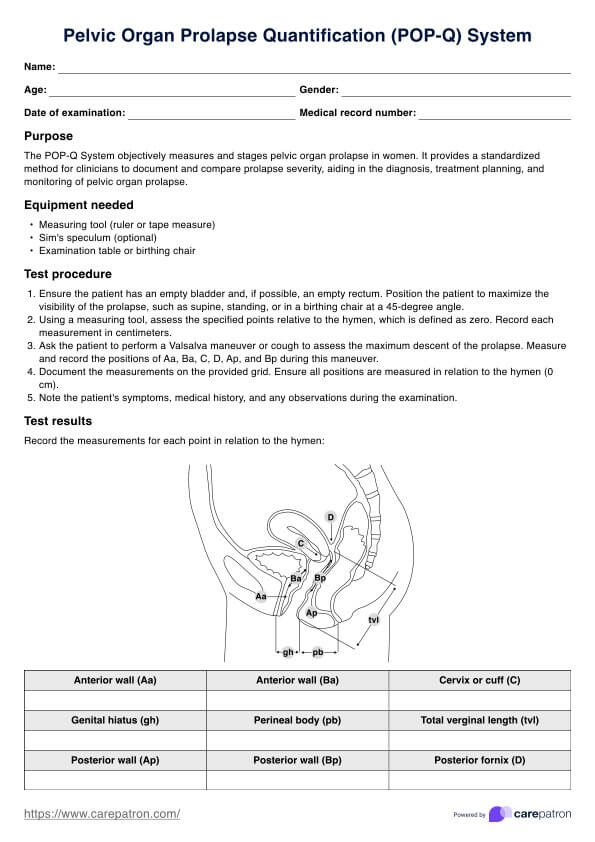




What is pelvic organ prolapse?
Pelvic organ prolapse (POP) occurs when one or more of the pelvic organs (such as the bladder, uterus, or rectum) descend into or outside the vaginal canal due to the weakening of the pelvic floor muscles and tissues. This condition can result in a variety of symptoms, including a feeling of heaviness or bulging in the vagina, urinary incontinence, and difficulties with bowel movements.
There are several types of POP, classified based on the organ involved:
- Cystocele: Prolapse of the bladder into the front wall of the vagina. The anterior vaginal wall plays a significant role in anterior vaginal wall prolapse.
- Rectocele: Prolapse of the rectum into the back wall of the vagina. The posterior vaginal wall is crucial in posterior vaginal wall prolapse.
- Uterine prolapse: Descent of the uterus into the vaginal canal.
- Enterocele: Prolapse of the small intestine into the vaginal canal.
Causes of POP include childbirth, aging, menopause, hysterectomy, and activities that increase abdominal pressure, such as heavy lifting, chronic coughing, or constipation. Women with POP may also experience sexual dysfunction, urge incontinence, and a visible or palpable bulge in the vaginal area.









