



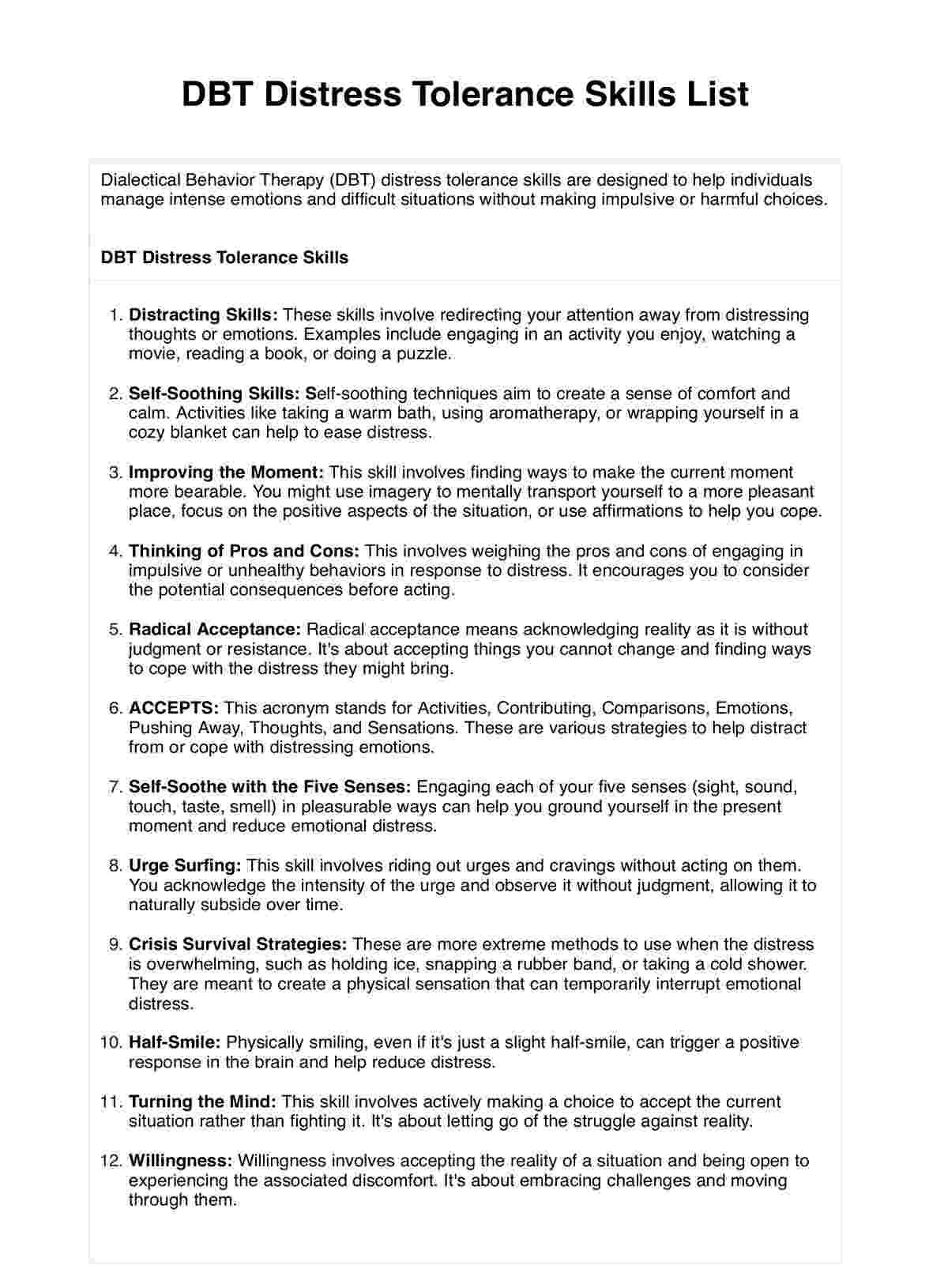




What is a DBT Distress Tolerance Skills List?
Dialectical behavioral therapy (DBT) is a form of cognitive-behavioral therapy that focuses on the psychosocial aspects of treatment, helping patients identify and change patterns of behavior that are not helpful. One of the key facets of DBT is developing distress tolerance skills.
Distress tolerance is a person's ability to manage actual or perceived emotional distress. Rather than avoiding or escaping distressing situations, DBT helps individuals accept and tolerate distress as a natural part of life. Distress tolerance techniques include distraction, self-soothing, radical acceptance, and considering pros and cons.
Patients with borderline personality disorder benefit from distress tolerance skills by reducing distress, preventing problem behaviors, and improving function. Although initial training can be challenging and acceptance may be difficult at first, patients find it helpful in managing crises and enhancing stability (Schaich et al., 2021).
Therapists may assign patients to practice different distress tolerance skills in sessions and at home using a checklist. DBT distress tolerance skills can help individuals develop crisis survival skills to cope with and tolerate difficult emotions and experiences. In turn, this can help them become better equipped to deal with distressing situations in the future.









