








What is a Drinking Motives Questionnaire?
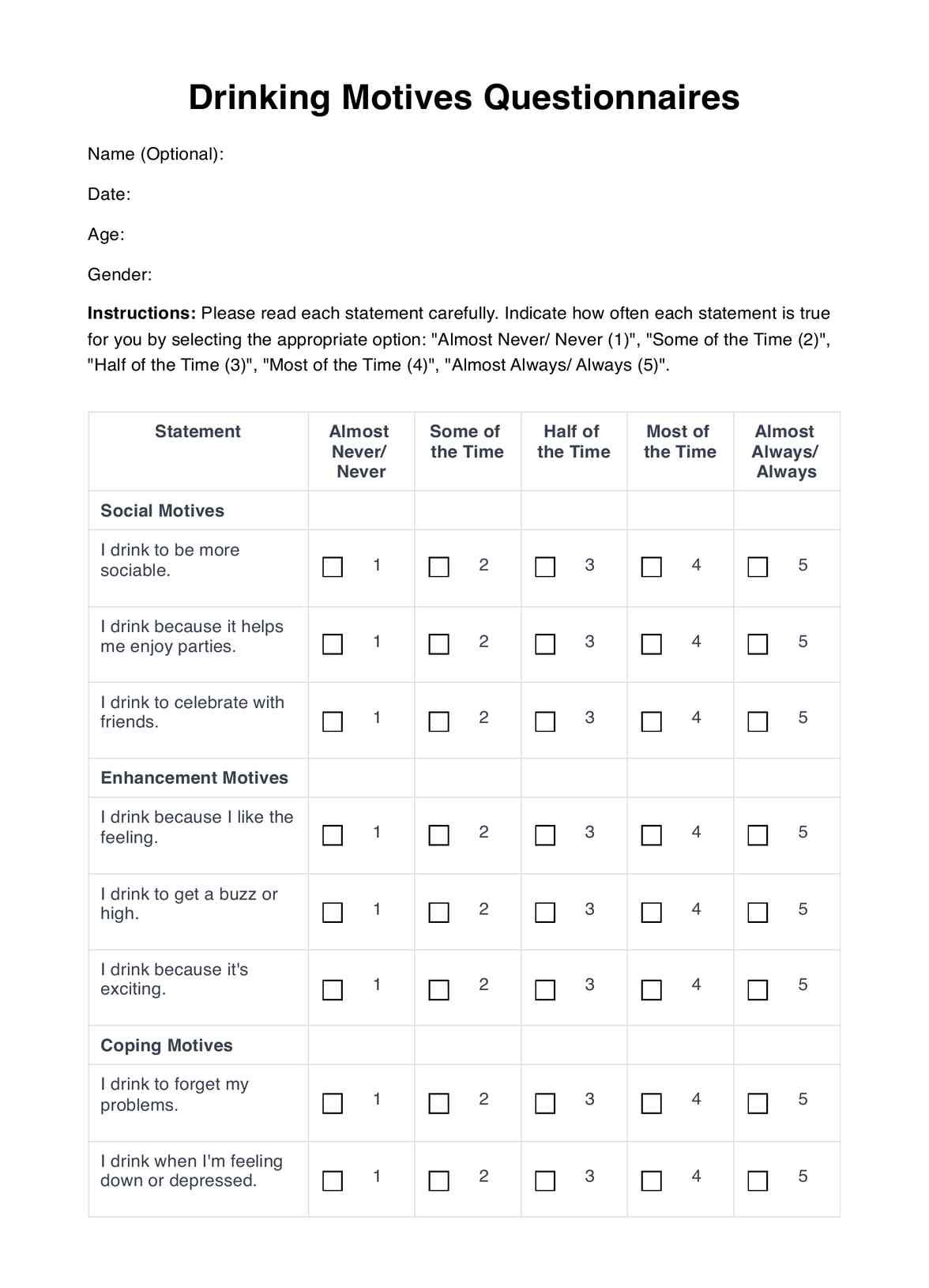
The Drinking Motives Questionnaire (DMQ) is an assessment tool designed to delve into the reasons or motives an individual might have for consuming alcohol. Based on extensive psychological and social research, this questionnaire seeks to understand the 'why' behind alcohol use, which is critical in identifying potential risk factors and creating tailored treatment plans for alcohol-related issues.
The DMQ focuses on four primary categories of drinking motives:
- Social motives: Social motives for drinking alcohol can encompass various social interactions. Some people may consume alcohol to make socializing easier or more enjoyable, as alcohol can sometimes reduce social inhibitions and make people feel more relaxed. For instance, someone might have a drink at a party to feel more at ease with others or to fit in with a drinking group. This motive is often about enhancing positive experiences in social settings. However, reliance on alcohol for social interactions could signal a potential problem, particularly if the individual struggles to socialize without it.
- Enhancement motives: These motives are related to the desire to enhance or increase positive emotional states. People who drink for enhancement motives often report liking the feeling of intoxication, which might include feeling euphoric, uninhibited, or simply "buzzed." They seek the pleasurable effects that alcohol can sometimes induce. However, while it might seem like these drinkers are chasing positive feelings, the risk lies in the potential for this behavior to lead to heavier drinking and the possibility of developing an alcohol use disorder.
- Coping motives: Some individuals use alcohol to cope with negative feelings, stress, or personal problems. They might use alcohol to temporarily escape their issues, numb their emotions, or help them relax or fall asleep. This category of drinking motive is particularly concerning because it's often linked with heavier drinking and a higher risk of alcohol-related problems. Furthermore, it indicates that the person might not have other, healthier coping mechanisms for dealing with stress or negative emotions.
- Conformity motives: Conformity motives refer to drinking alcohol to fit in with a group, to conform to peer pressure, or to avoid feeling different or left out. This type of drinking motive can be especially prevalent among younger drinkers or in environments where heavy drinking is normalized. Individuals who drink for conformity motives might not necessarily enjoy or want to drink, but they do it anyway to blend in with their peers. This can lead to risky drinking behaviors and potentially contribute to the development of alcohol-related problems.
Used in conjunction with self-worth workshttps://youtu.be/dljyE2NlAIAheets, the DMQ helps provide a holistic approach to understanding and addressing an individual's drinking habits. By identifying the motives behind alcohol use, individuals and professionals can work towards healthier coping strategies and enhance the individual's self-esteem, leading to improved outcomes.









