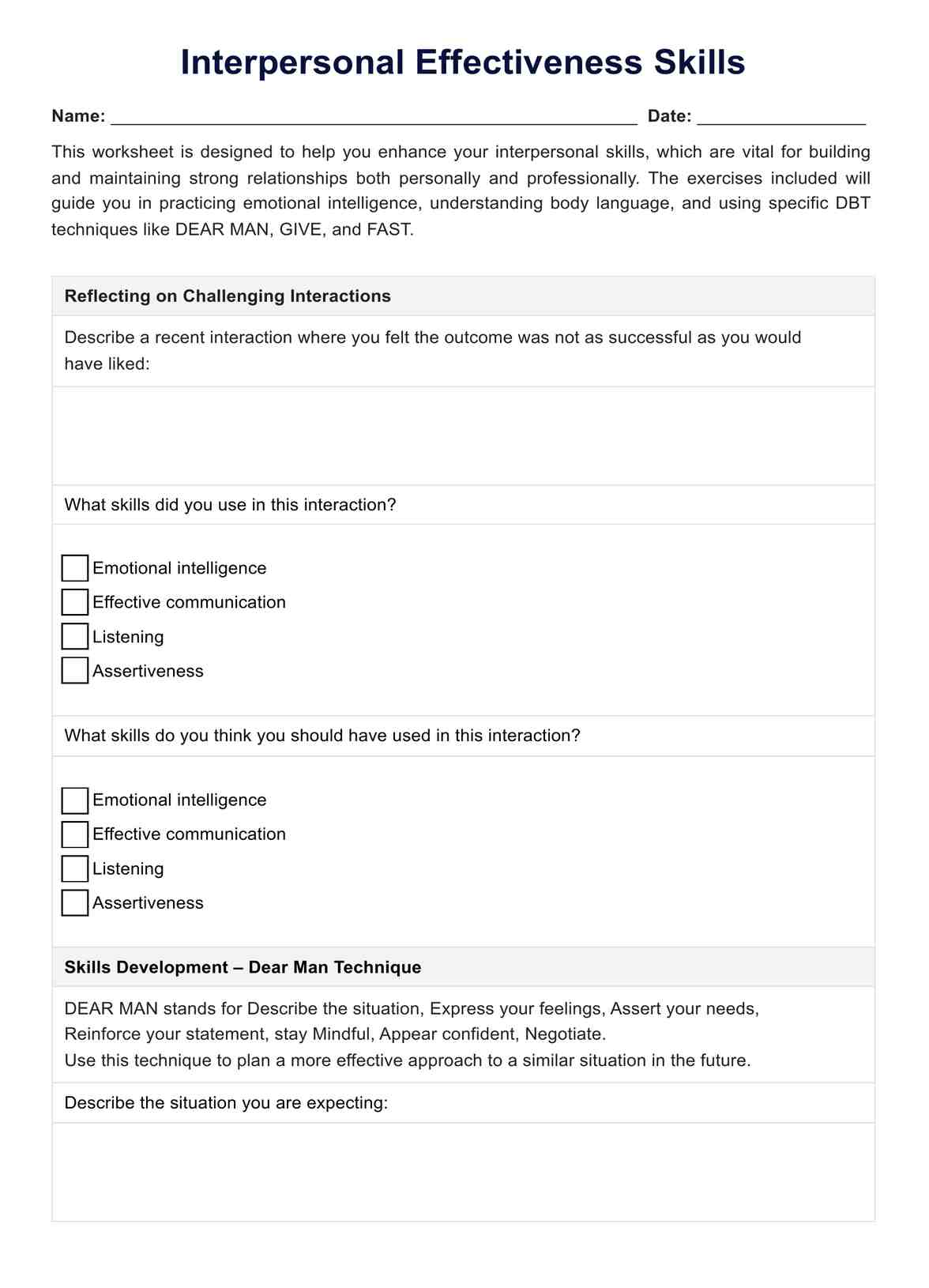
Interpersonal effectiveness techniques
Mastering interpersonal effectiveness helps individuals maintain healthy relationships and navigate social complexities efficiently. Here are some key techniques integral to developing strong interpersonal skills:
DEAR MAN Technique
DEAR MAN stands for Describe, Express, Assert, Reinforce, Mindful, Appear confident, Negotiate. It helps individuals communicate their needs or desires effectively and assertively, which is especially useful in situations requiring clear requests or refusals. Developed as part of DBT to assist patients with emotional regulation and assertiveness, DEAR MAN has been shown to enhance communication outcomes by providing a structured approach to expressing needs respectfully and effectively.
GIVE Technique
GIVE stands for Gentle, Interested, Validate, Easy Manner. This technique aims to enhance relationship quality and ensure connections are maintained positively, even during conflicts. It is effective in maintaining healthy interpersonal dynamics by fostering understanding and respect, crucial for long-term relationship stability. Research on GIVE highlights its role in promoting empathy and reducing interpersonal conflicts through supportive and validating communication.
FAST Technique
FAST stands for Fair, Apologies (only when appropriate), Stick to values, Truthful. It helps you maintain self-respect and integrity in interactions, particularly when there's a risk of compromising one's values. FAST teaches individuals to be honest and straightforward, supporting the maintenance of personal integrity and respect in relationships. Studies indicate that FAST helps individuals uphold their self-respect and authenticity, contributing positively to their mental health and well-being.
THINK Technique
THINK is a newer DBT skill developed to manage negative emotions in challenging interactions by fostering understanding and empathy. THINK stands for Think, Have empathy, Interpretations, Notice, Kindness. It encourages considering multiple perspectives and responding kindly, especially useful in conflict situations. Initial studies suggest THINK can decrease emotional reactivity and promote rational, compassionate responses, improving interaction outcomes.
By incorporating these skills into daily interactions, individuals are better equipped to handle various social situations, leading to more fulfilling and stable relationships.
Importance of developing effectiveness skills
Developing interpersonal effectiveness skills is vital for achieving healthy and satisfying interactions across various aspects of life. These skills facilitate clearer communication, enhance problem-solving capabilities, and promote stronger relationships in both personal and professional settings.
Interpersonal effectiveness encompasses a range of abilities including clear communication, assertiveness, conflict resolution, and the ability to listen and respond empathetically. Mastery of these skills can significantly impact one's ability to navigate social interactions and relationships effectively. For instance, being able to articulate needs clearly and respectfully can lead to better outcomes in both workplace negotiations and personal relationships.
Moreover, these skills are critical in managing emotional responses and maintaining self-respect in interactions. They help individuals establish and maintain boundaries, negotiate solutions, and interact in a way that respects both their own needs and those of others. This balance is crucial for personal well-being and for building relationships based on mutual respect and understanding.