





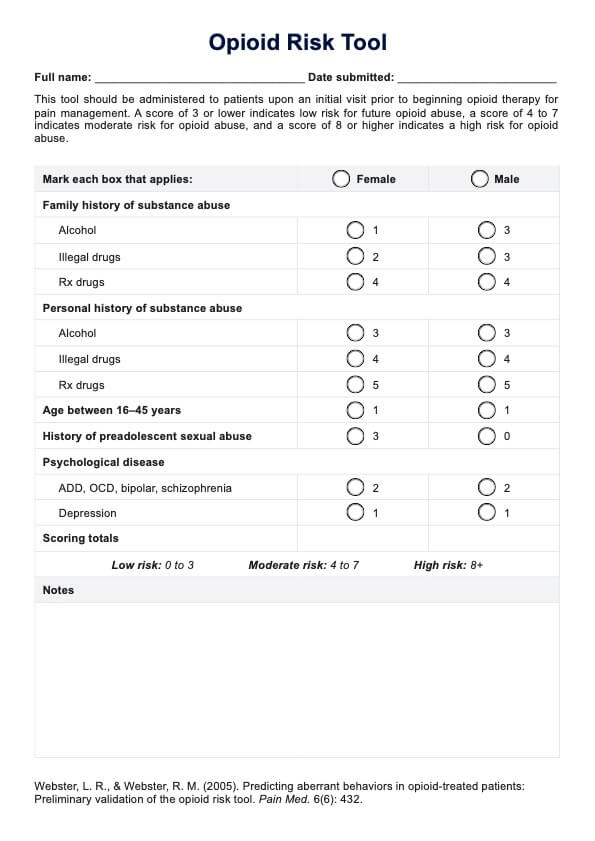




What is the Opioid Risk Tool (ORT)?
The Opioid Risk Tool, or ORT for short, is a nifty risk assessment tool created by Lynn R. Webster, MD. It was created to serve as a self-report screening tool to be used on patients who are about to take opioid therapy for chronic pain to see if they are at risk of developing opioid use disorder.
Chronic pain patients have a higher chance of prescription opioid misuse, substance abuse, alcohol abuse, and other things they can get their hands on to numb the pain they're feeling. Using the Opioid Risk Tool will help assess risk of addiction in opioid-treated patients so that doctors can develop ways to mitigate that risk and prevent them from developing aberrant drug-related behavior and engaging in prescription drug abuse or even illegal drug abuse.
How is the assessment scored, and how are the results interpreted?
The Opioid Risk Tool comes in the form of a list containing the following factors:
- Family history of substance abuse: alcohol, illegal drugs, prescription drugs
- Personal history of substance abuse: alcohol, illegal drugs, prescription drugs
- Age (if between 16 to 45)
- History of preadolescent sexual abuse
- Psychological disease: ADD, OCD, bipolar, schizophrenia (these 4 in one option); depression
There are two answer columns: female and male. The person answering the tool or the healthcare professional using it only needs to tick the necessary columns based on the patient's sex. The score for each answer may vary. One answer might score higher for a male than it would for a female, and vice versa.
After the tool has been completely answered, the healthcare professional needs to add up and get the sum of all the answers to get the total score. They can refer to the following score ranges to help them interpret the results:
- Low risk: 0 to 3
- Moderate risk: 4 to 7
- High risk: 8+
The only thing that healthcare professionals need to worry about is the possibility of the patients lying about their family and personal history of substance abuse and other factors, which can make predicting aberrant behaviors and potential opioid medication misuse a little tricky. It's best to explain the purpose of this tool to patients and assure them they're in a judgment-free zone and that you're here to help and cover all bases.
Next steps after using the ORT
The next step is to begin their prescribed opioid therapy while taking into account the results of the Opioid Risk Tool. The specific prescribed opioids and the dosages must be adjusted depending on a patient's risk level.
Healthcare professionals must also monitor chronic pain patients who are already taking opioid therapy for pain management and identify prescription medication misuse immediately to avoid the potential problems chronic opioid therapy may lead to, such as opioid abuse, myocardial infarctions, and sexual dysfunction. Rehabilitation plans must also be readied in case patients become dependent and addicted to the prescribed opioids.









