








What is the Biopsychosocial Model of Addiction?
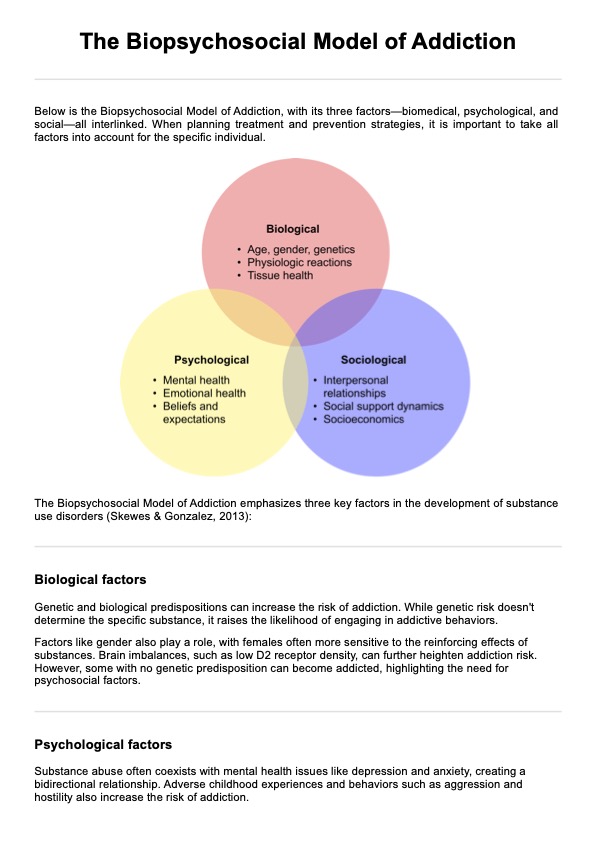
The Biopsychosocial Model of Addiction recognizes that there is not one single factor that can explain why some people are able to use substances without progressing to addiction. In contrast, others develop substance use disorder (Skewes & Gonzalez, 2013). Instead, the Biopsychosocial Model of Addiction focuses on the environmental, biological, psychological, psychological, cultural, cognitive, social, and genetic factors that interact to produce substance misuse among individuals (Skewes & Gonzalez, 2013).
This holistic approach to understanding the development and progression of substance use disorders emphasizes the need to address multiple factors in both prevention and treatment programs (Skewes & Gonzalez, 2013).
The recognition of individuals as multifaceted and intertwined people with a rich history involving jobs, environments, personal values, friends, family, and life experiences makes it easier to understand that although substance use disorder is the primary diagnosis, it does not occur in isolation (Florin & Trytek, n.d.). This provides a foundation for a better understanding of how harmful substance use emerged and what can be done to shift their unhealthy patterns (Florin & Trytek, n.d.). The holistic and well-rounded approach to understanding both the causes of addictive disorders and the best substance abuse treatment is seen in the Biopsychosocial Model of Addiction (Florin & Trytek, n.d.).









