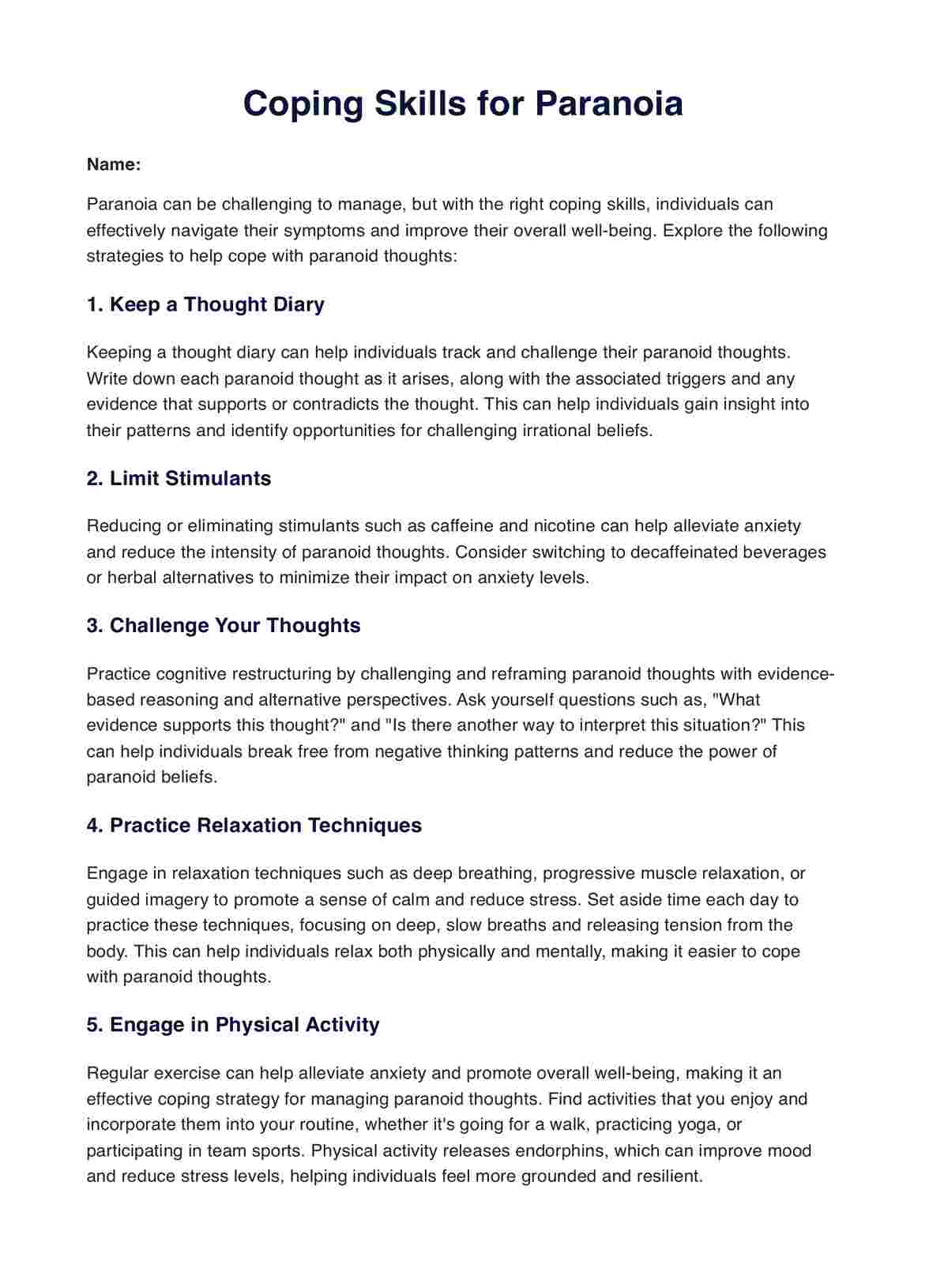
What is paranoia?
Paranoia is a mental health condition characterized by intense and irrational distrust or suspicion of others. It often involves exaggerated or unfounded beliefs that others are plotting against you or intending harm. These paranoid thoughts can manifest in various situations, leading individuals to interpret innocent actions as evidence of malevolent intentions.
Experiencing paranoia can be distressing and overwhelming, affecting one's ability to function in everyday life. It's essential to recognize that paranoia is a symptom of an underlying mental health problem and not a reflection of reality.
Support groups and therapy, such as cognitive behavioral therapy (CBT), can be valuable resources for individuals struggling with paranoid thinking. CBT helps individuals challenge and reframe their paranoid beliefs, enabling them to approach situations with a more balanced perspective. Additionally, seeking support from trusted friends, family members, or mental health professionals can help reduce stress and provide reassurance during episodes of paranoia.
Symptoms of paranoia
Paranoia can manifest in various ways, affecting both thoughts and behavior. Recognizing these symptoms is crucial for identifying and addressing the condition effectively. Here are some common signs of paranoia:
- Persistent suspicion or mistrust of others
- Belief that others are plotting against you or intending harm
- Feeling constantly watched or monitored
- Interpreting harmless situations as threatening
- Refusal to confide in others due to fear of betrayal
- Hypersensitivity to criticism or perceived slights
- Difficulty relaxing or feeling safe in familiar environments
- Avoidance of social situations or withdrawal from others
- Heightened vigilance and scanning of the environment for potential threats
Causes of paranoia
Paranoia can stem from various factors, including biological, environmental, and psychological influences. Here are some common causes of paranoia:
- Genetics: A family history of mental health problems, including paranoia or other psychotic disorders, can increase the likelihood of developing paranoid thinking patterns.
- Trauma or stress: Traumatic experiences, such as abuse, neglect, or significant life events, can trigger paranoid thoughts as a coping mechanism or response to perceived threats.
- Brain chemistry: Imbalances in neurotransmitters, such as dopamine, serotonin, or glutamate, may contribute to the development of paranoid symptoms.
- Psychological factors: Certain personality traits, such as high levels of suspicion or mistrust, can predispose individuals to experiencing paranoid thoughts.
- Substance abuse: Drug or alcohol use can exacerbate or trigger paranoid symptoms, particularly in individuals already predisposed to mental health problems.
- Persecutory delusions: Paranoia can also arise from delusional beliefs of being targeted or persecuted by others, even in the absence of evidence or rational justification.
Problems paranoia may lead to
Paranoia can significantly impact various aspects of an individual's life, affecting their relationships, well-being, and overall quality of life. Here are some problems paranoia may lead to:
- Strained relationships: Suspicious thoughts and mistrust can strain relationships with family members, friends, and colleagues, leading to isolation and alienation.
- Impaired functioning: Paranoia can interfere with daily functioning, making it challenging to concentrate, work, or engage in social activities.
- Increased anxiety: Constantly feeling on edge or threatened can contribute to heightened anxiety levels, exacerbating paranoid symptoms and impacting overall mental health.
- Decreased quality of life: Paranoia can diminish one's enjoyment of life, causing distress and reducing the ability to experience pleasure or satisfaction in activities.
- Risk of isolation: Fear of perceived threats or hostile intent from others may lead individuals to withdraw from social interactions, further exacerbating feelings of loneliness and isolation.
- Potential for misinterpretation: Paranoia may lead to misinterpretation of harmless situations or benign behaviors, potentially leading to conflict or misunderstanding.