





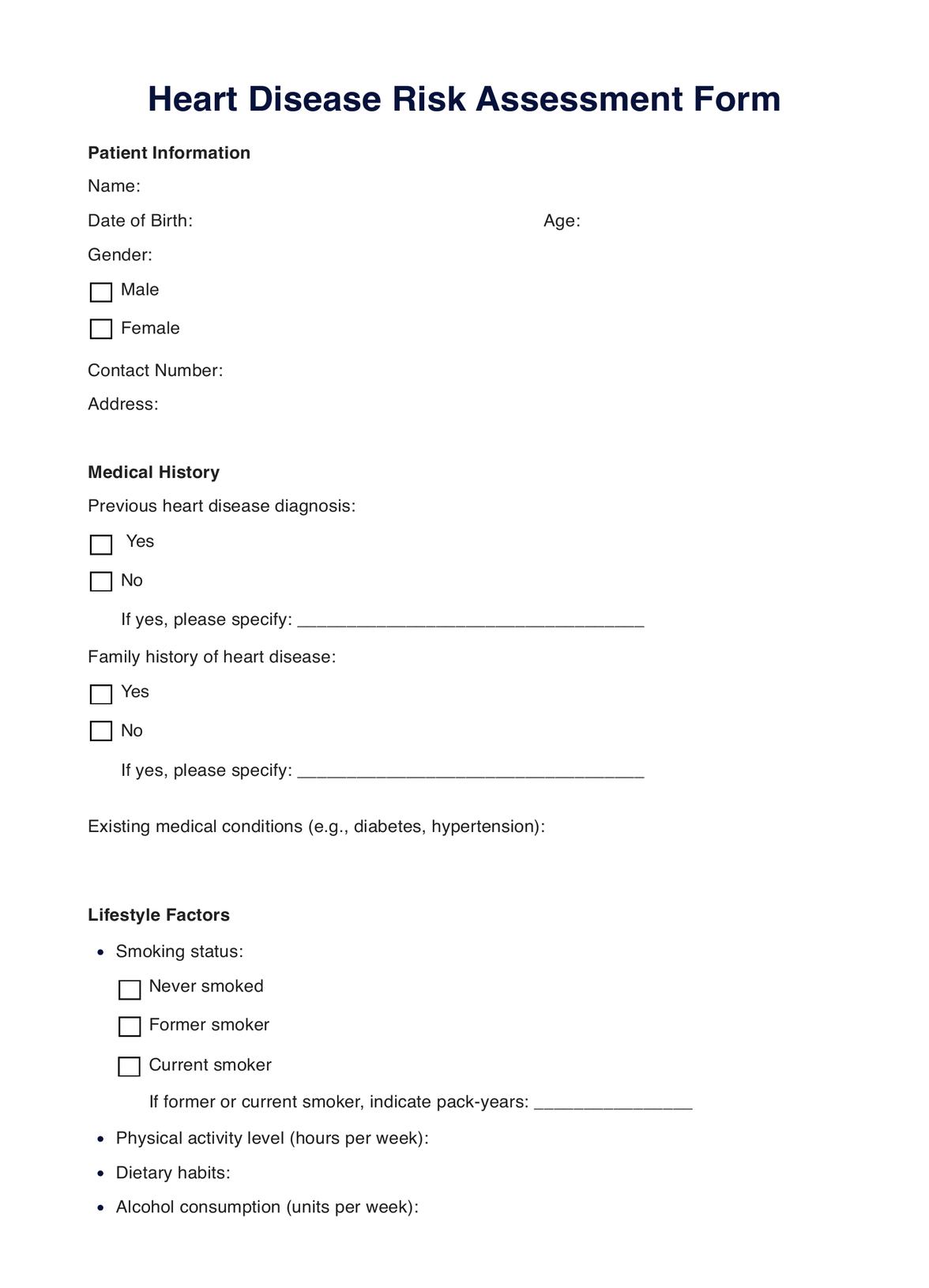




What is a Heart Disease Risk Assessment?
A Heart Disease Risk Assessment is a tool or process used by healthcare professionals to evaluate an individual's likelihood of developing cardiovascular diseases, primarily focusing on conditions such as coronary artery disease, heart attack, stroke, and other related ailments. The assessment is based on a comprehensive evaluation of various risk factors contributing to heart disease. Its primary goal is to identify individuals at higher risk for heart disease so that preventive measures can be initiated promptly, reducing the likelihood of heart-related complications.
Key components of a Heart Disease Risk Assessment typically include medical history, lifestyle factors, physical examination, blood tests, assessment of risk factors, scoring system, and recommendations. Heart Disease Risk Assessments help personalize prevention and intervention strategies for individuals, promoting better heart health and reducing the burden of heart disease.









