






What is catatonia?
Catatonia is a complex neuropsychiatric syndrome characterized by unusual physical and behavioral symptoms. It was first described in the late 19th century by German psychiatrist Karl Ludwig Kahlbaum, who originally named it "catatonic stupor." The word "catatonia" comes from the Greek words kata (meaning down) and tonos (meaning tension or tone), reflecting the state of reduced movement and increased muscle tone seen in affected individuals.
Types of catatonia
There are several types of catatonia, each with its own set of symptoms and characteristics. These include:
Malignant catatonia
Malignant catatonia is a severe and life-threatening form of catatonia. It can develop rapidly and is often associated with acute psychiatric illnesses or severe medical conditions. Symptoms of malignant catatonia include fever, autonomic instability, and delirium.
Akinetic catatonia
Akinetic catatonia, or retarded catatonia, is characterized by a state of immobility and unresponsiveness. It can be caused by various factors, including psychiatric disorders like schizophrenia or medical conditions like Parkinson's disease.
Excited catatonia
Excited catatonia is also known as "agitated" or "stuporous" catatonia. This type of catatonia is often associated with manic episodes in individuals with bipolar disorder. Symptoms may include rapid movements, agitation, and aggressive behaviors.
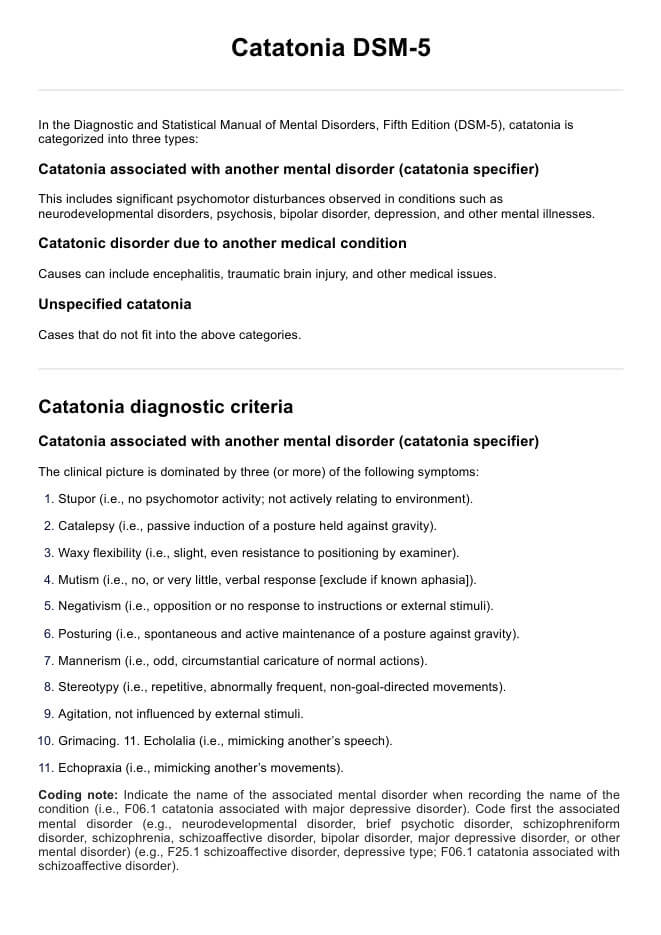
Note that the Diagnostic and Statistical Manual of Mental Disorders (DSM-5) does not recognize these subtypes; instead, it classifies catatonia into three categories.
Causes and symptoms
Some theorize that catatonia may be caused by an imbalance in the brain's dopamine and serotonin levels, which are neurotransmitters responsible for regulating mood, movement, and cognition (Daniels, 2009; Burrow et al., 2021). Others suggest that it may be related to dysfunction in the gamma-aminobutyric acid (GABA) system, which helps regulate muscle tone and movement (Northoff et al., 1999).
The symptoms of catatonia can vary greatly depending on the underlying cause and individual factors. However, some common symptoms include:
- Stupor or immobility: A person with catatonia may remain in a rigid, motionless state for extended periods of time.
- Mutism: Some individuals with catatonia may not speak at all or may only speak in short phrases.
- Waxy flexibility: In this symptom, a person's body can be easily moved into different positions and will remain in that position until moved again.
- Catenation: This refers to the tendency for a person with catatonia to move their limbs in specific patterns repeatedly.
- Agitation: On the other end of the spectrum, some individuals may display repetitive, purposeless movements or agitation.
- Echolalia and echopraxia: These symptoms involve repeating words or phrases spoken by others (echolalia) or mimicking their movements (echopraxia).
- Negativism: Some individuals with catatonia may display opposition to all instructions or attempts to move them.
- Grimacing: Catatonic individuals may also make facial expressions that do not match their emotions or the situation.
- Inappropriate or unusual postures: This can include holding the body in a twisted position or assuming a bizarre posture for extended periods of time.
Risk factors
Several factors can increase the risk of developing catatonia, including:
- A history of psychiatric disorders such as schizophrenia, bipolar disorder, or major depressive disorder.
- A history of neurological conditions such as Parkinson's disease or epilepsy.
- Substance use disorders, particularly long-term and heavy alcohol or sedative use.
- Medical illnesses that can affect brain function, such as infections or autoimmune disorders.









