Baby's first foods
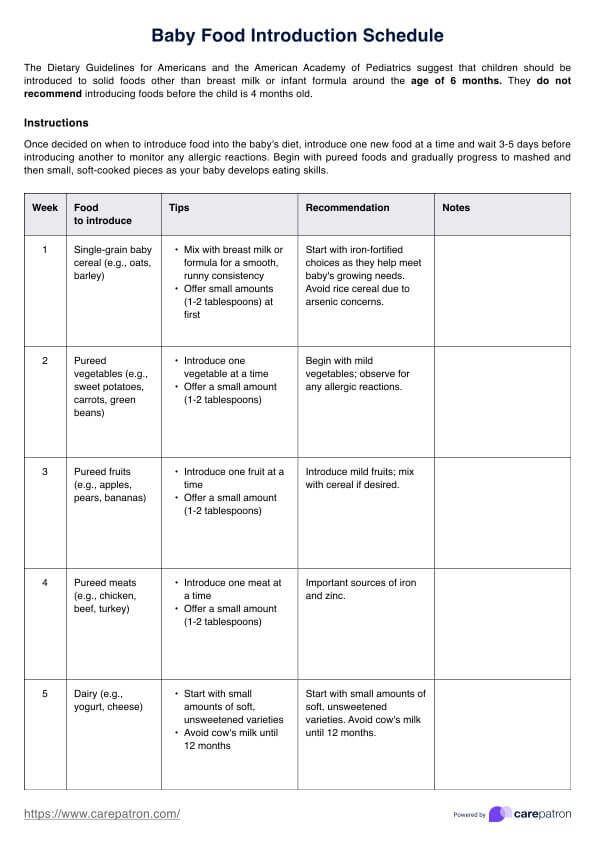
When advising parents on introducing solid foods to their baby, start with simple, easy-to-digest options such as baby oatmeal, rice cereal, or barley, as they are high in iron. Encourage mashed or pureed fruits and vegetables like sweet potatoes, bananas, avocados, apples, and pears. Additionally, pureed chicken or beef is an excellent source of essential iron and zinc.
Common food allergies
Advise parents to be cautious when introducing allergenic foods such as dairy, eggs, fish, soy, shellfish, wheat, peanuts, and tree nuts. They must introduce these foods one at a time and monitor for allergic reactions, ranging from mild (e.g., rash) to severe (e.g., difficulty breathing). Parents must consult a pediatrician before introducing peanuts if the infant has severe eczema or an egg allergy.
Foods to avoid
When advising parents on introducing solids to their infants, certain foods should be strictly avoided during the early stages. For instance, it is not safe to give honey to babies under the age of one due to the potential risk of botulism. Babies also usually struggle to digest cow's milk before they are one year old, so it is best to rely on breast milk or bottle feeding during this time.
Foods that pose a choking risk, such as raw vegetables, nuts, seeds, grapes, and hot dogs, should be avoided or cut into small, manageable pieces to minimize the risk of choking. Ensuring parents are well-informed about these guidelines is crucial in promoting their infants' safe and healthy eating habits.