





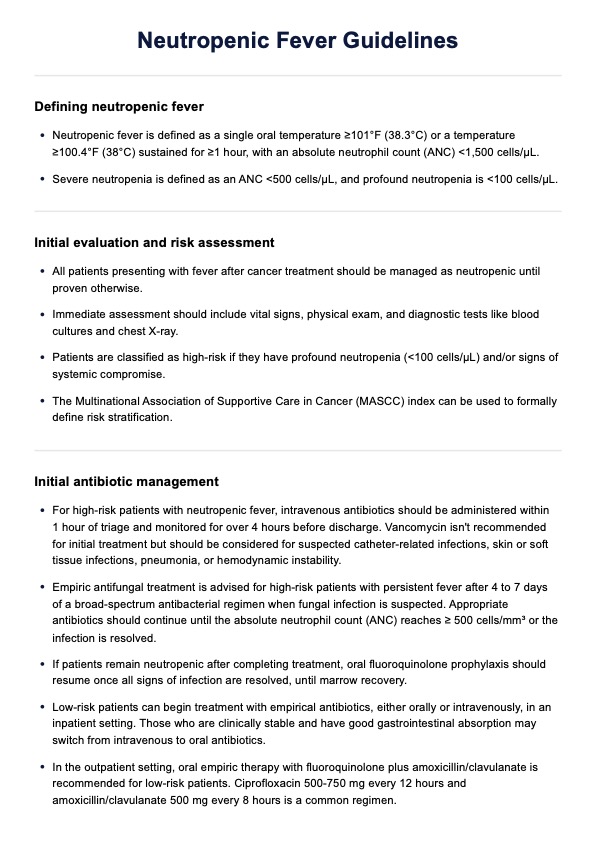




What is a neutropenic fever?
Neutropenic fever is a serious medical condition that occurs when a person with neutropenia, a low level of neutrophils in the blood, develops a fever. This condition is particularly dangerous because neutrophils are crucial for fighting off infections. Without enough neutrophils, the body is less able to combat infectious agents, making even minor infections potentially life-threatening.
Causes
Neutropenic fever is typically caused by an infection, which can be bacterial, viral, or fungal. Individuals undergoing chemotherapy or radiation therapy for cancer are particularly at risk, as these treatments can damage bone marrow, reducing neutrophil production. Other causes include bone marrow disorders, certain medications, and immune system diseases.
Symptoms
The symptoms of neutropenic fever are often subtle but can escalate quickly, necessitating immediate medical attention. Common symptoms include:
- Fever (usually above 100.4°F or 38°C)
- Chills or sweating
- Shortness of breath
- Sore throat
- Mouth sores
- Abdominal pain
- Diarrhea or changes in bowel habits
Diagnosis
Diagnosing neutropenic fever involves several steps to identify the cause and determine the best course of treatment:
- Medical history and physical examination: Assessing the patient's symptoms, recent treatments, and overall health.
- Complete blood count (CBC): To measure neutrophil levels.
- Blood cultures: To identify potential bacterial infections.
- Other cultures: Such as urine, stool, or sputum cultures to identify possible sources of infection.
- Imaging tests: Such as chest X-rays or CT scans to detect any signs of infection or complications.









