How to use this Neuro Exam Checklist Template
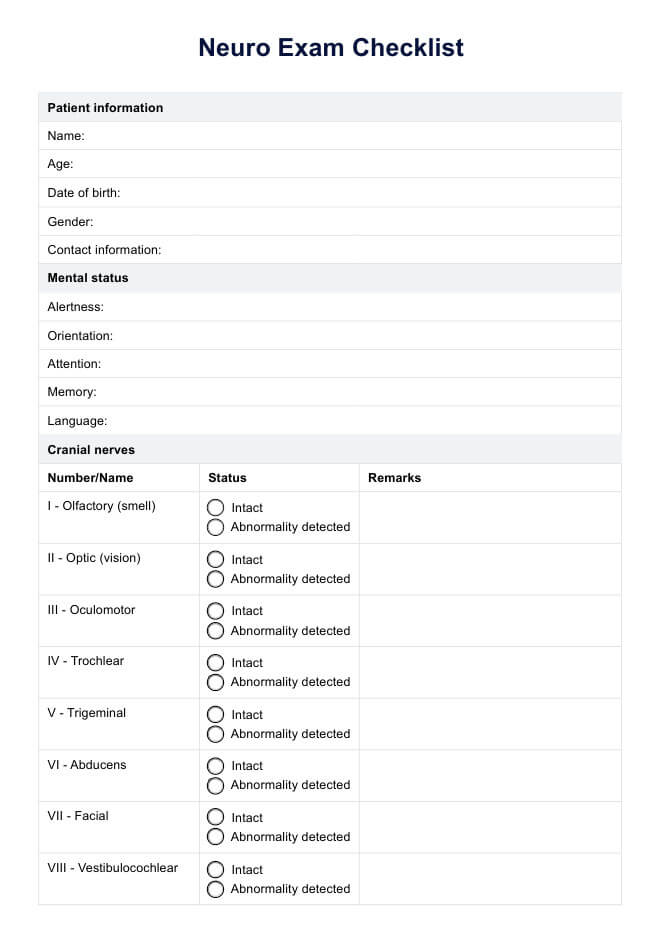
Our neurologic exam checklist is a valuable resource for healthcare practitioners to ensure a comprehensive neurological exam. Here's a concise guide on how to use this template in clinical practice effectively:
Step 1: Gather patient information and do a mental status exam
Ask the patient for their basic information, including name, age, date of birth, gender, and contact details. Next, proceed to the mental status section, evaluating and documenting the patient's alertness, orientation, attention, memory, and language skills. This initial evaluation provides crucial insights into the patient's cognitive function and level of consciousness.
Step 2: Conduct a cranial nerve examination
Systematically work through the cranial nerve assessment, checking each cranial nerve in order. For each nerve, perform the appropriate tests and mark whether the function is intact or if there are any abnormalities. This comprehensive evaluation helps identify potential neurological deficits related to specific cranial nerves.
Step 3: Evaluate motor and sensory function
Move on to assess motor function, including upper and lower extremity strength and coordination. Document your findings in the designated spaces. Then, conduct the sensory examination, testing and recording responses to light touch, pain, temperature, vibration, and proprioception. This step is crucial for identifying any motor weaknesses or sensory deficits.
Step 4: Test for reflex and gait
Complete the reflexes section by testing and documenting responses for deep tendon reflexes (biceps, triceps, patellar, and Achilles) and the plantar reflex. Finally, assess the patient's gait and balance. Note any abnormalities or concerns in the gait and station section.