



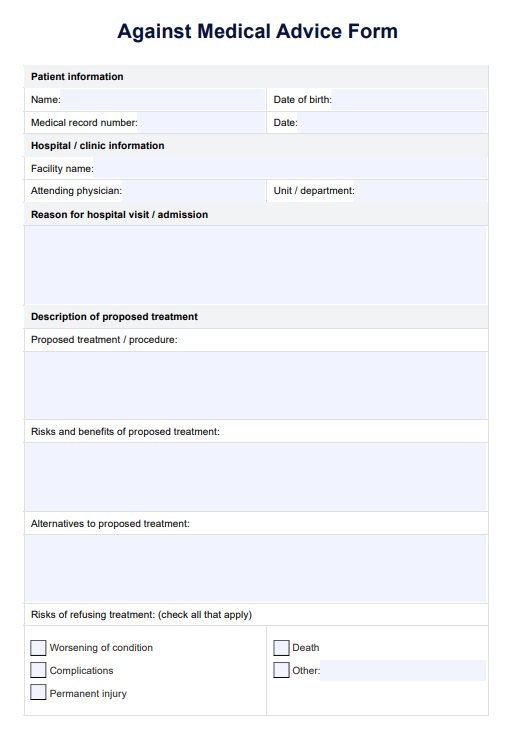




What is an Against Medical Advice Form?
An Against Medical Advice (AMA) Form is a legal document used in healthcare settings to document a patient’s decision to refuse recommended medical treatment or to leave the hospital against the advice of their healthcare provider. The AMA process involves thorough chart documentation and procedures to ensure all aspects of the patient's decision are recorded.
A signed AMA form is essential for this documentation process and serves as a critical defense in potential legal suits. It usually outlines the patient’s current medical condition, the recommended treatment, the potential risks of refusing treatment, and the patient’s acknowledgment of understanding these risks.
Why would a patient go against medical advice?
Patients may choose to go against medical advice for various reasons. Understanding these reasons can help healthcare professionals address patient concerns more effectively and possibly mitigate the risks of refusing treatment.
Personal beliefs, preferences, and patient autonomy
Some patients refuse treatment due to their personal beliefs or preferences. This can include religious beliefs that prohibit specific medical interventions or a strong preference for alternative therapies over conventional medical treatments. Respecting these beliefs while ensuring the patient is fully informed is crucial.
Fear and anxiety
Fear and anxiety about medical procedures, potential side effects, or the overall healthcare environment can lead patients to refuse treatment. Patients might be scared of the pain, potential complications, or unknown outcomes associated with the recommended medical interventions. Addressing these fears through open communication and reassuring can sometimes help convince the patient to follow medical advice.
Financial concerns
The cost of medical treatment can be a significant barrier for some patients. They might refuse treatment due to the financial burden it may impose, especially if they lack insurance coverage or have high out-of-pocket expenses. Discussing financial concerns and providing information on available resources or payment plans can help alleviate this issue.









