
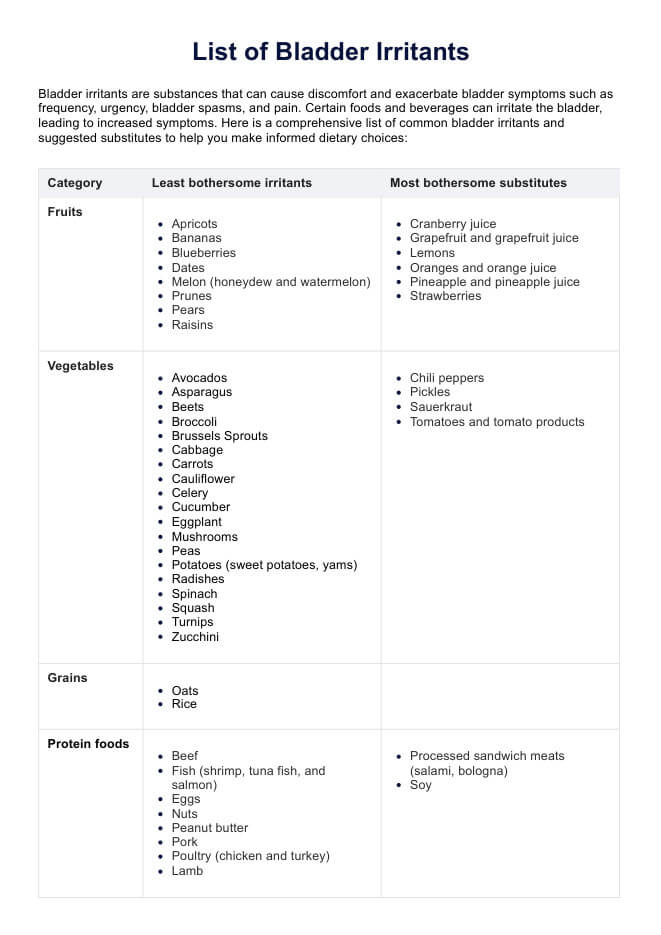




What are bladder irritants?
Bladder irritants are substances that can cause discomfort and exacerbate symptoms related to bladder health. These irritants are typically found in certain foods, drinks, and medications, and they can lead to increased frequency of urination, urgency, bladder spasms, and pain. Identifying and avoiding these irritants can be crucial for individuals who experience bladder sensitivity or conditions such as interstitial cystitis and overactive bladder.
Bladder irritating foods examples
Several common bladder irritants include:
- Caffeine: Found in coffee, tea, cola drinks, and energy drinks, caffeine can increase bladder activity and lead to urgency and frequency.
- Alcohol: All types of alcohol can irritate the bladder, leading to increased urination and discomfort.
- Artificial sweeteners: Substances such as aspartame, saccharin, and sucralose can cause bladder irritation.
- Acidic foods: Citrus fruits and juices, such as oranges, lemons, limes, grapefruits, tomatoes, and cranberries, are highly acidic and can irritate the bladder lining.
- Carbonated beverages: Sodas, sparkling water, and champagne contain substances that can irritate a sensitive bladder, potentially aggravating symptoms of overactive bladder (OAB).
- Spicy foods: Foods containing strong spices, such as chili peppers and curry, can cause bladder discomfort.
- Tomato-based products: Tomatoes and products such as ketchup, tomato sauce, and salsa are acidic and can irritate the bladder.
What can happen if the bladder becomes too irritated?
If the bladder becomes too irritated, it can lead to several uncomfortable and disruptive symptoms, including urinary frequency and overactive bladder symptoms. Bladder irritation can also lead to urinary incontinence, causing leakage and a loss of bladder control.
Initially, individuals may experience increased frequency and urgency of urination, feeling the need to use the bathroom more often and with greater urgency. This can interfere with daily activities and sleep, leading to frustration and decreased quality of life. In some cases, bladder spasms may occur, causing sudden, intense urges to urinate and sometimes resulting in involuntary leakage or incontinence.
As bladder irritation persists, the discomfort can escalate to chronic bladder pain. This pain can be constant or intermittent, significantly impacting an individual’s well-being and ability to perform everyday tasks. Chronic bladder pain is often associated with conditions like interstitial cystitis, a painful bladder syndrome characterized by persistent discomfort and frequent urination (Lim & O’Rourke, 2021). The constant irritation and inflammation can also increase the risk of urinary tract infections (UTIs), which can cause additional pain, burning, and other urinary symptoms.
In severe cases, prolonged bladder irritation can lead to various forms of incontinence, including stress incontinence and urge incontinence, making it difficult for individuals to control their urine flow. This can lead to embarrassment and social isolation.









