









What is Parkinson's disease?
Parkinson's disease (PD) is a progressive neurological disorder that primarily causes movement disorders. It is characterized by the gradual loss of dopamine-producing neurons in the brain, particularly in the substantia nigra region. Dopamine is a neurotransmitter crucial for coordinating smooth and balanced muscle movement. As Parkinson's disease progresses, individuals may experience a variety of motor symptoms.
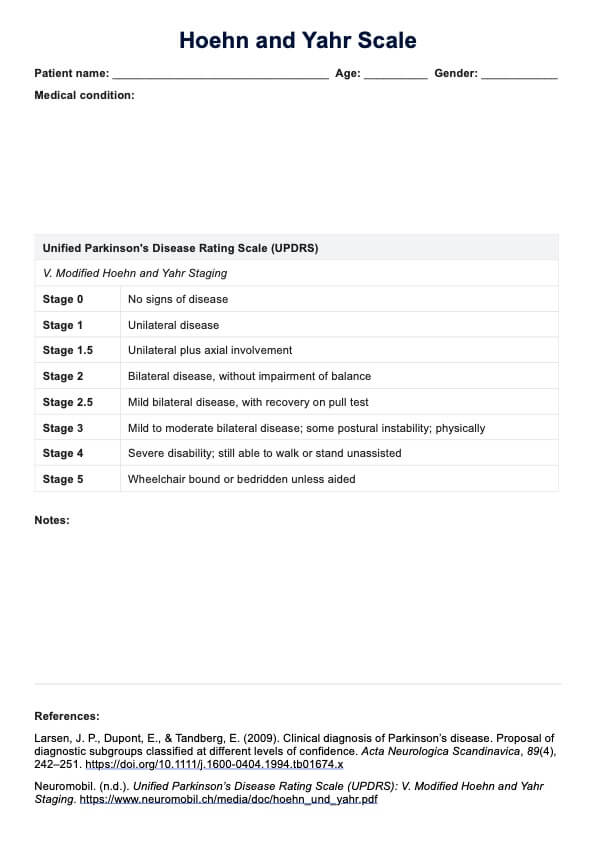
The Hoehn and Yahr Scale is a commonly used tool to assess the progression of Parkinson's disease, categorizing it into stages ranging from mild unilateral involvement to severe bilateral disease with significant functional disability. Early stages are often characterized by symptoms affecting one side of the body (unilateral involvement), while later stages typically exhibit symptoms on both sides (bilateral involvement).
Symptoms of Parkinson's disease
Parkinson's disease manifests primarily through motor symptoms that gradually worsen over time. These include tremors, often starting in one hand; rigidity or stiffness in limbs and trunk; bradykinesia, or slowed movements; and impaired balance and coordination, leading to postural instability. Non-motor symptoms may also arise, such as cognitive changes, depression, sleep disturbances, and autonomic dysfunction affecting blood pressure and bowel function.
Causes of Parkinson's disease
The exact cause of Parkinson disease remains unclear, but both genetic and environmental factors are believed to play significant roles. Genetic mutations, such as those in the LRRK2 and SNCA genes, can predispose individuals to the disease. Environmental factors like exposure to certain toxins or pesticides may also contribute to its development. Parkinson disease is characterized by the gradual degeneration of dopamine-producing neurons in the brain's substantia nigra region. This dopamine deficiency leads to the characteristic motor symptoms associated with the disease. Research continues to explore these factors to better understand and potentially intervene in the onset and progression of Parkinson's disease and other balance bilateral involvement problems.









