How to diagnose and test for cuboid syndrome?
Diagnosing cuboid syndrome can be challenging due to the lack of definitive tests. However, several clinical assessments can help identify the condition. Below is a detailed guide for healthcare workers to diagnose cuboid syndrome effectively.
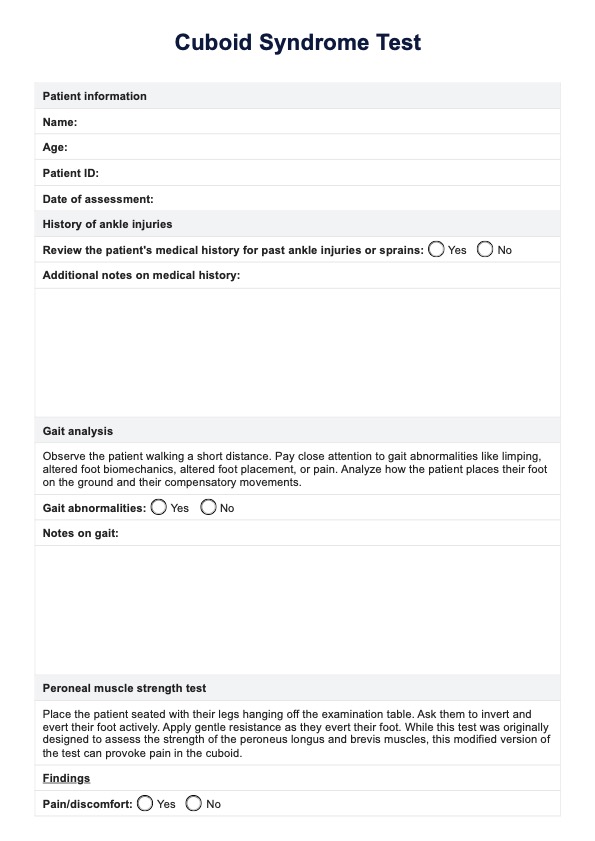
Check medical history
Review the patient's medical history, focusing on past ankle injuries or sprains. Correlate any history of lateral ankle sprains with the current symptoms of cuboid syndrome and document any relevant findings.
Gait analysis
Observe the patient's walking pattern by having them walk a short distance. Pay close attention to abnormalities like limping or altered foot biomechanics. Analyze how the patient places their foot on the ground and their compensatory movements. Record any deviations from a normal gait, as these can provide clues about the presence of cuboid syndrome.
When testing for cuboid subluxation, a quick gait analysis should suffice. Still, Carepatron has a full guide and template for gait analysis if you want to do a more in-depth assessment. Look at our Functional Gait Analysis page for more information.
Peroneal muscle strength test
Place the patient seated with their legs hanging off the examination table. Ask them to invert and evert their foot actively. Apply gentle resistance as they evert their foot. While this test was originally designed to assess peroneus longus muscle strength, this modified version of the test can provoke pain in the cuboid
Palpation test
Start by comfortably positioning the patient in a supine position. Using anatomical landmarks, locate the cuboid bone on the lateral side of the foot. Gently press on the cuboid bone and the surrounding structures, checking for tenderness, discomfort, or pain. Carefully observe the patient's reaction and document any positive findings.
Midtarsal joint motion test
This part combines the two most commonly used tests for cuboid syndrome: the midtarsal adduction test and the midtarsal supination test. It also incorporates elements of the cuboid translation test.
With the patient seated or lying down with their foot relaxed, hold the foot with one hand stabilizing the heel and the other grasping the midfoot. Move the midfoot in various directions—up, down, and sideways. Assess the range of motion, noting any restrictions or pain, as limited movement can indicate cuboid subluxation.
You can download our free Cuboid Syndrome Tests template to streamline the diagnostic process. You can access the template PDF by clicking the download button on this page, or you can open it on the Carepatron app which also lets you customize the template.
This template will help ensure a comprehensive and systematic approach to diagnosing cuboid syndrome.