
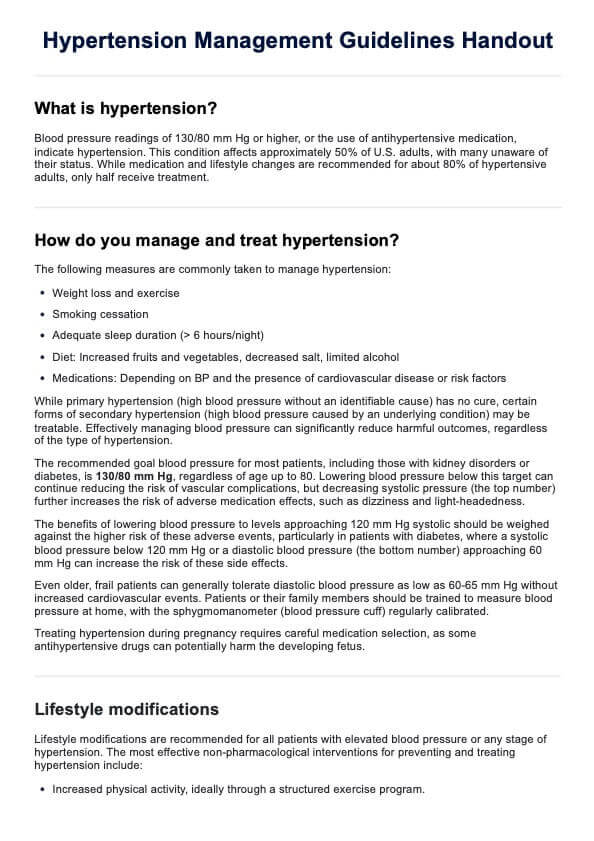




What is high blood pressure?
Hypertension, commonly known as high blood pressure, is a chronic medical condition characterized by persistently elevated pressure within the blood vessels. It occurs when the force of blood against the artery walls is consistently higher than normal. An estimated 1.28 billion of the adult population has hypertension (World Health Organization, 2023).
Blood pressure (BP) is measured using systolic blood pressure (when the heart beats) and diastolic blood pressure levels (when the heart rests between beats). In adults, hypertension is generally defined as elevated systolic BP consistently at or above 130 mmHg and/or diastolic BP at or above 80 mmHg, where the normal blood pressure rests at 120/80 mmHg.
Causes of hypertension
Most cases of hypertension are classified as primary or essential hypertension, which develops gradually over time without a single identifiable cause. Key risk factors include:
- Age: Blood pressure tends to rise as we get older.
- Family history: Genetic factors play a significant role.
- Obesity: Excess weight increases strain on the heart and blood vessels.
- Sedentary lifestyle: Lack of physical activity is linked to higher blood pressure.
- Alcohol consumption: Regular, heavy drinking can lead to hypertension.
- Stress: Chronic stress may contribute to elevated blood pressure.
High blood pressure also sometimes results from an underlying condition or medication. Common causes in these cases include the following:
- Chronic kidney disease
- Cardiovascular disease
- Hormonal disorders (e.g., thyroid problems, Cushing’s syndrome)
- Obstructive sleep apnea
- Certain medications (e.g., birth control pills, decongestants, some pain relievers)
- Illegal drugs (e.g., cocaine, amphetamines)









