
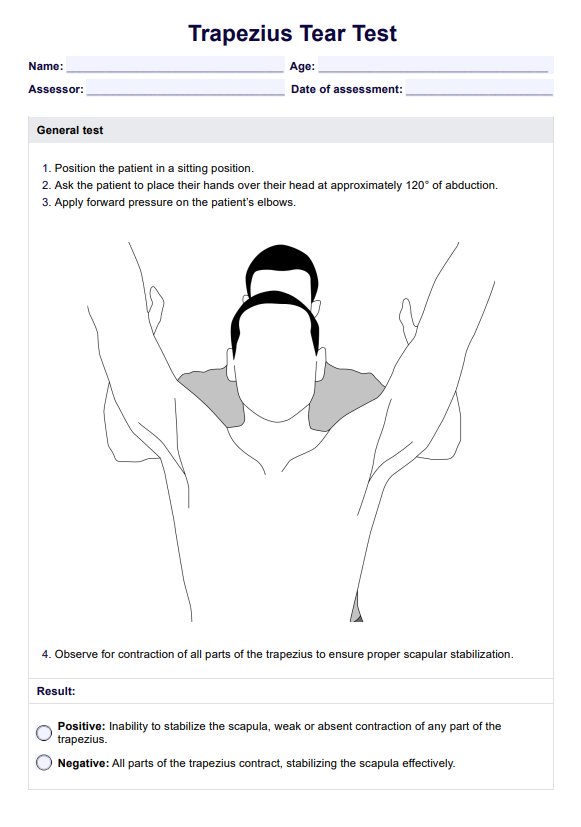




What is a trapezius muscle tear?
A trapezius muscle tear, or strain, occurs when the trapezius muscle is overstretched or torn due to injury, overuse, or sudden forceful movements. This large, triangular muscle extends from the back of the neck and thorax to the shoulder girdle, playing a crucial role in shoulder joint stability, upper body movement, and posture support. Damage to this muscle can lead to trapezius muscle pain, affecting daily activities and overall mobility.
A trapezius tear can result from an acute injury, such as a violent twist, fall, or collision, leading to significant pain and stiffness in the neck, shoulder region, and upper back. Chronic muscle overuse, poor posture, or repetitive motions can also strain the lower trapezius muscle, reducing its ability to stabilize the shoulder joint and leading to discomfort. When the injured muscle is not properly treated, symptoms can worsen, affecting blood flow and delaying recovery.
Symptoms
The severity of symptoms depends on the extent of the muscle damage. Common signs of a trapezius strain or tear include:
- Neck and shoulder pain that worsens with movement.
- Swelling or bruising in the affected area.
- Muscle spasms and a burning sensation in the shoulder region or upper back.
- Stiffness and decreased range of motion in the neck and shoulders.
- Headaches due to referred pain from the trapezius muscle.
- Muscle weakness, making it difficult to perform routine tasks.
Causes
Trapezius muscle pain and strain can result from several factors, including:
- Repetitive motions or muscle overuse from lifting, pulling, or certain sports activities, leading to an upper back muscle strain.
- Lack of warm-up or stretching, which reduces blood flow and increases the risk of a strained trapezius.
- Sudden trauma, such as falls, car accidents, or direct impact, causing an acutely injured muscle.
- Forceful, abrupt movements that overstretch or tear the muscle.
- Poor posture over time, which strains the shoulder girdle and weakens the lower trapezius muscle.
- Occupations or sports involving heavy lifting and repetitive motions, increasing strain on the shoulder region.









