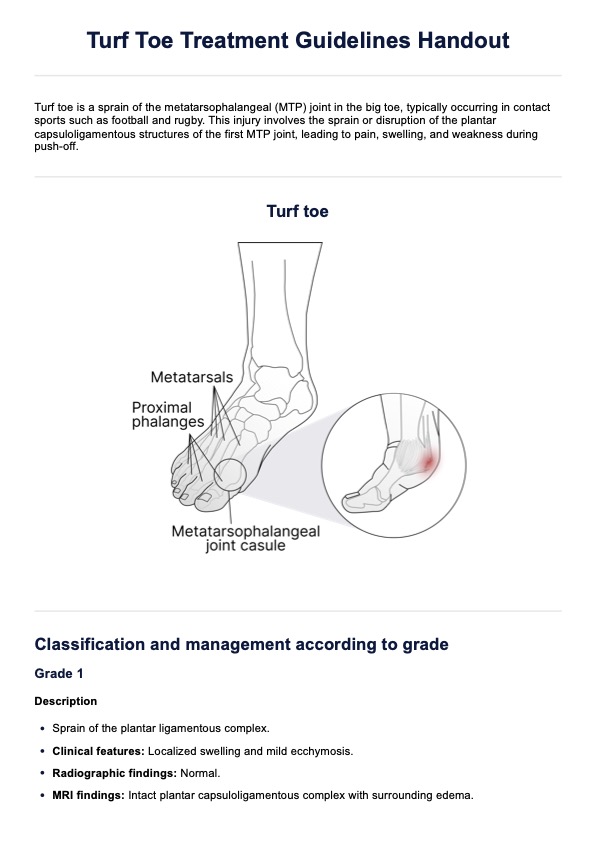
Turf toe treatments
Turf toe is a painful condition that requires proper treatment to ensure a full recovery and prevent further injury. Depending on the severity of the turf toe injury, different treatments may be recommended. Here, we discuss the most effective methods to treat turf toe and manage its symptoms.
Rest and immobilization
The first step in treating turf toe is often rest and immobilization. When a turf toe injury occurs, it is crucial to avoid activities that can worsen the condition. Resting the injured foot and keeping weight off the big toe joint can help reduce pain and inflammation. In some cases, a walking boot may be used to immobilize the toe and allow the metatarsophalangeal joint to heal. Grade 1 injuries generally require 1-2 weeks of rest, while Grade 2 injuries may need 4-6 weeks. Grade 3 injuries might necessitate immobilization for up to 8 weeks or more, followed by gradual return to activities.
Ice and compression
Ice and compression are standard treatments to manage the symptoms of turf toe. Applying ice to the injured foot can help reduce swelling and alleviate pain. Using a compression bandage can also minimize swelling by preventing fluid buildup in the affected area. These methods are best applied immediately after the injury occurred and continued for two to three weeks as needed.
Physical therapy
Physical therapy plays a significant role in the recovery process for turf toe. A physical therapist can design a rehabilitation program that includes exercises to improve the range of motion and strengthen the muscles around the big toe joint. This can help restore function and prevent future injuries. Physical therapy is especially important for athletes and individuals with more severe injuries who require a structured recovery plan.
Medication and pain management
Over-the-counter pain relievers such as ibuprofen can help manage pain and reduce inflammation associated with turf toe. In more severe cases, a doctor specializing in sports medicine may prescribe stronger medications to alleviate pain and assist with recovery. Anti-inflammatory medications can be particularly helpful in managing swelling and pain in the early stages of the injury.
Surgery
Surgery is rarely needed but may be considered for severe injuries or cases where other treatments have failed. Surgical intervention aims to repair the damaged ligaments and soft tissue around the metatarsal bone and the MTP joint, ensuring the big toe can function correctly. Indications for surgery include large capsular avulsion with joint instability, retraction of sesamoids, sesamoid fracture, traumatic hallux valgus deformity, chondral injury, cock-up toe deformity, intra-articular loose body, and failure of conservative management. Post-surgery, a period of immobilization and physical therapy will be necessary to regain full range of motion.
Preventive measures
Preventing turf toe involves wearing appropriate footwear, particularly when playing on artificial turf. Athletes should wear shoes with proper support and cushioning to protect the big toe joint. Strengthening and flexibility exercises can also help maintain the stability of the toe joint, reducing the risk of injury. Ensuring proper warm-up before activities and avoiding sudden changes in direction or excessive push-off movements can also help prevent turf toe.