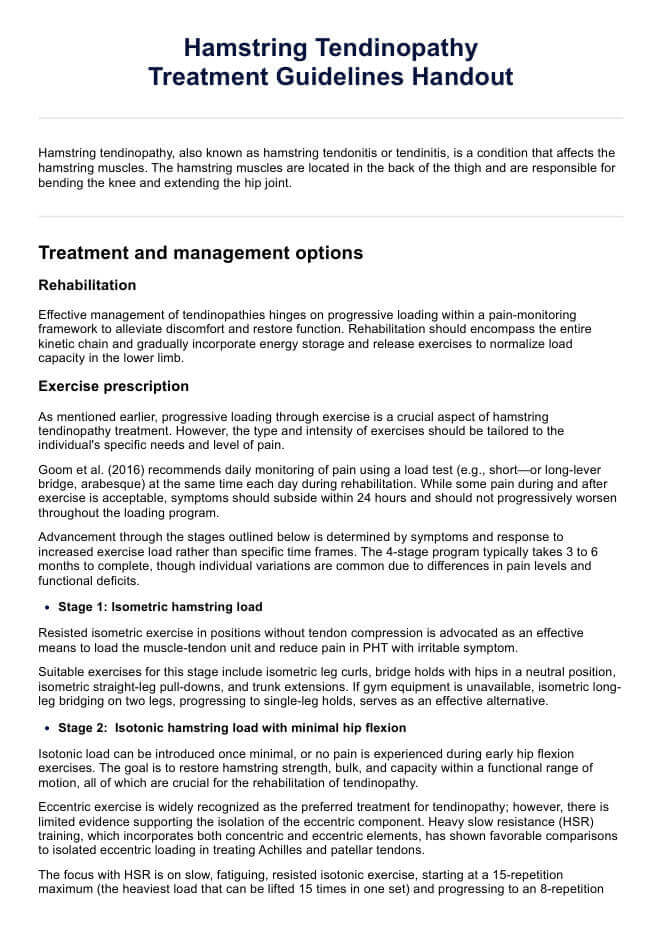
How to manage and treat hamstring tendinopathy
Managing and treating hamstring tendinopathy requires a combination of rest, rehabilitation exercises, and proper training techniques:
Rest
The first step in managing any injury is to give the body time to rest and heal. This means avoiding any activities that aggravate the hamstring tendon.
Exercise progression
Once the initial pain and inflammation have subsided, it is important to gradually reintroduce exercises that strengthen the hamstring muscles. This should be done under the guidance of a physical therapist or qualified trainer. The progression of exercises should be slow and steady, increasing in intensity and difficulty over time.
Eccentric strengthening exercises
Eccentric strengthening exercises involve lengthening the muscle while it contracts, which has been proven to be effective in treating tendon injuries. These types of exercises can include eccentric leg curls, squats, and deadlifts.
Foam rolling and stretching
Foam rolling can help to release tension and tightness in the hamstring muscles, which can contribute to tendinopathy. Stretching exercises can also help to improve flexibility and range of motion.
Proper training techniques
Many cases of hamstring tendinopathy are caused by overuse or improper training techniques. It is important to listen to your body and not push through pain during workouts. Gradually increasing intensity and incorporating rest days into your training schedule can also help prevent future injuries.
Other treatment options
In addition to exercise and rest, there are other treatment options that may be beneficial in managing hamstring tendinopathy. These include:
- Anti-inflammatory medication: Non-steroidal anti-inflammatory drugs (NSAIDs) can help to reduce pain and inflammation.
- Physical therapy: A physical therapist can assist with developing a personalized exercise plan and providing manual therapy techniques to aid in healing.
- Corticosteroid injections: In severe cases, corticosteroid injections may be recommended by a healthcare professional to reduce pain and inflammation.
- Surgery: In rare cases where conservative treatments have not been successful, surgery may be necessary to repair the damaged tendon.