




What does Gratitude in Recovery entail?
When individuals experience personal hardships, they may spiral into depression and develop unhealthy dependencies on substances like alcohol or drugs. This downward spiral can lead them to lose hope and disregard the positive aspects of life that used to bring them joy.
In recovering from substance abuse and dependence, healthcare professionals must emphasize the importance of gratitude. Patients can find renewed purpose in life by cultivating a sense of gratitude. They can recognize the value of their existence, the opportunity to lead a normal life after recovery, and the presence of loved ones who care for them.
Gratitude plays a significant role in the recovery journey, giving patients a reason to move forward. By acknowledging the people and things they are grateful for, individuals in recovery can shape their future and let go of self-criticism. They can take gradual steps towards self-improvement, strengthen existing relationships, establish new connections, and stay motivated to achieve their goals. Moreover, gratitude acts as a protective barrier against relapse, as it not only provides direction but also promotes emotional well-being.
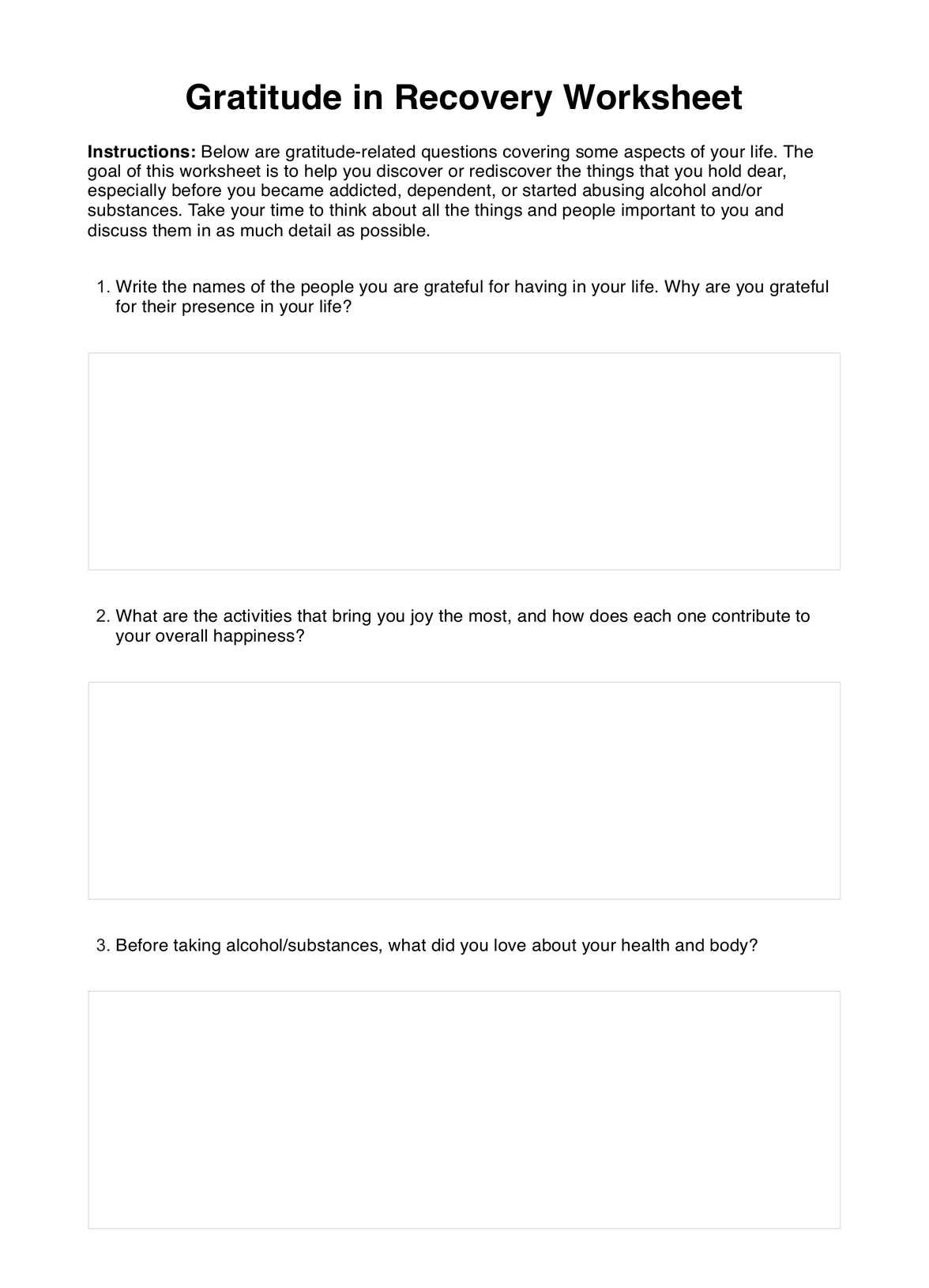
To assist patients in rediscovering gratitude, healthcare professionals can introduce the . This resource guides individuals to reflect on their lives and identify the people and things they appreciate, helping them shift their perspective and find solace in gratitude.









