









What is a General Self-Efficacy Scale (GSE)?
Self-efficacy is the belief we have in our ability to accomplish tasks, reach goals, and overcome obstacles. It is a crucial component of personal growth and achievement, as it influences our motivation, effort, and persistence in facing challenges.
According to the Self-Efficacy Theory, a person's self-efficacy can significantly impact motivation, behavior, and emotional well-being. The higher a person's self-efficacy, the more likely they are to set challenging goals, persevere in the face of obstacles, and view failures as learning opportunities.
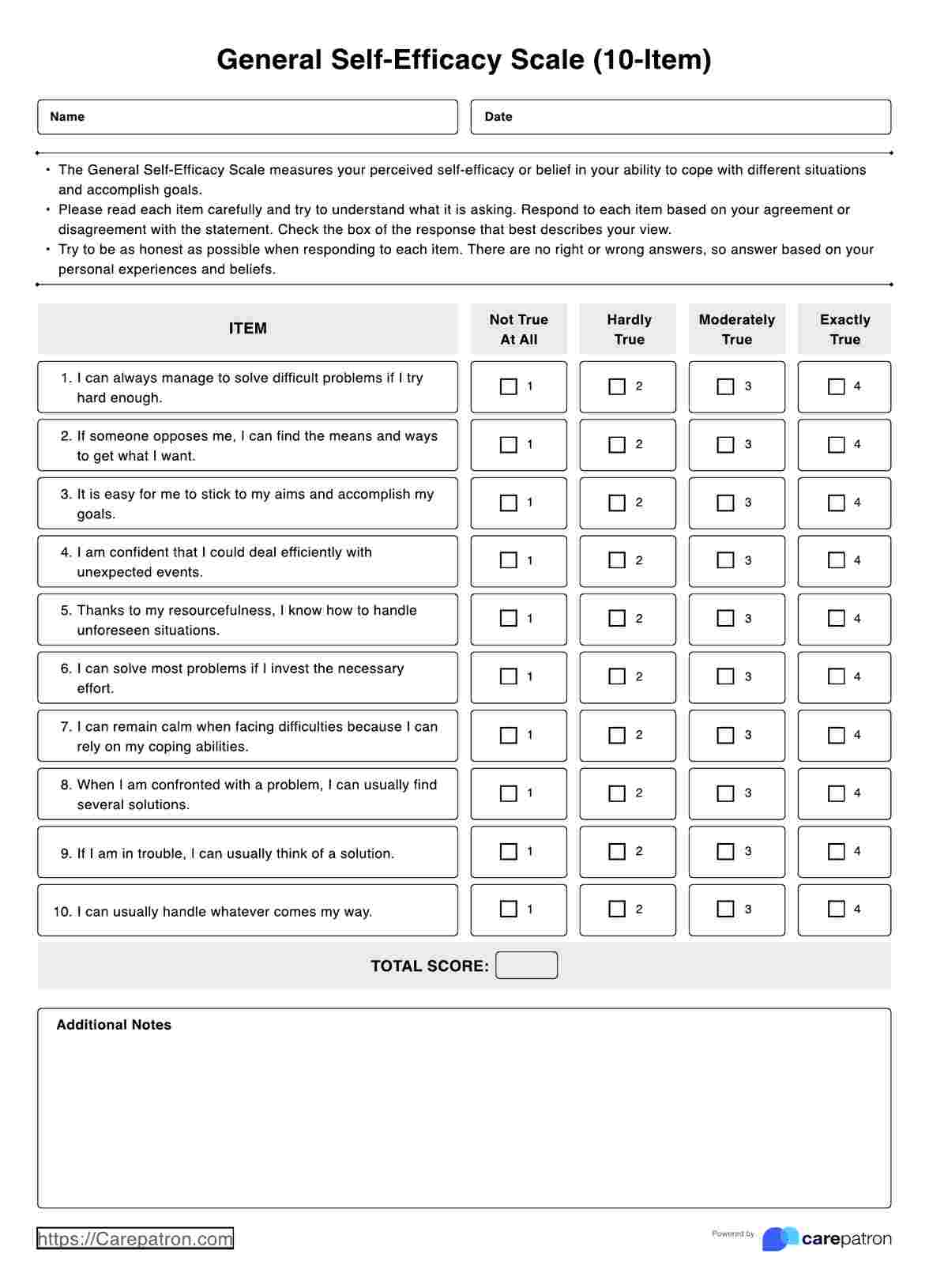
Healthcare professionals, especially mental health providers, use the (GSE) to measure an individual's perceived self-efficacy in handling difficult situations. This 10-item scale helps assess the degree to which people believe they can cope with challenging tasks and overcome obstacles.
Developed in 1981 by Matthias Jerusalem and Ralf Schwarzer, the GSE has been used for over thirty years and is one of the most commonly utilized scales for measuring self-efficacy. The GSE has been applied in research on physical health, academic performance, and mental health.
The GSE presents an individual with a series of statements describing complex situations. The patient then rates their confidence in their ability to handle the situation on a scale from 1 to 4. The possible scores range from 10 to 40, with higher scores indicating greater self-efficacy.
There is also an 8-Item version of the GSE created in 2001 by psychologist Gilad Chen and their team. This version is meant to be a shortened version of the original 10-item scale.









