




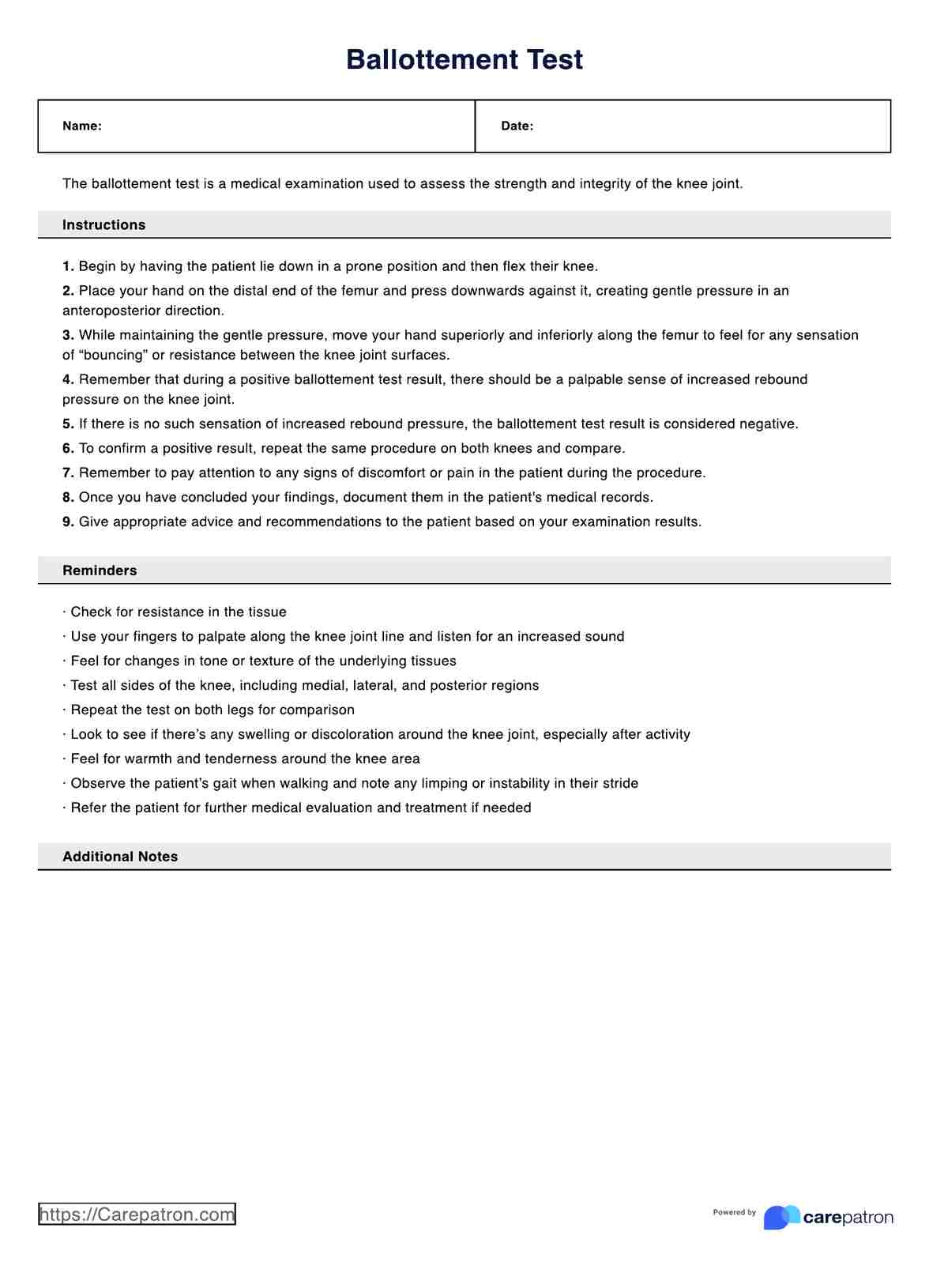




What is a Ballottement Test?
Knee pain occurs for various reasons, including sprains and strains, tendonitis, arthritis, bursitis, and ligament injuries. Healthcare professionals use the ballottement test to get a clearer picture of the knee's condition.
This assessment helps detect abnormalities in the soft tissue structures of the knee, including ligaments and muscles. It also determines if there is any fluid buildup around the knee joint, knee effusion, and knee swelling.
To perform the test, the healthcare professional places one hand on the patient's lower leg just above the knee joint. With their other hand, they use upward pressure on the patella or kneecap. If fluid is present around the knee joint, a "bouncing" will be felt when their hands are moved up and down.
A positive test result occurs when a "bouncing" sensation is felt during the exam. This indicates that there could be fluid buildup around the knee and ligament damage, or there could be knee effusion or knee swelling. However, a positive test result is not a definitive diagnosis. The healthcare professional recommends imaging tests (MRIs or X-rays) for further evaluation.









