




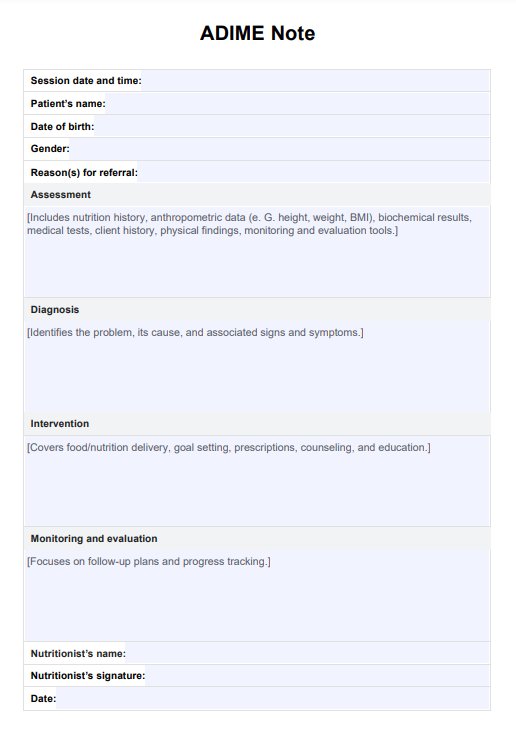




What is an ADIME note?
ADIME is an acronym that dietitians and nutritionists use to format their clinical notes during the Nutrition Care Process (NCP) for better care. They assess a client's nutrition or diet health and contain valuable information to make appropriate diagnoses and intervention plans. ADIME stands for Assessment, Diagnosis, Intervention, and Monitoring and Evaluation, which form the four main sections of the ADIME notes. Let's take a look at what each of these headings means.
Assessment
The nutrition assessment section is for the information you gather on your client. This might include:
- Client’s social and family history
- Client's food/nutrition-related history
- Client’s medical history relevant to their diet/nutrition
- Anthropometric measurements such as height, weight, BMI, arm circumference, past weight history, and usual body weight
- Results of medical tests, biochemical data, and other nutrition-focused physical findings
- Vital signs such as resting heart rate or other biochemical measurements
You can also include subjective data, such as your patient’s feelings or self-reporting of their history, and objective data, such as measurements or lab results.
Diagnosis
The nutrition diagnosis section is for you to write your conclusion of your client’s primary nutritional concern. This should be supported by evidence gathered in the assessment section to yield a more meaningful medical diagnosis.
Intervention
The nutrition intervention section is for your client's plan. Essentially, it asks what steps you recommend for your client to address their diagnosis, whether inadequate oral intake, nutrition support with oral nutrition supplements, or having limited nutrition-related knowledge. Typical categories of nutrition interventions might include food/nutrient delivery, goals, nutritional prescriptions, nutrition counseling, or nutrition education.
Monitoring and evaluation
The final section, nutrition monitoring and nutrition evaluation, sums up what you will review at your next appointment and how you will monitor your client’s progress. One example of conducting evaluation is utilizing tools like the Nutrition Focused Physical Exam (NFPE), which aids in evaluating changes in muscle or fat related to weight loss.
You might sometimes see these sections split into five sections or with sub-headings under the main ADIME headings. To keep this template simple, we have provided the four widely recognized ADIME headings and left enough space for you to write your nutrition notes in your preferred style.









