



What is a Postpartum Depression Treatment Plan?
Postpartum depression is a serious condition that can affect new mothers after childbirth. It is characterized by intense sadness, hopelessness, guilt, and difficulty bonding with the baby. It can also include physical symptoms such as insomnia, fatigue, body aches, and appetite changes. The exact cause of postpartum depression is unknown, but risk factors include a history of depression, lack of social support, and significant life changes.
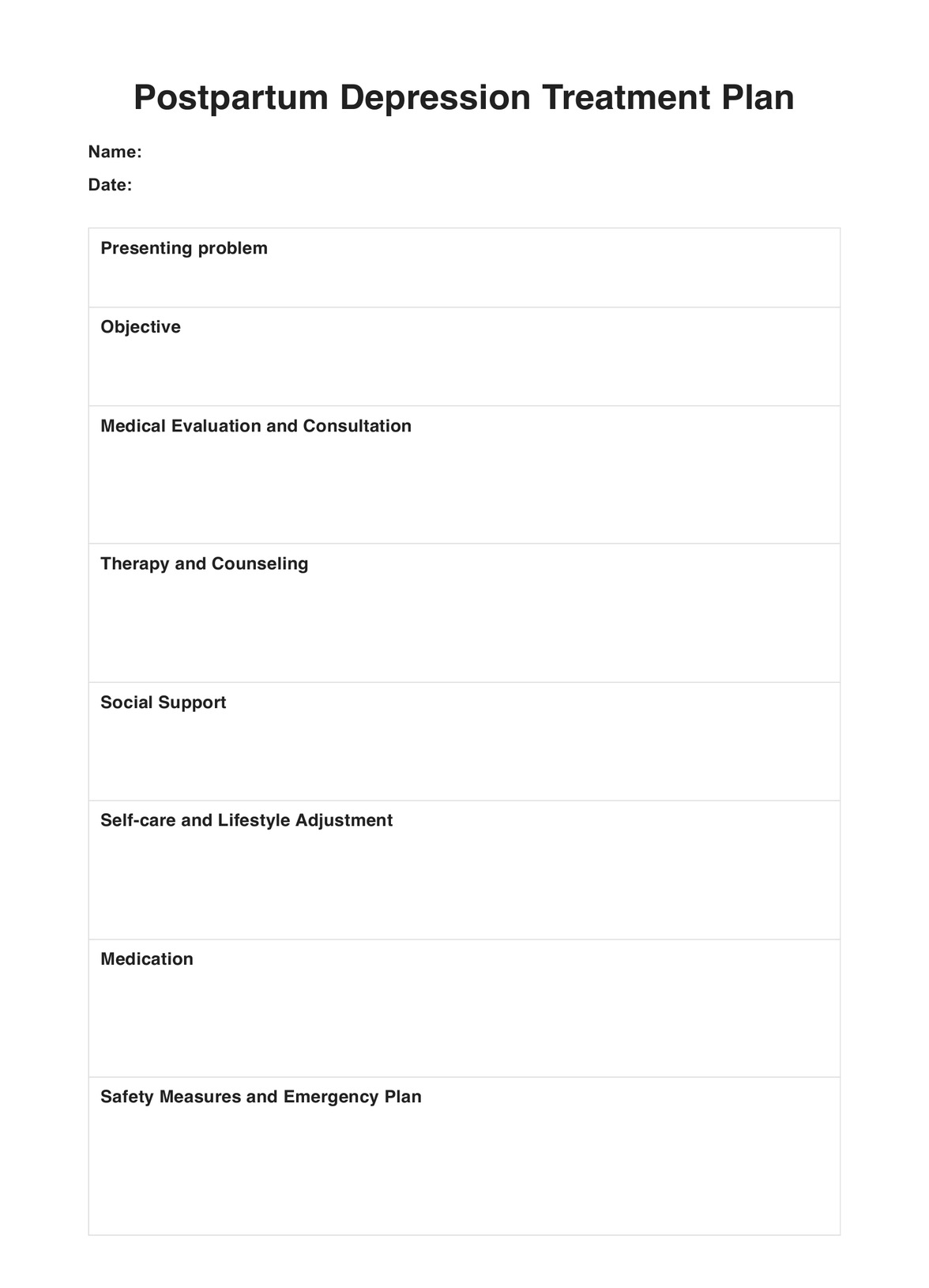
Depression treatment plans are used to alleviate many of the symptoms that accompany major depressive disorder, as well as other forms of depression. In which case, a Postpartum Depression Treatment Plan is a comprehensive plan that outlines the steps and strategies healthcare providers can take to help their clients manage their postpartum depression. Generally, any treatment plan template should include psychological, social, and medical support. The goal is to help new mothers understand their emotions and regain control.
Treatment for postpartum depression can look a little different for everyone. Depending on your symptoms and severity level, you may be recommended one of the following treatments, or a combination of multiple.
Psychotherapy
Talking through your problems with a psychologist, psychiatrist, or other mental healthcare professional, may reduce the severity of your postpartum depressions symptoms. Within psychotherapy, there are various types of therapy. This may include talk therapy, cognitive behavioural therapy (CBT), or interpersonal psychotherapy. Through these options, you can discuss your concerns, and create action plans to build a cope with your feelings. Postpartum depression can be alleviated, and it is also very common.
Antidepressants
For many women, medication is a great way to reduce postpartum depression symptoms. Antidepressants are very common, and can help improve symptoms over time. This is in addition to antipsychotic medicines, SSRIs, mood stabilizers, and more.