When would you use this Form?
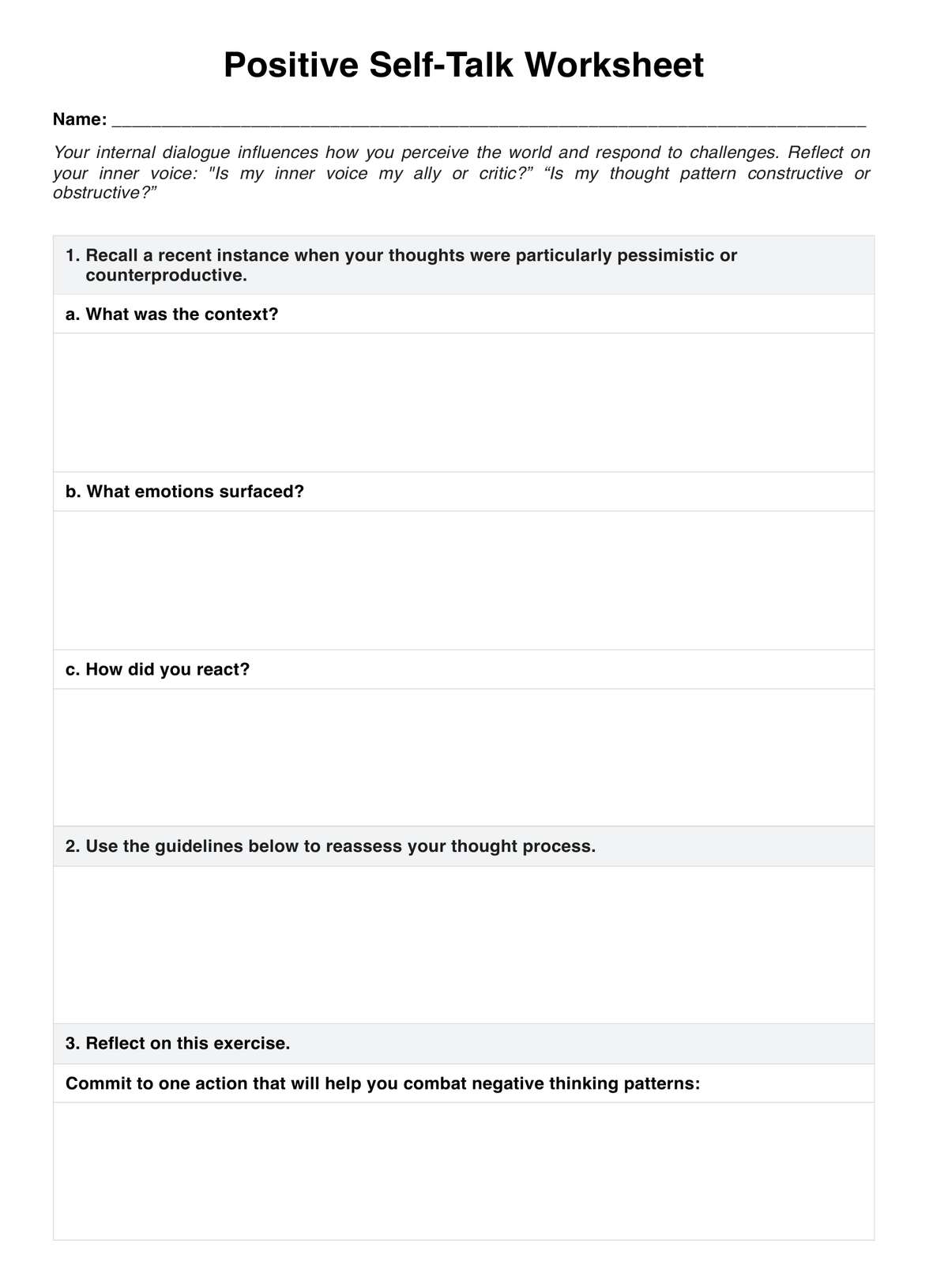
Understanding and navigating our internal dialogue is pivotal in determining how we interact with the world around us. The Positive Self-Talk Worksheet acts as a bridge, helping us traverse from self-critical thoughts to more constructive, uplifting narratives. Different scenarios and life events accentuate the need for this tool, ensuring that we remain balanced, understanding, and resilient amidst challenges. Let's delve deeper into these scenarios:
1. Career Setbacks:
Job Loss: Losing a job can significantly blow one's self-esteem. It's easy to internalize this event, questioning one's worth and abilities. The worksheet can help distill such feelings, separating external circumstances from one's self-worth and fostering a proactive mindset.
Missed Promotions: When overlooked for a promotion, feelings of inadequacy may arise. The tool guides individuals to understand such emotions and reframe their perspective, focusing on future opportunities and self-improvement.
Negative Feedback: Constructive criticism is valuable, but it can be hard to digest. The worksheet lets individuals process the feedback healthily, discerning the actionable advice from potentially harmful self-deprecating thoughts.
2. Personal Challenges:
Breakups: Ending a relationship can lead to a maelstrom of emotions, with individuals often blaming themselves. The worksheet aids in navigating this emotional terrain, emphasizing self-love and growth.
Disagreements with Loved Ones: Conflicts can trigger negative self-talk, especially if one feels at fault. The tool helps users process these feelings, encouraging empathy and understanding for themselves and others.
3. Academic Struggles:
Academic Pressure: Exams, assignments, and expectations can be overwhelming. The worksheet assists students in managing stress, fostering a balanced approach toward academics.
Disappointing Grades: Rather than spiraling into self-criticism, students can utilize the worksheet to process their feelings, strategize improvements, and maintain a positive outlook.
Peer Interactions: Social dynamics in academic settings can be challenging. The worksheet helps students navigate feelings of exclusion, misunderstandings, or conflicts, promoting a healthy self-image and constructive social interactions.
4. Health and Body Image Concerns:
Chronic Illnesses: Living with a chronic condition can sometimes bring about feelings of inadequacy or "being different." The worksheet aids in processing these emotions, emphasizing self-compassion and acceptance.
Body Image Struggles: Many grapple with self-image in a world of ever-changing beauty standards. The tool offers a space to confront and reframe such concerns, championing self-love and acceptance.
5. General Self-Reflection:
Personal Growth: The worksheet can regularly check one's emotional well-being for those on a self-improvement journey, ensuring that personal growth aligns with positive self-talk.
Life Transitions: Events like relocating, starting a new phase in life, or any significant change can stir a mix of emotions. The worksheet aids in processing these feelings, grounding individuals in positive reflections.
Each scenario underscores the adaptability and relevance of the Positive Self-Talk Worksheet, reaffirming its role as a cornerstone in nurturing mental well-being across diverse life situations.