



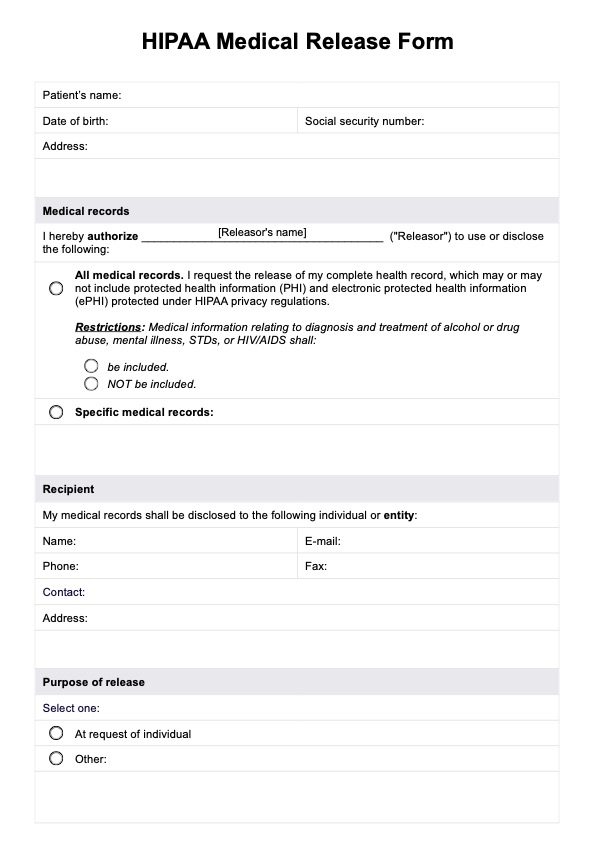




What is a HIPAA Medical Release Form?
A HIPAA Medical Release Form, or HIPAA authorization, allows a patient to authorize a health care entity to disclose protected health information (PHI) to designated third parties. It ensures compliance with HIPAA privacy regulations while facilitating treatment, health care operations, or payment processes.
This form includes key details such as patient identification, the entity authorized to share PHI, the designated record set, the address of the receiving party, the purpose of disclosure, and the patient's right to revoke authorization. Whether changing providers or engaging in clinical research, this document maintains the balance between privacy and essential data sharing.
Understanding this authorization process is crucial for patients, providers, and caregivers to uphold privacy while ensuring seamless connections in medical communication.
Key components of a HIPAA Medical Release Form
According to the U.S. Department of Health & Human Services (n.d.), a valid HIPAA authorization must include specific elements such as patient identification, purpose of disclosure, and expiration details. Below are the essential elements typically included in this document:
- Patient information: Full name, date of birth, and contact details of the individual authorizing the release of medical records.
- Authorized entity: The healthcare provider, facility, or organization permitted to disclose PHI.
- Receiving party: The individual, organization, or institution designated to receive the disclosed information.
- Scope of disclosure: Specific medical records or information categories authorized for release, such as lab results, imaging reports, or treatment history.
- Purpose of disclosure: The reason for sharing the information, including treatment coordination, legal proceedings, insurance claims, or research participation.
- Expiration date: A defined period or event after which the authorization expires.
- Revocation clause: The patient has the right to withdraw consent at any time, with instructions on how to do so.
- Signature and date: The patient or legal representative's signatures and the date of authorization are required.
Properly completing this form ensures legal compliance and facilitates a streamlined exchange of critical health information while maintaining patient privacy and security.









