





What is a HIPAA Checklist?
A Health Insurance Portability and Accountability Act (HIPAA) Checklist is a comprehensive tool designed to help healthcare organizations and entities ensure compliance with the regulations outlined in the HIPAA legislation. Enacted in 1996, HIPAA aims to safeguard the privacy and security of individuals' health information and establishes standards for the electronic exchange of health information.
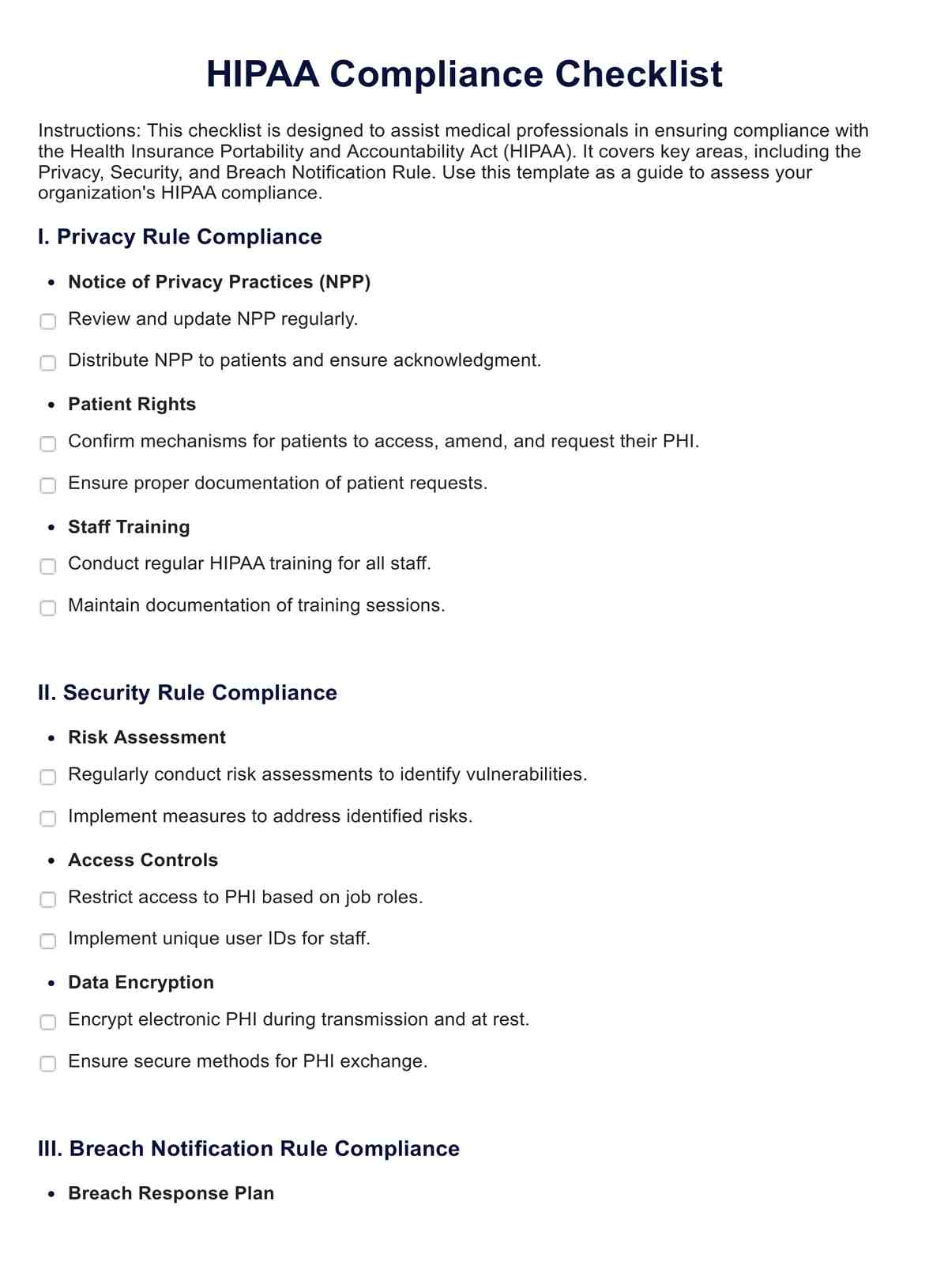
A HIPAA compliance checklist ensures healthcare professionals meet the necessary standards. It covers critical aspects like administrative, physical, and technical safeguards. It typically encompasses various aspects of the law, including privacy, security, and breach notification rules. These rules collectively set standards for HIPAA-covered entities, including health plans and healthcare providers handling sensitive patient information (Alder, 2024).
A typical HIPAA compliance requirements checklist covers the following:
- Privacy rule compliance: The HIPAA privacy rule ensures that policies and procedures are in place to protect patients' health information privacy.
- Security rule compliance: A HIPAA Security Rule Checklist ensures electronic protected health information (e-PHI) security and confidentiality. This rule establishes standards for safeguarding sensitive patient data and outlines the necessary measures to protect against potential security threats (U.S. Department of Health and Human Services, 2019).
- Breach notification rule compliance: Establish procedures to detect and respond to data breaches and notify affected individuals and relevant authorities.
- Employee training: Providing ongoing training to staff members regarding HIPAA regulations, ensuring they know their responsibilities in maintaining patient privacy.
- Risk assessment: Conduct regular risk assessments to identify and mitigate potential vulnerabilities in handling health information.
- Business associate agreements: Ensuring that appropriate agreements are in place with vendors and partners who have access to PHI, holding them accountable for maintaining the confidentiality and security of the information.
Regularly using a HIPAA Checklist helps organizations identify gaps in compliance, address potential risks, and avoid HIPAA violations. It is a valuable tool in the healthcare industry's efforts to remain HIPAA-compliant, safeguard patient information, and maintain trust in handling sensitive health data.









