







What is sacroiliac joint dysfunction?
Sacroiliac joint dysfunction refers to improper movement of the joints at the bottom of the spine that connect the sacrum to the pelvis. This condition can cause significant lower back and leg pain, often mimicking other conditions such as herniated discs or hip problems. Accurate diagnosis is essential, as the sacroiliac joint is responsible for transmitting the weight and forces of the upper body to the lower limbs.
Sacroiliac joint dysfunction can arise from various causes, including trauma, arthritis, pregnancy, and biomechanical issues such as leg length discrepancy or scoliosis. Common symptoms include localized pain in the lower back, buttocks, and thighs, sometimes extending down to the legs. The pain is often exacerbated by activities that stress the sacroiliac joint, such as standing up from a seated position, climbing stairs, or running.
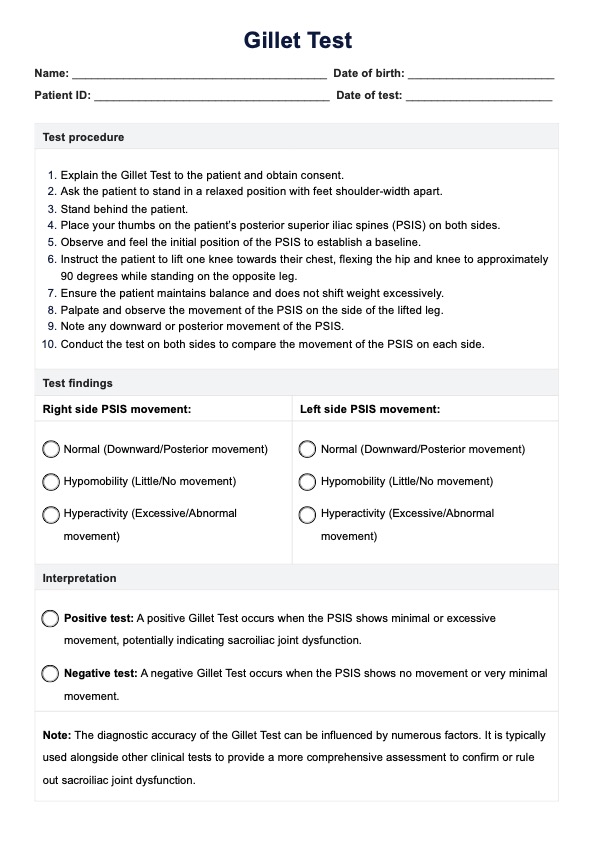
Healthcare professionals use a combination of clinical tests to diagnose sacroiliac joint dysfunction. Pain provocation tests, such as the thigh thrust and palpation tests, are commonly used to assess the presence and severity of sacroiliac joint pain. A positive test result in these assessments can help confirm the diagnosis. Other tests of the sacroiliac joint include the Gillet Test, which evaluates the mobility and function of the joint, and various imaging studies that can further aid in identifying the underlying cause of the dysfunction.
How to diagnose sacroiliac joint dysfunction
Diagnosing sacroiliac joint dysfunction requires a comprehensive approach, incorporating various clinical tests to identify the source of buttock and lower back pain accurately. Among the most commonly used tests of the sacroiliac joint are pain provocation tests, such as the thigh thrust test, which involve applying controlled pressure to specific areas to elicit pain responses.
Palpation and palpatory clinical tests are also essential, as they help assess tenderness and pain in the sacroiliac region. One widely used palpation test is the Stork Test, also known as the Gillet Test, which evaluates sacroiliac joint mobility by observing the movement of the posterior superior iliac spines during single-leg stance.
However, note that no single test can definitively diagnose sacroiliac joint dysfunction; therefore, a combination of tests is often used. Typically, a diagnosis is considered more reliable if at least three out of four tests of sacroiliac joint yield positive results. These tests include pain provocation tests, palpatory clinical tests, and functional assessments like the Gillet Test. In cases with inconclusive test results, imaging studies may rule out other conditions.
Physical therapy plays a crucial role in diagnosing and treating sacroiliac joint dysfunction, helping improve joint mobility and alleviate pain. However, it is essential to distinguish between symptomatic and asymptomatic patients, as some individuals may exhibit positive test results without experiencing any pain or dysfunction.









