




What are the goals of smoking cessation therapy?
According to the World Health Organization (2023), cigarette smoking is the leading preventable cause of death in the globally. Tobacco use significantly raises the risk of numerous acute and chronic diseases, including various forms of cancer. Smoking cessation therapy aims to help smokers overcome nicotine addiction and quit smoking by addressing both the physical dependence on nicotine and the behavioral and psychological aspects of smoking. Effective treatments can significantly increase the chances of quitting successfully compared to no treatment.
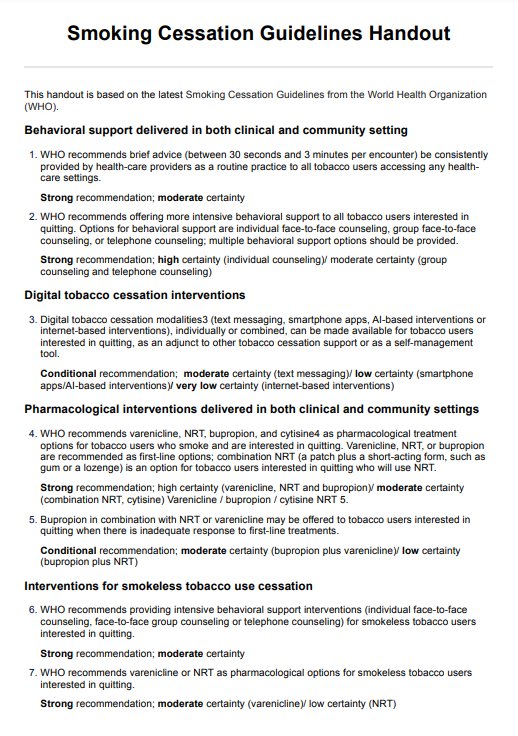
Quitting smoking reduces the risk of many adverse health effects, including poor reproductive outcomes, cardiovascular diseases, chronic obstructive pulmonary disease (COPD), and various cancers. This improvement in health can enhance the overall quality of life and potentially add as much as a decade to life expectancy. Smoking cessation therapy typically involves a combination of pharmacological and behavioral support.
FDA-approved medications such as nicotine replacement therapy, bupropion, and varenicline help manage nicotine withdrawal symptoms, while various forms of counseling, including individual, group, and telephone sessions, provide essential coping strategies and emotional support.









