





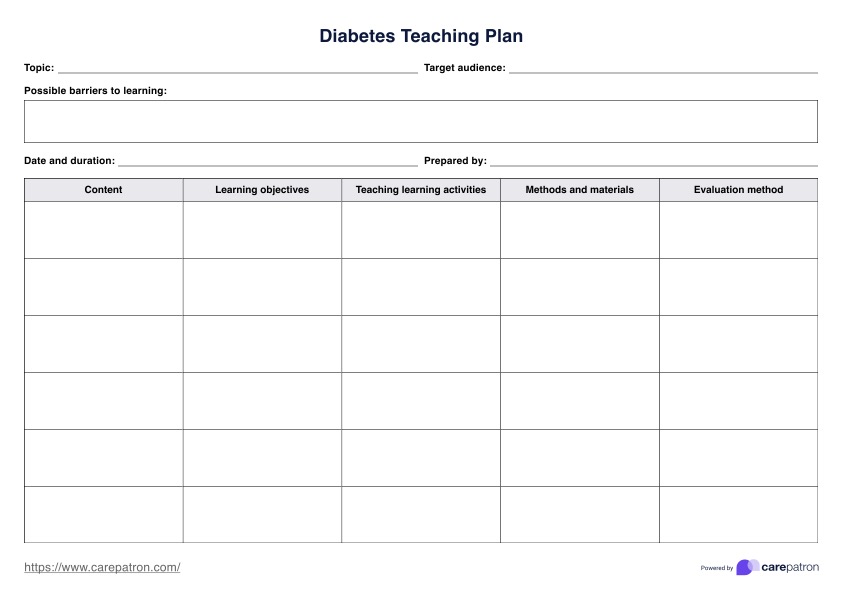




What is a Diabetes Teaching Plan?
Diabetes mellitus, commonly known as diabetes, is a complex metabolic disorder characterized by the body's inability to properly regulate low blood sugar levels, leading to elevated glucose levels in the bloodstream. Glucose, obtained from food, is the primary energy source for cells. Insulin, a hormone from the pancreas, helps cells absorb glucose for energy. In diabetes, insufficient or absent insulin disrupts this process, causing elevated blood sugar levels.
In 2021, 38.4 million Americans had diabetes, while 8.7 million adults were undiagnosed. With diabetes costing the U.S. $412.9 billion in 2022 (American Diabetes Association, 2023), teaching patients is vital to help them manage their health, prevent complications, and reduce its impact.
A Diabetes Teaching Plan is a helpful tool that guides healthcare professionals in teaching patients about diabetes. You can use it when teaching them ways to manage diabetes, like monitoring blood glucose levels, understanding risk factors, and making healthier lifestyle choices to achieve optimal blood glucose control.
The goal of diabetes patient education is to help patients understand their condition so they can make informed decisions about their care. As a healthcare professional, using this plan is crucial because it ensures you provide consistent, practical education that supports better self-management and long-term health outcomes for your patients.









