








What is dialectical behavior therapy?
Dialectical Behavior Therapy (DBT) is a well-researched cognitive-behavioral treatment approach designed to assist individuals who struggle with emotion regulation. Developed by psychologist Marsha Linehan, DBT aims to empower individuals to manage stress, regulate intense emotions, enhance interpersonal relationships, and live mindfully.
DBT operates on the "dialectical tension" principle, which balances accepting feelings and the simultaneous need for change. This dual acceptance and change create a harmonious approach to addressing emotional difficulties.
The therapy is structured around four main components: mindfulness, interpersonal effectiveness, emotion regulation, and distress tolerance. Emotional regulation is a crucial part of DBT and consists of strategies to constructively understand, manage, and respond to emotions. By addressing myths and misunderstandings about emotions and providing tools to modify emotional responses, DBT leads to more balanced and resilient emotional lives.
DBT is particularly effective for conditions like borderline personality disorder, depression, eating disorders, and other mental health issues where emotion dysregulation is a core feature.
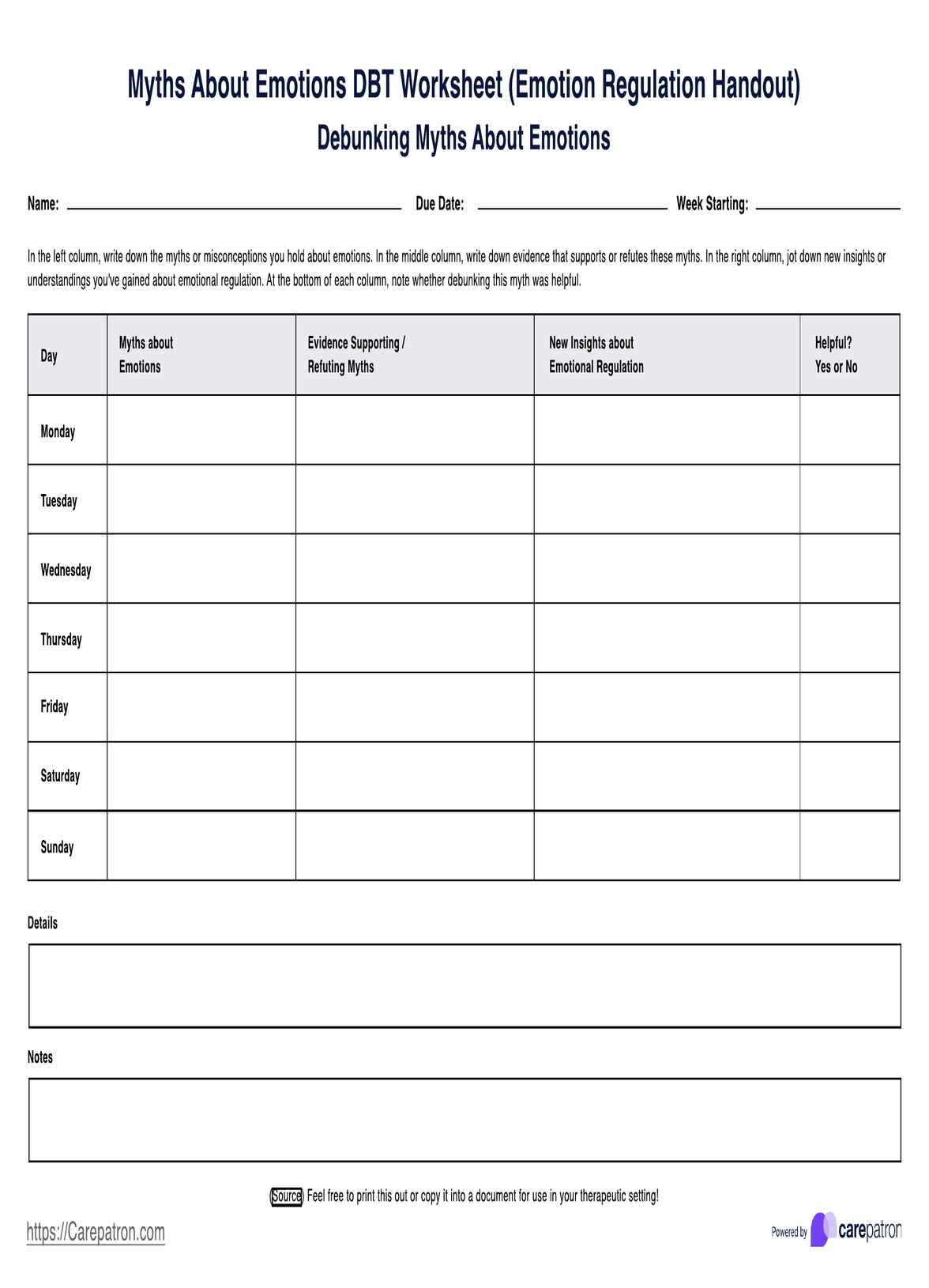
The is an invaluable tool within this therapeutic approach. It's used to help patients identify and challenge their emotional beliefs and behaviors, aligning with the therapy's goals of enhancing emotional understanding and regulation.
DBT's integration of acceptance and change and its emphasis on building practical skills make it a versatile and effective approach for many individuals seeking mental health support.
Printable Myths About Emotions DBT Worksheet
Download this Myths About Emotions DBT Worksheet to help clients effectively manage their emotions.









