








What is a codependency assessment?
Codependency is an emotional and behavioral condition characterized by excessive reliance on others for approval and a sense of identity. It often manifests in dysfunctional relationships where one person prioritizes another's needs over their own, potentially enabling addictive or harmful behaviors.
Codependency frequently intersects with addiction, particularly in dysfunctional families affected by substance abuse. Having codependent relationships may lead to other family members inadvertently enabling a family member's drug addiction or other harmful behaviors by consistently prioritizing the person struggling with addiction's needs over their own needs and their own life, in general.
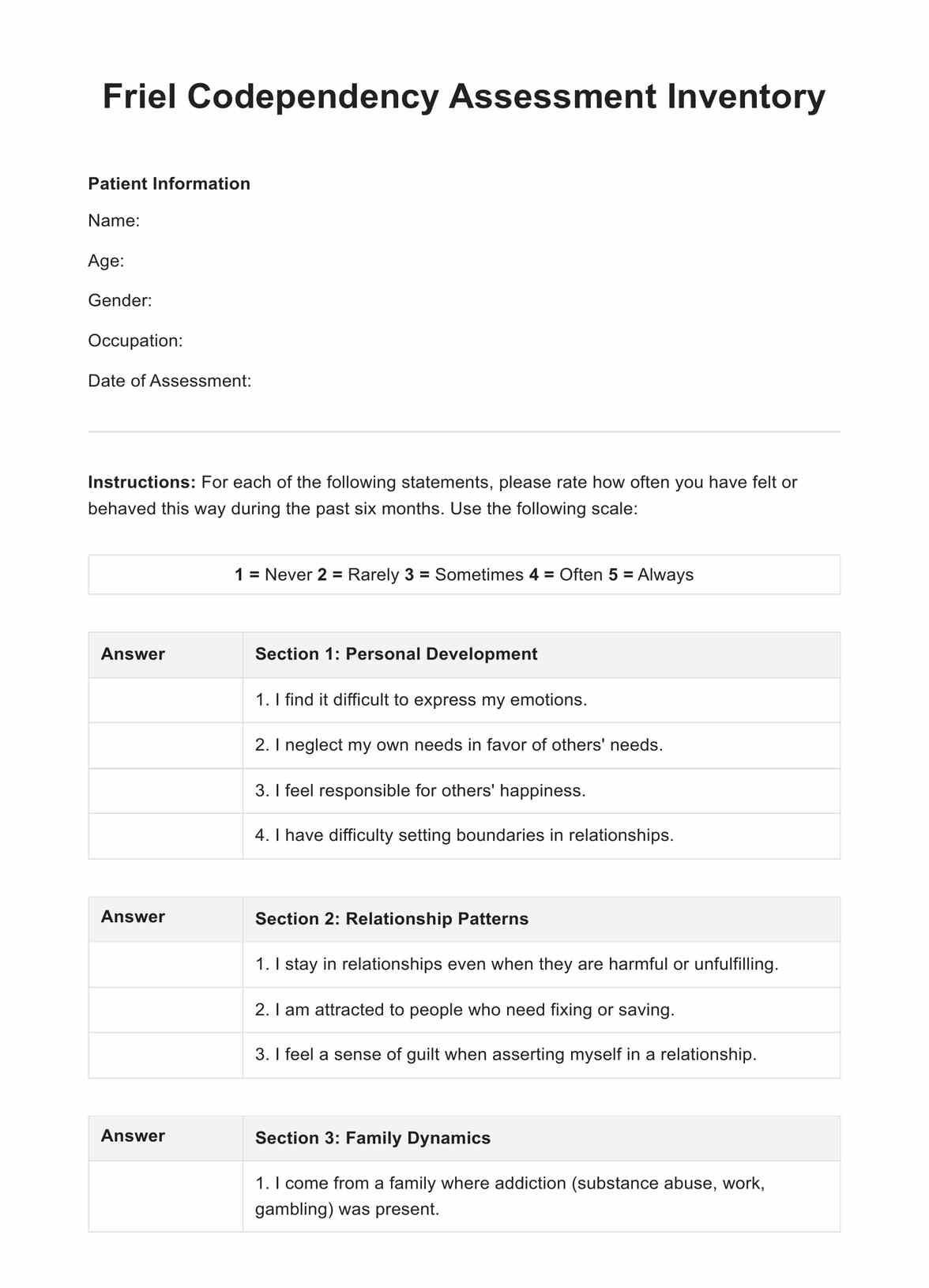
A codependency assessment is a tool used to evaluate an individual's tendencies toward codependent behavior and relationship patterns. The Friel Codependency Assessment Inventory, developed by John and Linda Friel, is one such tool widely used in clinical settings. It consists of 60 true/false questions that assess various aspects of codependency, including:
- Low self-esteem
- Boundary issues
- Difficulty expressing emotions
- Caretaking behaviors
- Control patterns
A codependency test is a valuable tool for helping practitioners understand and evaluate codependent behaviors, guide treatment, and promote self-awareness. Codependency Checklists, on the other hand, are also helpful resources for helping individuals reflect on their personal tendencies toward codependent behaviors and relationships.
When used appropriately, these tools can contribute significantly to exploring and addressing dynamics in a relationship, addiction tendencies, and underlying issues to overcome codependency.
You can refer to our codependency assessment guide and explainer video for a more comprehensive understanding of the codependency assessment.









