





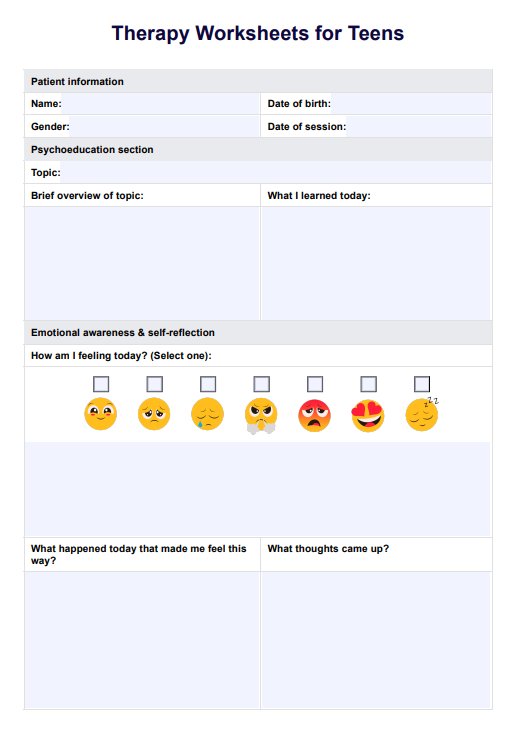




How therapy helps teenagers
Therapy plays a critical role in supporting the mental health of teenagers (World Health Organization, 2024). For mental health professionals working with adolescents, therapy offers a structured way to address common challenges such as emotional dysregulation, anxiety, depression, trauma, and difficulty in maintaining healthy relationships. Adolescence is characterized by ongoing neurological and emotional development, making early intervention and therapy tools especially relevant in clinical settings.
A key component of effective therapy with teens is helping them build self-awareness. Many teenagers struggle to articulate their feelings, and therapy creates a space for them to reflect on their emotions, behaviors, and thought patterns. By identifying negative thoughts and using techniques like cognitive restructuring, therapists help teens shift their thinking, which supports emotional regulation and improves decision-making skills.
Another important outcome is the development of self-compassion. Adolescents are often critical of themselves due to peer comparison or academic pressures. Therapy encourages perspective-taking and mindfulness practices, which allow teens to foster empathy toward themselves and others. This can be especially useful for students navigating social challenges and identity exploration.
Through therapeutic intervention, teens are also taught how to practice communication and stress management strategies (Alvord & Halfond, 2024). These therapy tools reduce the risk of maladaptive behaviors such as substance use or self-harm. Moreover, they prepare teens to become more resilient and adaptable in the face of change. Learning how to create and maintain healthy relationships becomes more attainable with guided support from trained therapists.
In addition to internal coping mechanisms, therapy provides additional support during critical developmental periods. Whether teens are struggling with academic expectations, peer conflict, or family issues, therapy offers new resources and guidance to help them navigate these complexities. A therapist can offer unbiased feedback grounded in psychological principles and evidence-based interventions.
Therapy equips kids and teens with tools that support their overall well-being. For practitioners, understanding how to apply these interventions effectively can enhance outcomes and contribute to long-term mental health improvement. Therapy helps teens make sense of their experiences, search for meaning in their identity, and build distress tolerance—crucial steps in their journey toward emotional stability.









