




What is psychopathy?
Psychopathy is a personality disorder characterized by a distinct set of traits related to how someone interacts with others, experiences emotions, and behaves. People with psychopathic tendencies often lack empathy, remorse, and guilt. They may have difficulty forming deep emotional connections and tend to be impulsive and engage in antisocial behavior (Hare & Neumann, 2008).
People with psychopathy may engage in pathological lying, promiscuous sexual behavior, and criminal versatility, displaying a failure to accept responsibility for their own actions.
It's important to note that psychopathy exists on a continuum, and individuals may exhibit varying degrees of psychopathic traits. Not all individuals with psychopathic tendencies engage in criminal behavior, but they may still experience significant difficulties in interpersonal relationships and emotional functioning.
What are psychopathic traits?
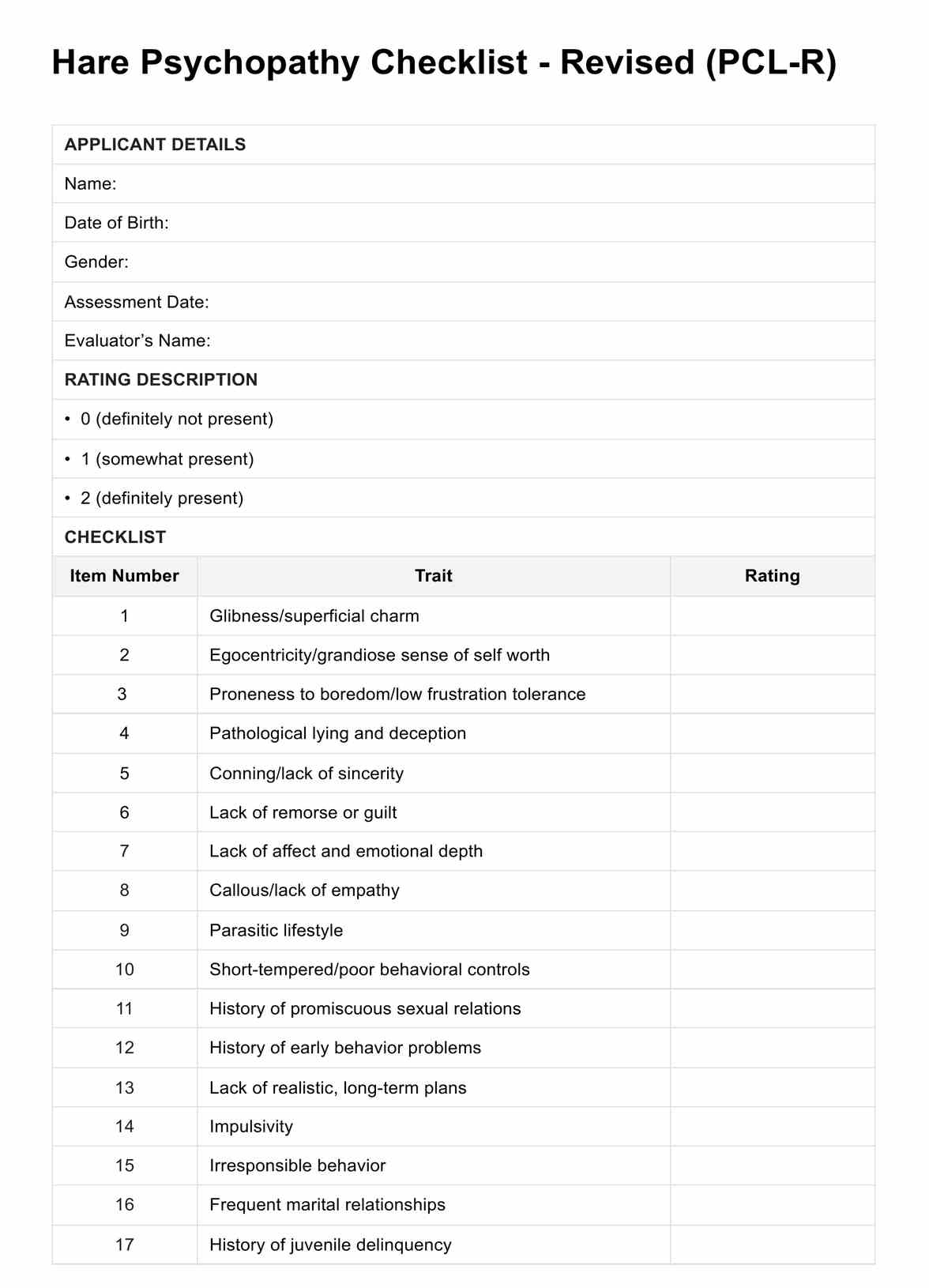
Psychopathic traits refer to a specific set of personality characteristics and behavioral patterns commonly associated with the disorder of psychopathy. These traits can be categorized into two main factors: interpersonal and affective traits and antisocial lifestyle and behavior.
Interpersonal and affective traits include the following:
- Superficial charm and a grandiose sense of self-worth
- Pathological lying and manipulation
- Lack of remorse or guilt
- Shallow or deficient emotional experiences
- Lack of empathy and concern for others
- Callousness and a lack of emotional depth
On the other hand, antisocial lifestyle and behavior are characterized by these psychopathic features:
- Impulsivity and poor behavioral controls
- Irresponsible and parasitic lifestyle
- Promiscuous sexual behavior
- Criminal versatility and a history of juvenile delinquency
- Early behavioral problems
- Failure to accept responsibility for own actions
- Revocation of conditional release or parole
Psychopathy vs. antisocial personality disorder
Psychopathy and antisocial personality disorder (ASPD) are related but distinct concepts. While there is an overlap between the two, they are not identical.
Clinical psychopathy is characterized by a distinct cluster of interpersonal, affective, and behavioral traits. Individuals with psychopathic tendencies often exhibit a grandiose sense of self-worth, violent behavior, poor behavioral controls, shallow affect, and a parasitic lifestyle.
It's important to note that while many individuals with psychopathy may exhibit antisocial tendencies and behavior, not all antisocial individuals are necessarily psychopaths. Psychopathy is a more specific and narrower construct than antisocial personality disorder (Sarkar, et al., 2011).
Antisocial personality disorder is a broader diagnostic category among the personality disorders defined by the Diagnostic and Statistical Manual of Mental Disorders (DSM-5) (American Psychiatric Association, 2013). ASPD is characterized by early behavior problems and a pervasive pattern of disregard for and violation of the rights of others, which may include:
- Failure to conform to social norms and laws
- Deceitfulness and manipulation
- Impulsivity and failure to plan ahead
- Irritability and aggression
- Disregard for the safety of self and others
- Irresponsibility and lack of remorse
While ASPD shares some antisocial behaviors and personality traits associated with psychopathy, it is a broader category that may or may not include the full range of interpersonal and affective traits associated with psychopathy.
It's important to note that the diagnosis of ASPD is based on specific criteria outlined in the DSM-5. At the same time, adult psychopathy is typically assessed using psychopathic personality inventory tools like the Hare Psychopathy Checklist-Revised (PCL-R).









