





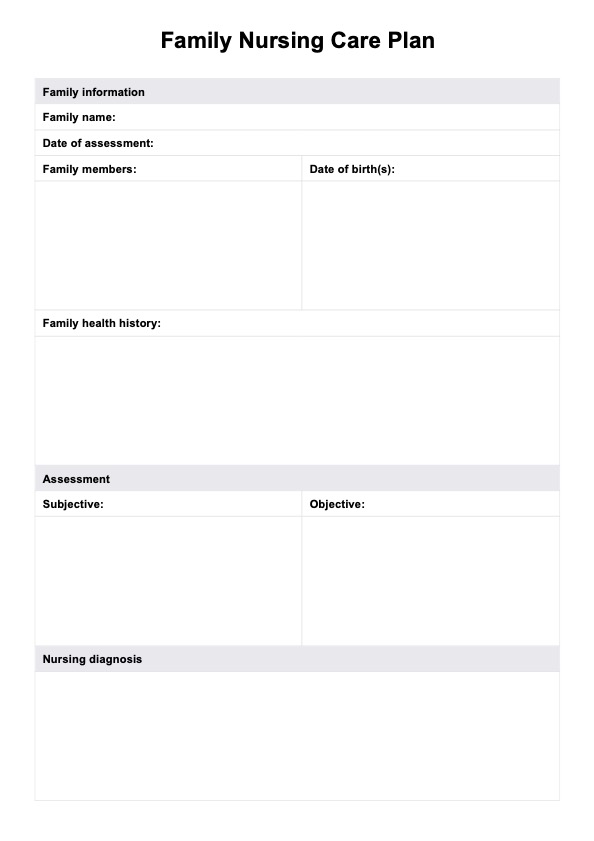




What is a Family Nursing Care Plan?
A Family Nursing Care Plan (FNCP) is a strategic document utilized in nursing practice to address the comprehensive health needs of families. Rooted in the nursing process, it involves a series of systematic steps, including assessment, diagnosis, planning, intervention, and evaluation, tailored to support the health maintenance of families. Unlike plans focusing on individual patients, the FNCP considers the collective health concerns and dynamics within the family unit.
In practice, this plan begins with a detailed assessment of the family's health, where information about health deficits and family resources is gathered. This step is crucial as it lays the foundation for all subsequent nursing interventions. The nursing diagnosis follows, identifying and prioritizing health issues based on data collected during the assessment. This diagnosis informs the creation of measurable and achievable goals to promote health and prevent disease.
The core of the FNCP lies in its nursing interventions. These are actions planned and executed by healthcare professionals to address the diagnosed health needs. Nursing interventions in an FNCP can be dependent, involving actions in collaboration with other healthcare professionals, and independent nursing interventions, which nurses can undertake on their own. Examples include educating the family on appropriate health actions and managing their health resources effectively.
Finally, the effectiveness of these interventions is evaluated periodically to ensure they are meeting the set goals. Based on this evaluation, adjustments are made to ensure that the FNCP remains relevant and effective in achieving health outcomes. This dynamic document is a vital tool in family nursing practice, enabling nurses to deliver comprehensive care that extends beyond the individual to foster healthier family environments.









