





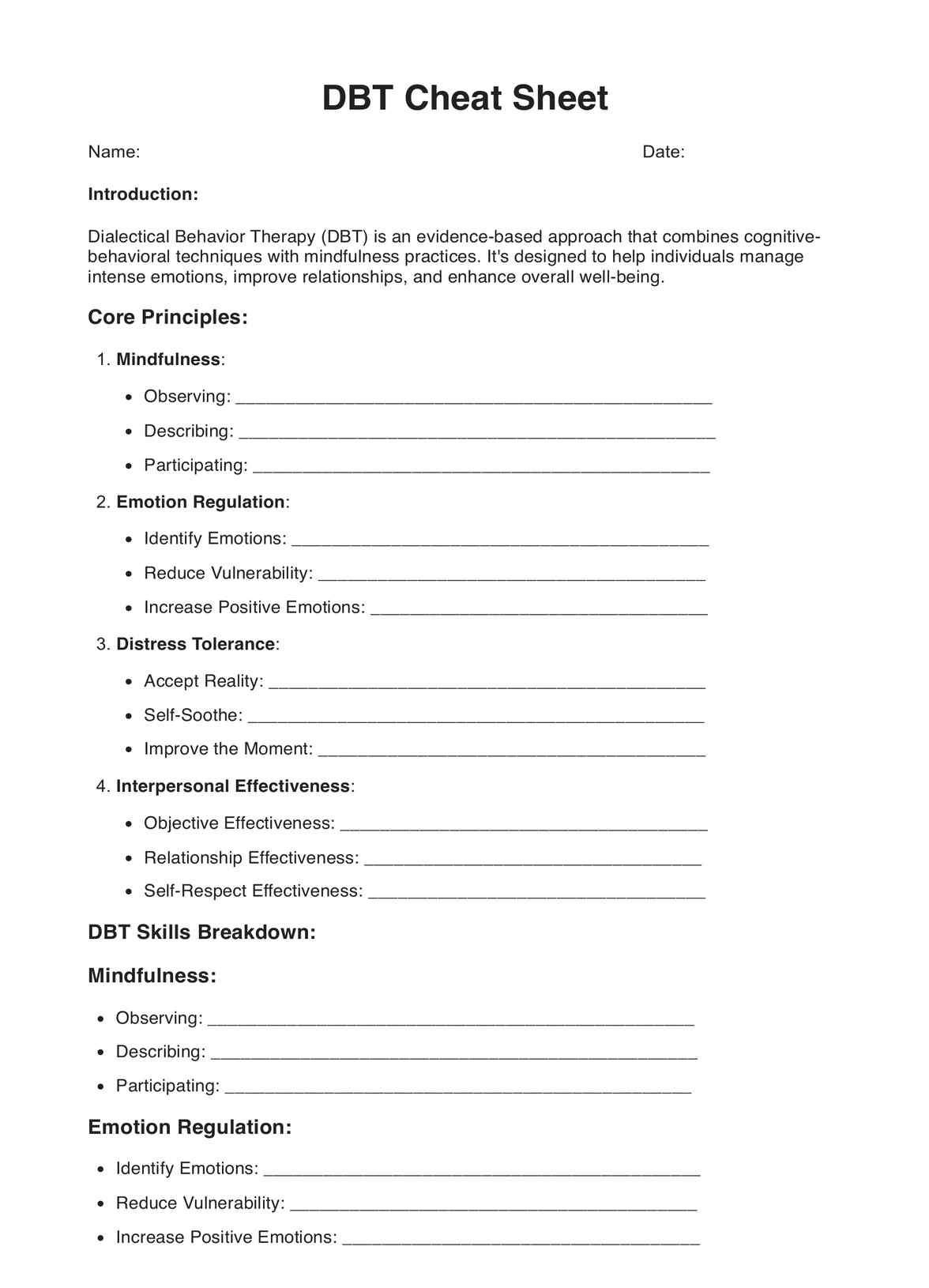




What is a DBT Cheat Sheet?
A DBT (Dialectical Behavior Therapy) Cheat Sheet is a concise and informative resource designed to provide quick reference and guidance on the principles, techniques, and concepts of Dialectical Behavior Therapy. DBT is a therapeutic approach that combines cognitive-behavioral techniques with mindfulness practices. It was initially developed to treat individuals with borderline personality disorder but has since been utilized for various emotional and behavioral challenges.
The DBT Cheat Sheet is a valuable tool for therapists, counselors, students, and individuals interested in understanding and implementing DBT strategies. This resource typically includes key components of DBT, such as:
- Core Principles: A summary of the foundational principles that underlie DBT, including mindfulness, emotion regulation, distress tolerance, and interpersonal effectiveness.
- Skills Breakdown: An overview of the specific skills taught in DBT, including descriptions and practical applications for each skill. These may encompass techniques for managing emotions, enhancing interpersonal relationships, and coping with distress.
- Therapeutic Strategies: Quickly explain the primary therapeutic strategies employed in DBT, such as validation, behavior chain analysis, and dialectical thinking.
- Mindfulness Exercises: Brief descriptions of mindfulness exercises and practices central to DBT, aimed at helping individuals become more aware of their thoughts, emotions, and bodily sensations.
- Emotion Regulation Techniques: Techniques for healthily identifying, understanding, and managing intense emotions.
- Interpersonal Effectiveness Tips: Strategies to improve communication, set boundaries, and navigate social interactions skillfully.
The is a handy reference that condenses the essence of DBT into a concise format, making it easier for practitioners to recall key concepts during therapy sessions or personal practice. It serves as a valuable resource for reinforcing learning, clarifying doubts, and enhancing the effectiveness of DBT interventions.









