








What are motivational interviews?
Motivational interviewing is a client-centered counseling method used to engage patients in conversations that support positive behavioral change (Substance Abuse and Mental Health Services Administration, 2021). Originally developed by William Miller and Stephen Rollnick for substance abuse treatment (Smedslund et. al., 2011), the motivational interviewing process is now widely applied in managing various psychological and physical health conditions. This approach helps clients resolve ambivalence about change by encouraging open dialogue and evoking internal motivation.
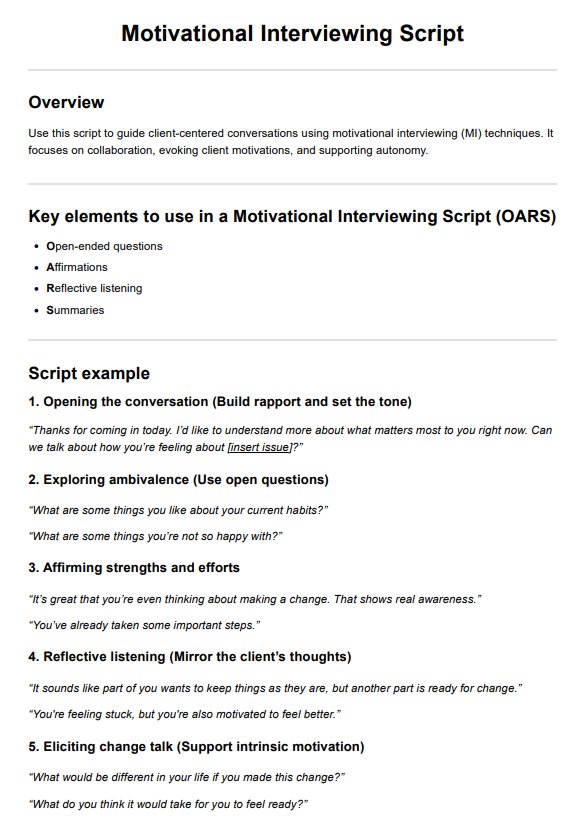
Central to motivational interviewing strategies are techniques like active listening and the use of open-ended questions, affirmations, and summaries (Bischof et. al., 2021). These tools promote change talk, where clients verbalize their motivations in their own words, strengthening their commitment to change. The motivational interviewing approach is collaborative, emphasizing the client’s autonomy and self-direction.
Practitioners focus on the emotional aspects of behavior and foster the client’s self-efficacy to promote sustainable positive behaviors. Motivational interviewing works by building trust, validating client experiences, and guiding them toward healthier decisions without imposing external pressure.









