




What is complex PTSD?
Complex Post-Traumatic Stress Disorder or Complex PTSD, which originated in the early 1990s, is a disorder that occurs when the patient experiences similar traumatic events as those with PTSD but repeatedly. A traumatic event may be:
- Staying in war zones or being a prisoner of war
- Being a victim of torture, violence, kidnapping, slavery, trafficking, childhood neglect/abandonment, physical/sexual/emotional abuse
- Long-term exposure to domestic violence/abuse
- Childhood trauma
- Physical or sexual abuse
- Repeated trauma
- Substance abuse
- Unresolved underlying trauma
- Physical abuse
As a result of these repeated traumatic experiences, not only do CPTSD patients have a longer, tougher, and more complex healing journey, but they also have additional symptoms that PTSD students don't exhibit, such as:
- Depressive feelings that may lead to self-harm or suicidal thoughts
- Physical pain
- Relationship problems caused by a lack of trust
- Self-esteem issues, including constant feelings of shame and guilt
- Extreme stress
- Traumatic memories and intrusive memories
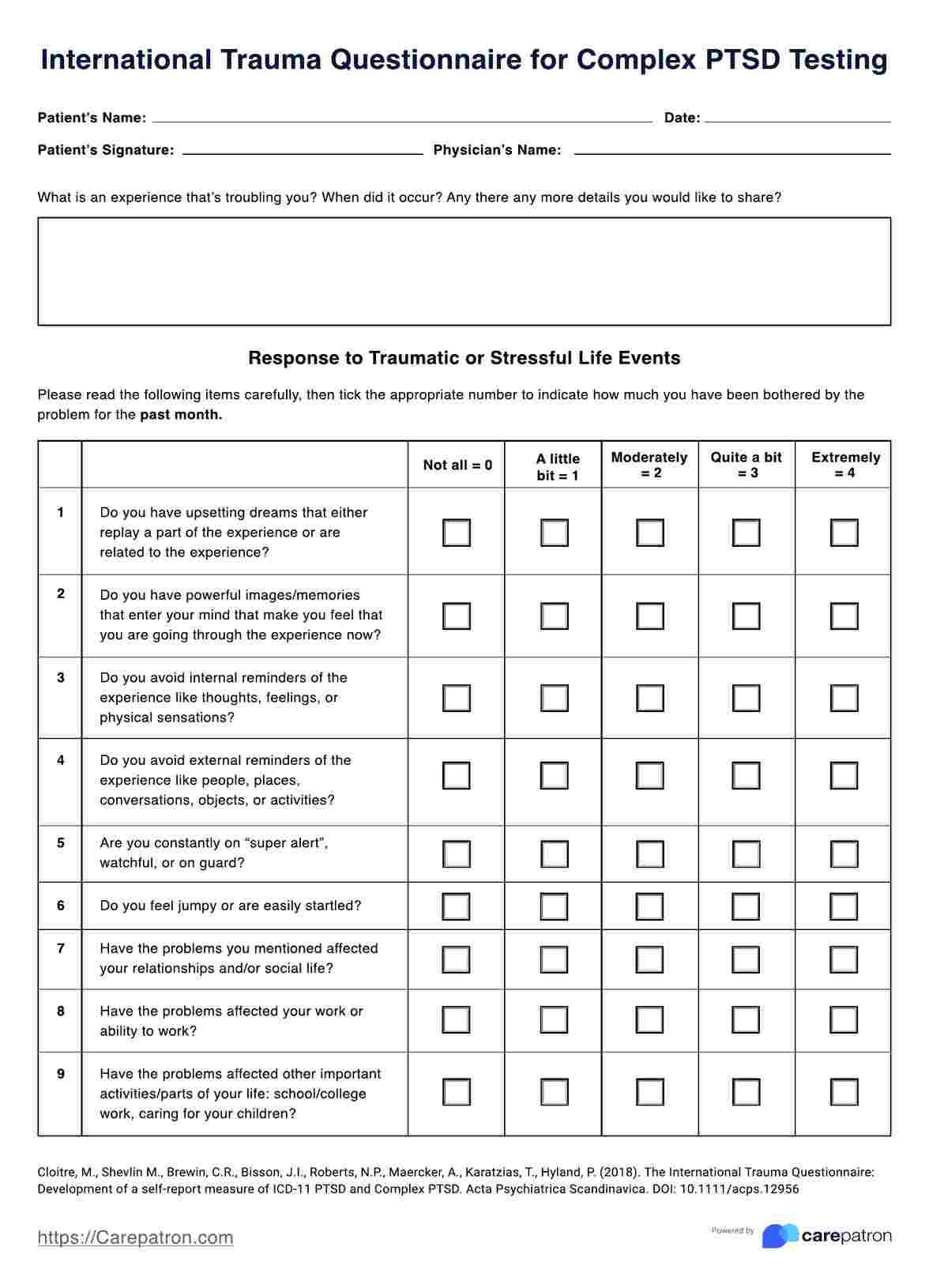
Since this is a relatively new diagnosis category under complex post traumatic stress disorder, tests are few and far between. One approach is to keep track of the symptoms - starting date, changes, frequency, and intensity - and the triggers. Another is by utilizing the International Trauma Questionnaire.
The International Trauma Questionnaire or ITQ is a self-report questionnaire with 2 subscales, 3 symptom clusters each, and 18 questions. The first half is symptoms for those who may have PTSD may be experiencing while the other is for those with CPTSD. To be diagnosed with CPTSD, one must be experiencing the symptoms of both halves. For a more comprehensive explanation of scoring and interpreting, look at the How to Score section and the FAQs below.