How does it work?
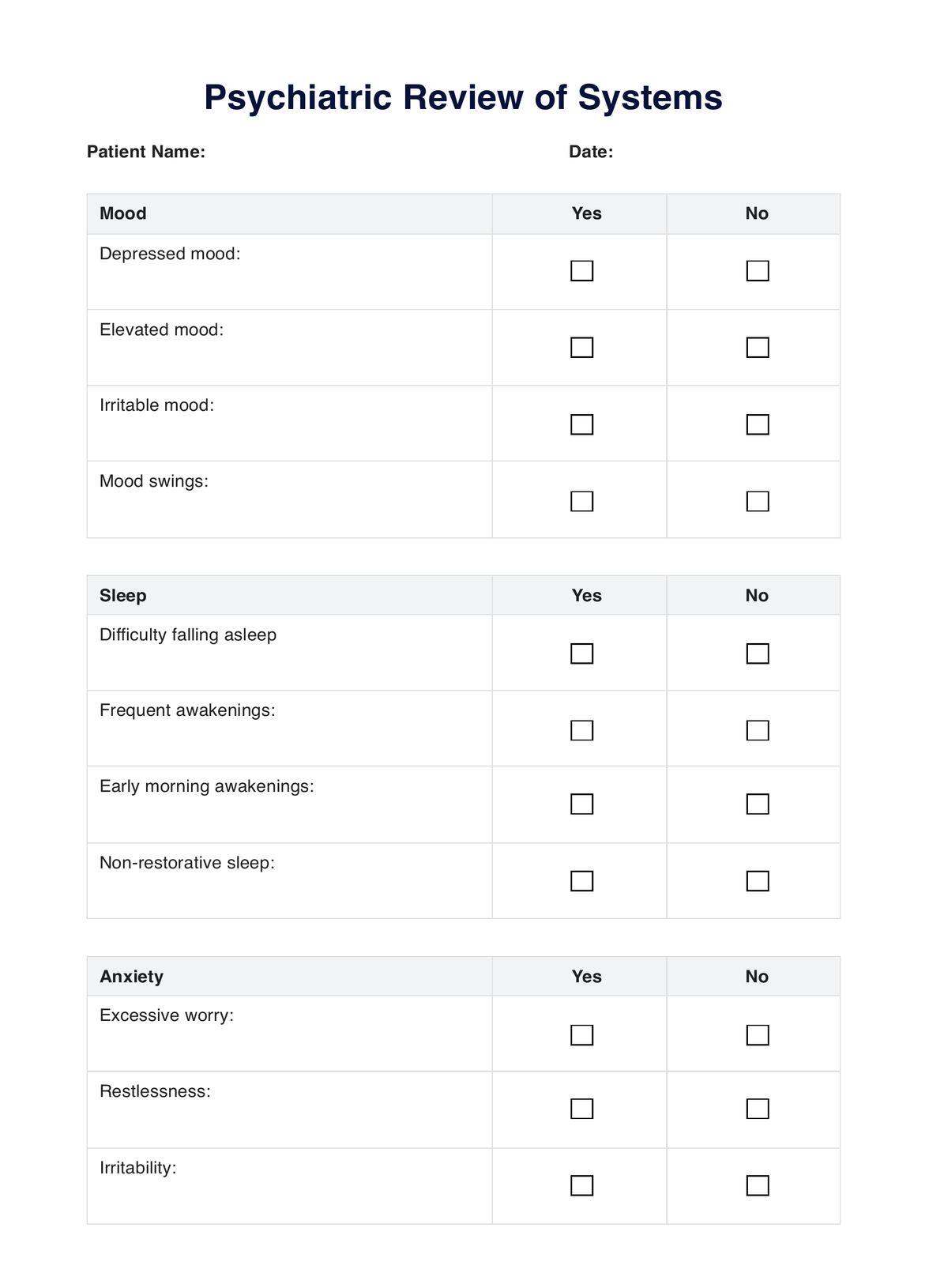
When conducting a psychiatric review of systems, healthcare practitioners can follow these five steps to ensure a comprehensive evaluation:
Step 1: Assess mood and sleep
Begin by inquiring about the patient's mood patterns, including depressed mood, elevated mood, irritability, and mood swings. Additionally, explore any sleep disturbances, such as difficulty falling or staying asleep, early morning awakenings, and non-restorative sleep.
Step 2: Evaluate anxiety, psychosis, and obsessive-compulsive symptoms
Next, assess the presence and severity of anxiety symptoms, including excessive worry, restlessness, irritability, concentration difficulties, and physical symptoms like racing heart or sweating. Inquire about any psychotic symptoms, such as hallucinations, delusions, or disorganized thinking. Also, explore the presence of obsessive thoughts and compulsive behaviors.
Step 3: Identify dissociative symptoms and trauma history
Explore any dissociative symptoms the patient may be experiencing, such as detachment, numbness, out-of-body experiences, or memory loss. Additionally, inquire about any exposure to traumatic events and related symptoms like flashbacks or nightmares, which may indicate post-traumatic stress disorder (PTSD).
Step 4: Assess body image disturbances and substance abuse
Evaluate the patient's body image and any preoccupation with appearance, dissatisfaction with body image, or engagement in weight control behaviors like excessive dieting or purging. Also, gather information about substance use, including alcohol, tobacco, and illicit drugs.
Step 5: Identify cognitive symptoms and suicidal ideation
Assess the patient's cognitive functioning, including memory problems, concentration difficulties, and decision-making challenges. Finally, inquire about the presence of suicidal ideation, including thoughts of suicide or any specific plans.
Throughout the review, healthcare practitioners should document any additional relevant notes or observations, and use clinical judgment to aid in the diagnostic process and treatment planning.