



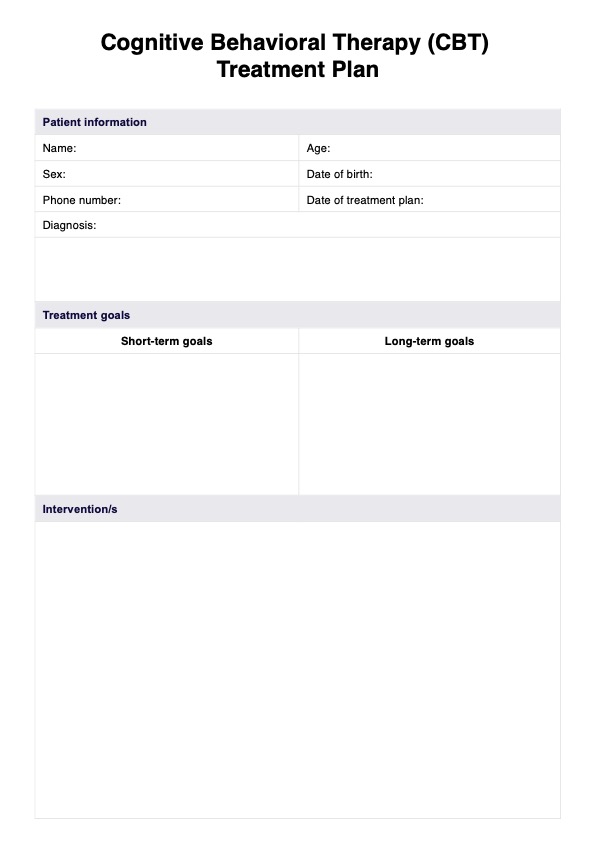




What is a CBT Treatment Plan?
Cognitive behavioral therapy (CBT) is a widely used form of psychotherapy designed to address mental health disorders by exploring an individual's thoughts, feelings, and behaviors. This therapeutic approach identifies negative thought patterns, cognitive distortions, and maladaptive behaviors, working to replace them with healthier alternatives to achieve specific goals. CBT is effective in treating various mental health conditions, including anxiety disorders, depression symptoms, obsessive-compulsive disorder (OCD), post-traumatic stress disorder (PTSD), substance use disorders, and more.
Mental health professionals rely on CBT Treatment Plans to provide a structured roadmap for therapy sessions. These plans typically outline the diagnosis, therapy goals, and recommended cognitive behavioral therapy techniques, such as cognitive restructuring, exposure therapy, and relaxation training. Additionally, CBT Treatment Plans include the duration or timelines for achieving goals and interventions and recommendations for medications when applicable.
CBT Treatment Plans are essential for guiding the therapy process, helping practitioners track patient progress over time, and documenting significant changes in coping strategies, behavior patterns, and emotional regulation. This comprehensive approach ensures consistency and optimizes outcomes for patients with mental disorders, negative thinking patterns, and life stressors.









