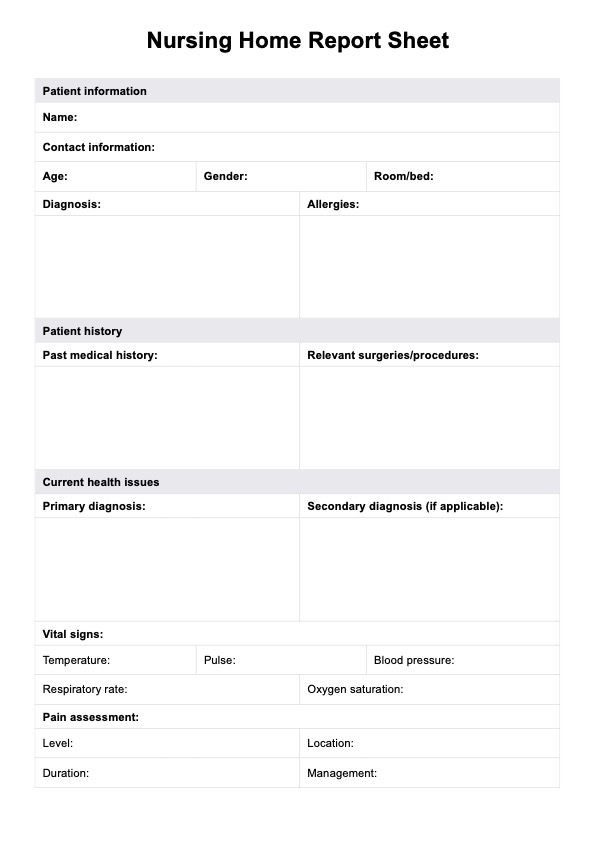
Key components of a Nursing Home Report Sheet
A Nursing Home Report Sheet is a comprehensive tool designed to assist nurses in hospitals and care units by centralizing crucial patient information. These sheets help ensure that every nurse has the best experience and full knowledge needed to provide optimal care. Here, we break down the essential components of a Nursing Home Report Sheet.
Patient information and medical history
This section contains the patient’s personal details such as name, age, and room number, along with a detailed medical history. It includes past diagnoses, surgeries, and ongoing health concerns, helping nurses quickly understand the patient's background.
Current health status and vital signs
Critical for immediate assessment, this part records the patient's current health complaints and vital signs, such as temperature, blood pressure, pulse, and respiratory rate. It helps nurses monitor changes and respond promptly.
Current medications
Here, nurses log all medications a patient is taking, including dosages, administration routes, and times. This component is vital for managing drug interactions and ensuring continuity of care across shifts.
Treatments and procedures
This section outlines any ongoing or scheduled treatments and medical procedures, clearly describing care plans. It's essential for preparing staff for the patient's care needs during their shift.
Laboratory and diagnostic results
Recent lab and diagnostic results are detailed here, offering insights into the patient's condition and any necessary medical adjustments. This helps inform treatment plans and monitor progress or emerging concerns.
Activities of Daily Living (ADLs)
Assessment of the patient’s ability to perform daily activities like bathing, dressing, and eating is recorded in this part. Understanding ADL capabilities is crucial for tailoring nursing care to the patient's needs.
Care plan and interventions
This final component outlines the nursing diagnosis and planned interventions, ensuring every team member is aware of the patient’s care objectives and the strategies in place to address them. It facilitates coordinated care and clear communication among nursing staff.