
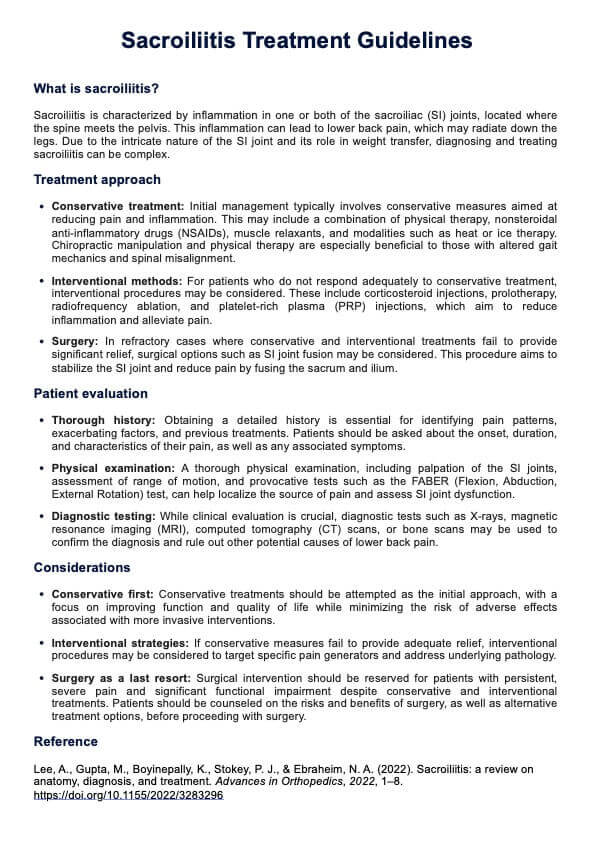




What is sacroiliitis?
According to Lee, Gupta, et. al (2022), sacroiliitis is a condition characterized by inflammation in one or both of the sacroiliac joints, often resulting in sacroiliac (SI) joint pain. The sacroiliac joint, located where the spine meets the pelvis, play a crucial role in supporting the upper body and transferring weight between the spine and lower limbs. When sacroiliac joint dysfunction occurs, it can lead to various symptoms, including sacroiliac pain, buttock pain, and chronic low back pain.
Several underlying conditions can contribute to sacroiliitis, including ankylosing spondylitis, psoriatic arthritis, and other forms of inflammatory arthritis. The inflammation associated with sacroiliitis can cause stiffness and discomfort, particularly during movement or prolonged periods of sitting or standing.
Treating SI joint pain and relieving sacroiliitis pain typically involves a combination of approaches, including medication, physical therapy, and lifestyle modifications. Anti-inflammatory medications may help reduce inflammation and alleviate symptoms, while physical therapy can strengthen the muscles surrounding the sacroiliac joints and improve flexibility.
In some cases, corticosteroid injections may be recommended to provide temporary relief from sacroiliitis pain. Additionally, lifestyle changes such as maintaining a healthy weight and practicing proper posture can help manage symptoms and prevent flare-ups of sacroiliitis.
Sacroiliitis symptoms
Sacroiliitis manifests through various symptoms, indicating inflammation or dysfunction in the sacroiliac joints. Recognizing these symptoms is crucial for timely diagnosis and treatment. Here are the common signs of sacroiliitis:
- Pain: Persistent pain in the lower back, buttocks, hips, or groin is a hallmark symptom of sacroiliitis. The pain may worsen with movement or prolonged sitting or standing.
- Stiffness: Individuals with sacroiliitis often experience stiffness, particularly after periods of inactivity or upon waking in the morning.
- Radiating pain: Pain from the sacroiliac joints can sometimes radiate down the legs, mimicking sciatica.
- Reduced range of motion: Limited flexibility and difficulty performing certain movements, such as bending or twisting, may occur due to sacroiliitis.
- Inflammation: Swelling and tenderness around the sacroiliac joints can accompany sacroiliitis, indicating ongoing inflammation.
- Pain aggravation: Certain activities, such as climbing stairs, standing on one leg, or transitioning from sitting to standing, may exacerbate sacroiliitis pain.
Recognizing these symptoms can prompt individuals to seek medical evaluation and appropriate treatment for sacroiliitis.
Causes of sacroiliitis
Sacroiliitis can stem from various underlying causes, often related to inflammation or dysfunction in the sacroiliac joints. One primary cause is inflammatory arthritis, including conditions such as ankylosing spondylitis and arthritis. In these autoimmune disorders, the body's immune system mistakenly attacks the joints, leading to inflammation and pain.
Physical trauma or injury to the sacroiliac joints can also trigger sacroiliitis. Activities or accidents that result in direct impact or repetitive stress on the pelvis can damage the ligaments and cartilage surrounding the sacroiliac joints, leading to inflammation and discomfort.
Additionally, infections, such as those caused by bacteria or viruses, can sometimes affect the sacroiliac joints, resulting in sacroiliitis. These infections may spread to the joints from nearby tissues or organs, leading to inflammation and pain.









