
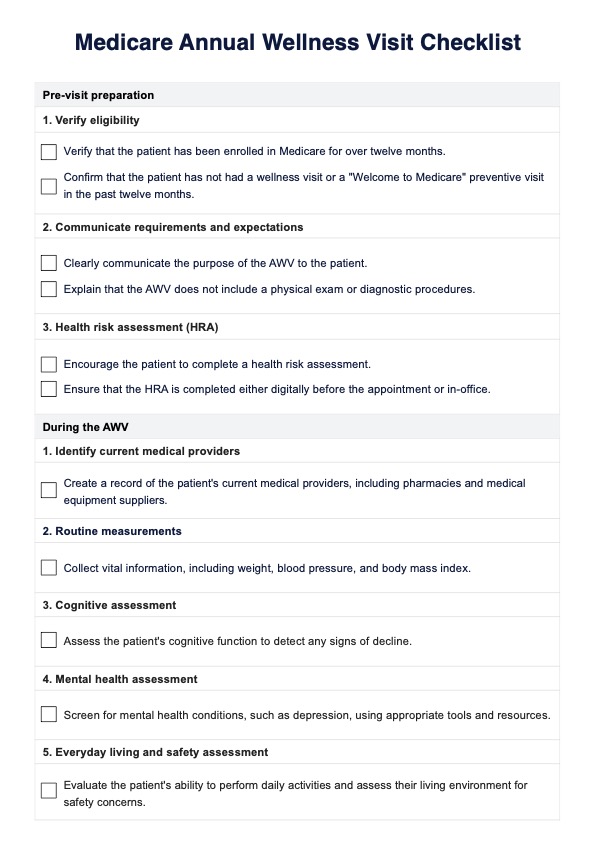




What is a Medicare Annual Wellness Visit Checklist?
A Medicare Annual Wellness Visit (AWV) Checklist serves as an essential tool for healthcare providers, facilitating a thorough annual evaluation of a patient’s overall health. This comprehensive resource guides the collection of vital health data, including height, weight, blood pressure, and body mass index (BMI), alongside a detailed review of the patient's medical and family history.
Key components of the checklist include conducting an initial health risk assessment (HRA) to identify potential health risks and behavioral factors that could predispose the patient to future medical issues. By gathering insights from the patient's current health status, medical and social history, and any cognitive impairments, providers can craft a personalized prevention plan (PPP) tailored to address and mitigate specific risks.
Furthermore, the AWV offers a structured opportunity for patients to discuss their current health concerns and symptoms. This patient-provider dialogue is vital for fostering a collaborative relationship and empowering patients to take an active role in their health management. During the visit, medical professionals may also update immunization records, review current prescriptions, including non-opioid treatment options, and discuss advance directives to ensure comprehensive preventive care.
Incorporating routine measurements and appropriate screening questions into the AWV helps healthcare providers detect issues early. This proactive approach not only enhances the possibility of disease prevention but also aligns with Medicare’s emphasis on preventive services to reduce long-term healthcare costs.
Ultimately, the Medicare Annual Wellness Visit Checklist is more than just a regulatory requirement; it is a strategic framework that enhances patient care through focused preventive measures, ensuring that each patient receives the most appropriate and personalized health advice.









