




What is thoracic outlet syndrome?
Thoracic outlet syndrome (TOS) is a group of disorders that occur when blood vessels or nerves in the thoracic outlet—the space between your collarbone and first rib—are compressed. These outlets supply the upper extremity. Compression of these outlets, which may involve the cervical spine, can lead to pain in your shoulders and neck and numbness in your fingers. The condition is named for the thoracic outlet, which is the area between your ribcage and collarbone.
There are three types of TOS: neurogenic, venous, and arterial, with neurogenic TOS being the most common. Neurogenic thoracic outlet syndrome affects the brachial plexus, a network of nerves that sends signals from your spinal cord to your shoulder, arm, and hand. Venous TOS affects the veins, and arterial TOS affects the arteries, including the subclavian artery.
Common causes of TOS include anatomical defects, poor posture, trauma, repetitive activity, and carrying heavy items. Symptoms vary depending on the type of TOS but often include neck and shoulder pain, finger numbness or tingling, arm weakness, and a feeling of heavy arms or hands.
How to assess thoracic outlet syndrome
Assessing TOS involves a comprehensive evaluation that includes observation, palpation, neurological screening, and special tests to confirm the diagnosis.
During observation, look for postural abnormalities such as rounded shoulders or a forward head position. Check for signs of poor blood flow, including cyanosis, swelling, and unusual paleness in the arms or hands. Also, note any muscle wasting, particularly in the hand or arm.
For palpation, feel for any temperature differences between the limbs. Check for tenderness in the supraclavicular fossa, scalene muscles, and trapezius muscle. These areas are commonly affected in TOS.
The neurological screening involves manual muscle testing (MMT) and assessing the flexibility of several muscles, including the anterior and middle scalenes, pectoralis major and minor, levator scapulae, sternocleidomastoid, and serratus anterior.
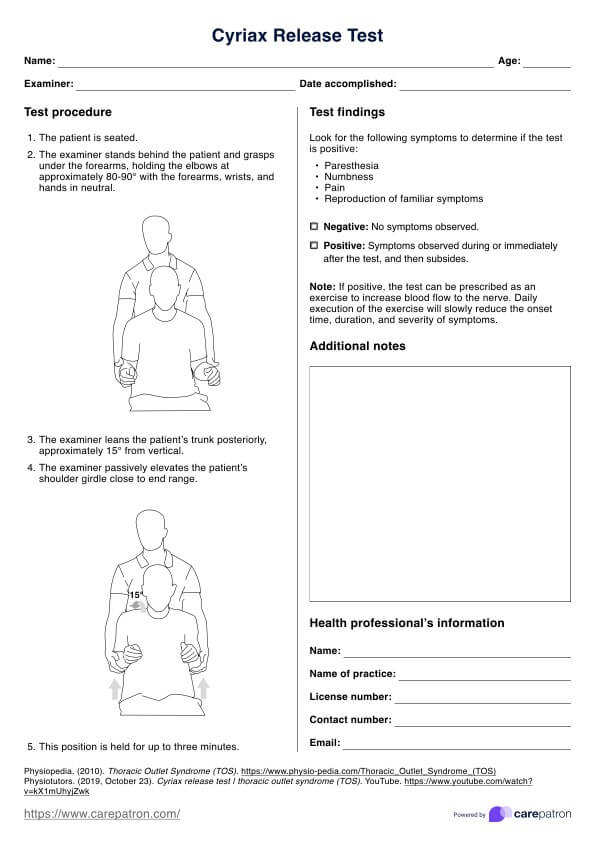
Special tests are crucial in diagnosing TOS. These include the elevated arm stress test (roos test), Wright’s Test, Adson's Test, Cyriax Release Test, supraclavicular pressure test, costoclavicular maneuver, upper limb tension test, and cervical rotation lateral flexion test. Each test helps identify the presence and severity of TOS, providing a comprehensive understanding of the patient's condition to guide appropriate treatment.









