
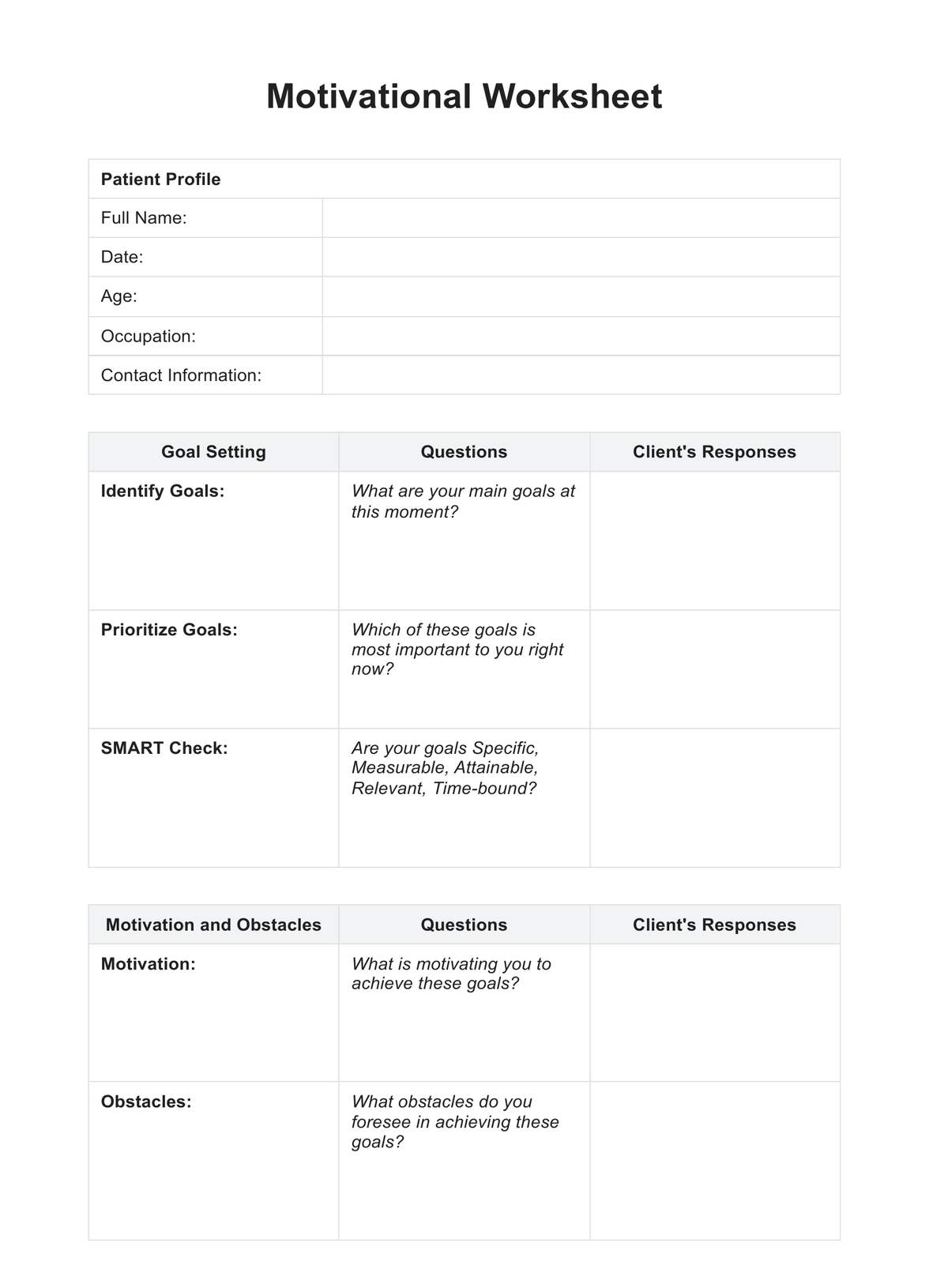




What Is a Motivational Worksheet?
A motivational worksheet is a powerful tool that helps individuals reflect on their goals, identify potential obstacles, and devise strategies to overcome them. Used by therapists, coaches, and counselors alike, it empowers individuals to gain clarity about what they truly want, why they want it, and how they can achieve it.
Unlike traditional goal-setting, a motivational worksheet encourages introspection and personal insight. These worksheets foster self-awareness and commitment by prompting users to contemplate their values, aspirations, and motivations. They serve as a roadmap, guiding individuals toward self-improvement and personal growth.
A motivational worksheet offers a sacred space for contemplation and planning in a world where external distractions are rampant. It doesn't merely promote goal-setting; it encourages individuals to align their goals with their values and motivations. This alignment, in turn, boosts their resolve to work towards their objectives, even in the face of adversity.
In this guide, we'll delve into the world of motivational worksheets, exploring how they can catalyze change and improve outcomes in therapy and coaching contexts. Plus, we'll offer a free downloadable PDF for you to use with your clients or for your growth journey. Get ready to embrace a tool that can truly transform lives!
Motivational Worksheet Formats
Previously, motivational worksheets have come in various different formats. Each one has their owns benefits, as well as disadvantages with some of these different types including the following:
- Rosenberg Self-Esteem Scale (1965)
- Procrastination Scale (Lay, 1986)
- Curiosity Inventory
- SMART+R Goals
- Coaching Questions
Motivational Worksheet Techniques
The free motivational worksheets can also focus on a wide range of activities and techniques to improve goal achievements. Many of these areas overlap, but also provide valuable insight into improving motivation within clients. The techniques may include the following:
- Neuro-Linguistic Programming (NLP)
- Pathfinding
- Work-style evaluations
- Auerbach GOOD coaching model
- FLOW questionnaire
- Oblique strategizing
- Motivational boards