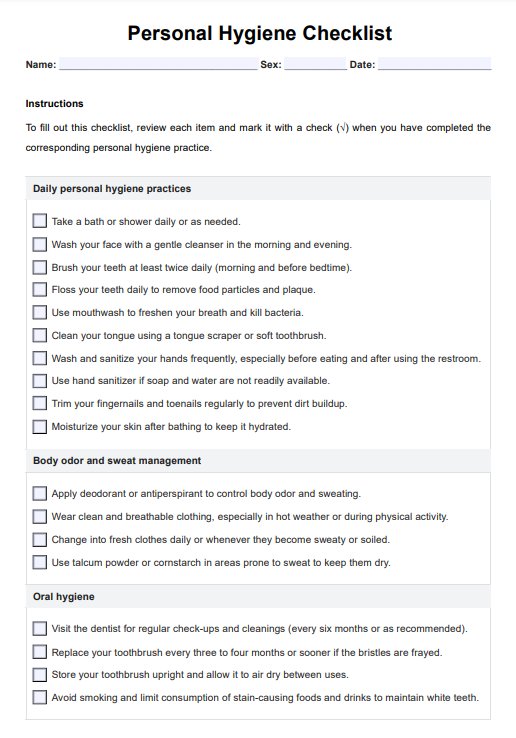
Looking for a simple way to help your clients stay clean, confident, and healthy? Our Personal Hygiene Checklist is a practical tool designed to teach and reinforce essential hygiene routines. Whether used at home, in schools, or in healthcare settings, it encourages consistency, reduces infection risk, and supports overall well-being.
## **Why maintaining good personal hygiene matters**
Maintaining good personal hygiene goes beyond looking clean. It’s a cornerstone of physical, mental, and social well-being. Simple daily habits like handwashing, bathing, and oral care play a critical role in protecting the body from harmful bacteria and viruses. Consistent hygiene practices remain one of the most effective and affordable ways to prevent communicable diseases such as respiratory infections, skin conditions, and gastrointestinal illnesses (Centers for Disease Control and Prevention, 2024; UNICEF, 2024).
Neglecting personal hygiene, on the other hand, can lead to a cascade of preventable problems. Poor hand hygiene can transmit pathogens responsible for colds, flu, and gastrointestinal diseases, while unwashed skin and clothing can harbor bacteria that cause fungal infections or body odor. Inadequate oral hygiene can result in tooth decay, gum disease, and even cardiovascular complications linked to chronic inflammation (Fu et al., 2025)
The effects aren’t limited to physical health. Studies show that poor hygiene is often associated with low self-esteem, anxiety, and social withdrawal (Curtis et al., 2022). Individuals who struggle with hygiene, whether due to physical limitations, mental health challenges, or lack of access to clean facilities, may experience stigma or reduced confidence in social and professional situations.
Encouraging clients to maintain regular hygiene routines helps them safeguard their health, strengthen their immune defenses, and feel more comfortable in their own skin. For healthcare professionals like you, reinforcing these practices can make a tangible difference in both preventive care and overall quality of life.
## **Common challenges in maintaining personal hygiene**
Maintaining good hygiene may sound simple, but many individuals face genuine barriers that affect their ability to stay consistent. Understanding these challenges helps you provide realistic, compassionate support tailored to each client’s circumstances.
### **Physical and cognitive limitations**
Clients recovering from surgery, managing chronic pain, or living with mobility restrictions often struggle with basic hygiene tasks such as bathing, grooming, or dressing. Similarly, those with cognitive conditions like dementia, autism, or intellectual disabilities may forget routines or find them overwhelming. These situations call for patient, structured guidance and adaptive tools to maintain dignity while supporting independence.
### **Mental health factors**
Mental health challenges can directly affect hygiene habits. Depression, anxiety, and other mood disorders can lead to low motivation or fatigue, making daily hygiene feel like an impossible task. For these clients, creating gentle, achievable goals and incorporating positive reinforcement can make routines less intimidating.
### **Environmental and social barriers**
For some individuals, poor hygiene isn’t a choice—it’s a result of circumstance. Limited access to clean water, hygiene products, or safe facilities can make consistent care difficult. In other cases, financial instability, homelessness, or limited caregiver assistance further restrict hygiene maintenance. Recognizing these realities allows you to respond with empathy and connect clients with practical resources or social support services.
## **What is a Personal Hygiene Checklist?**
A Personal Hygiene Checklist is a comprehensive guide that goes beyond the basics of personal cleanliness. It underscores the importance of hygiene not only for physical health but also for mental and social well-being.
By addressing various aspects, including oral hygiene, bedding or sleep hygiene, intimate care, and hygiene during menstruation, the comprehensive checklist promotes a holistic approach to maintaining cleanliness and dignity. It also instills a sense of self-discipline and responsibility, empowering individuals to make informed decisions about their well-being.
For healthcare practitioners like you, it serves as a reference to educate patients on maintaining proper hygiene during recovery from illnesses or surgeries. The daily Personal Hygiene Checklist can also be used by caregivers, who can utilize it to ensure the well-being of elderly or dependent individuals under their care.
## **How does it work?**
Using our comprehensive Personal Hygiene Checklist is a simple and effective process that empowers individuals to take charge of their hygiene habits. Following the checklist helps individuals adhere to essential hygiene protocols. Here's a step-by-step breakdown of how it works:
### **Step 1: Download the checklist**
The digital hygiene checklist is organized into categories for easy reference and is available in downloadable PDF format. Encourage your clients to start by reviewing the personal hygiene PDF checklist. This makes it convenient for them to keep either a digital or physical copy on hand.
### **Step 2: Customize if necessary**
Advise your clients that the checklist is customizable. They can add or remove specific items based on their needs and preferences for their personal hygiene routine. Whether they use it for themselves, guide their children's hygiene routines, or care for someone else, the checklist can be adapted to fit their unique situation. The checklist can also be customized to meet specific hygiene guidelines.
### **Step 3: Check off completed tasks**
Instruct your clients to mark a check next to each completed hygiene practice. This simple check-off system will help them track their progress and identify areas for improvement.
### **Step 4: Use the checklist regularly**
Emphasize the importance of regular hygiene practices. By consistently following the checklist, your clients can develop and maintain healthy hygiene habits, reducing the risk of infections, preventing unpleasant body odors, and enhancing their physical and mental well-being.
## **Tips for teaching good hygiene habits**
Helping clients, or their children, develop good hygiene routines takes time, patience, and consistency. Whether you’re guiding young learners, adults recovering from illness, or individuals with special needs, a structured yet empathetic approach makes these habits easier to build and maintain.
### **Start with small, clear steps**
Introduce one habit at a time to avoid overwhelming your client. Begin with essential daily hygiene tasks such as washing hands, brushing teeth, or taking a shower regularly. Encourage them to wear clean clothes daily and practice nail care to prevent dirt buildup and skin infections. For children, use songs or visual reminders to make hygiene routines easier to remember and more enjoyable.
### **Model the behavior**
People learn best by example. Demonstrate how to properly wash hands, clean genitals, or brush teeth as part of dental care. Showing clients the right way to rinse, shave, or care for their hair type helps them stay confident and stay clean in their routines. In clinical settings, you can also model how to safely handle food before eating or when they’re sick to prevent the spread of infection.
### **Use positive reinforcement**
Celebrate small wins. Simple encouragement, like acknowledging progress or offering small rewards, can help build motivation and consistency. Positive reinforcement turns hygiene from a chore into a meaningful self-care practice that benefits both confidence and overall health.
### **Create a routine**
Encourage clients to link hygiene habits to daily events, such as brushing teeth after breakfast or washing hands before meals. Over time, these actions become automatic signs of self-care. Consistency helps prevent irritation and the buildup of toxins or sweat, supporting healthy skin and preventing odor. If clients struggle with memory, suggest using reminders in the morning or before bedtime to strengthen their routines.
### **Make it accessible**
Ensure that hygiene tools and products are easy to reach and suitable for the individual’s needs. Adaptive equipment, non-slip mats, or long-handled brushes help those with mobility limitations maintain independence. For clients with sensory sensitivities, mild soaps or fragrance-free products can minimize discomfort. Encourage regular checkups for dental issues with a doctor or dentist to prevent complications and maintain long-term oral health.
### **Encourage understanding**
It’s easier for clients to commit to hygiene habits when they understand why they matter. Explain that maintaining clean skin, nails, and teeth helps them feel comfortable, reduces infection risk, and promotes confidence in social settings.
Discuss how regular shaving, washing hands and fingers, and proper grooming help remove dead skin and bacteria, reducing the buildup of germs that can lead to irritation or infection. Encourage them to search for trusted hygiene information when needed and to ask questions during checkups. Understanding how these habits protect their health helps clients see hygiene not just as maintenance, but as an investment in well-being.
## **References**
Curtis, V., de Barra, M., & Aunger, R. (2011). Disgust as an adaptive system for disease avoidance behaviour. Philosophical Transactions of the Royal Society B: Biological Sciences, 366(1563), 389–401. https://doi.org/10.1098/rstb.2010.0117
Centers for Disease Control and Prevention. (2024, March 1). Hygiene and respiratory viruses prevention | respiratory illnesses | CDC. https://www.cdc.gov/respiratory-viruses/prevention/hygiene.html
Fu, D., Shu, X., Zhou, G., Ji, M., Liao, G., & Zou, L. (2025). Connection between oral health and chronic diseases. MedComm, 6(1). https://doi.org/10.1002/mco2.70052
UNICEF. (2024). Hygiene. Www.unicef.org. https://www.unicef.org/wash/hygiene
Commonly asked questions
A daily checklist for personal hygiene includes basic habits that keep the body clean and healthy. These typically involve brushing teeth, bathing or showering, washing hands, trimming nails, and wearing clean clothes. Regularly cleaning the genitals, managing hair care, and maintaining a tidy environment also support overall health and comfort.
The seven key hygiene habits include handwashing, oral care, bathing, nail care, wearing clean clothes, proper food handling, and adequate sleep hygiene. Practicing these consistently helps prevent infections and maintain both physical and mental well-being. These habits also foster self-discipline and confidence in personal and social settings.
Ten practical ways to maintain personal hygiene include daily bathing, brushing teeth twice a day, washing hands regularly, trimming nails, wearing clean clothes, keeping hair neat, using deodorant, cleaning the genitals properly, managing menstrual hygiene, and ensuring a clean living space. Each habit works together to reduce the spread of germs and promote overall wellness. Encouraging clients to follow these routines can help them stay healthy, confident, and socially comfortable.