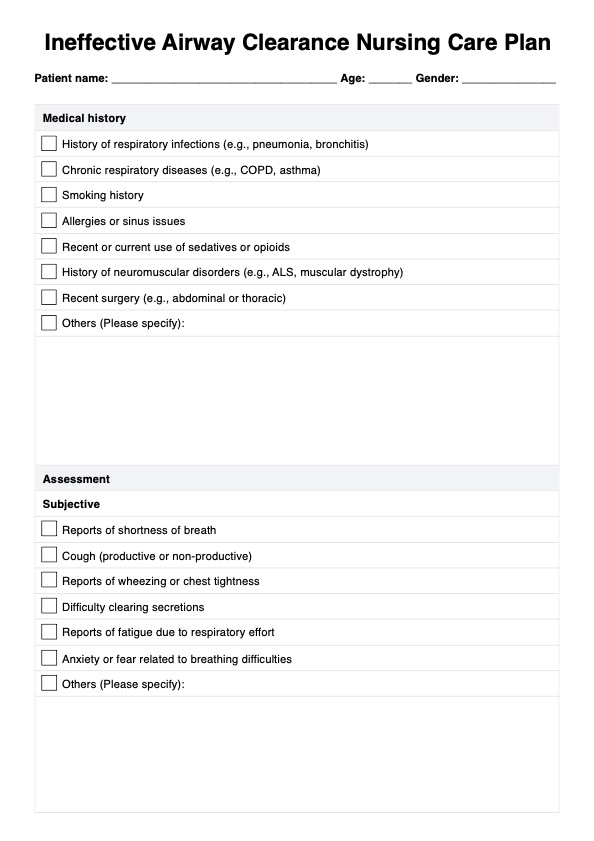
How does it work?
Here are the steps involved in using the Ineffective Airway Clearance Nursing Care Plan Template:
Step 1: Nursing assessment of the patient
The initial step involves comprehensively evaluating the patient's respiratory status. This includes observing lung sounds and the breathing pattern, noting any cough or secretions, and assessing signs of respiratory distress like cyanosis or using accessory muscles for breathing.
Step 2: Diagnosis
Based on the assessment, the nurse identifies an inneffective airway clearance nursing diagnosis or nursing diagnoses related to ineffective airway clearance. These diagnoses could include but are not limited to, altered breathing patterns, increased respiratory rate, or the presence of adventitious lung sounds.
Step 3: Planning
In this phase, the nurse sets realistic, measurable goals tailored to the patient's condition. Goals may include improving airway patency, enhancing the effectiveness of the cough mechanism, or reducing the risk of respiratory infections.
Step 4: Intervention
The nurse then outlines specific interventions to address the airway clearance issues. These interventions could involve suctioning to clear secretions, administering bronchodilators or mucolytic agents, providing chest physiotherapy, teaching effective coughing techniques, and ensuring proper positioning to facilitate breathing.
Step 5: Evaluation
The final step is a continuous process where the nurse regularly assesses the patient's progress toward the set goals. This includes re-evaluating the respiratory status, monitoring the effectiveness of the interventions, and making necessary adjustments to the care plan.