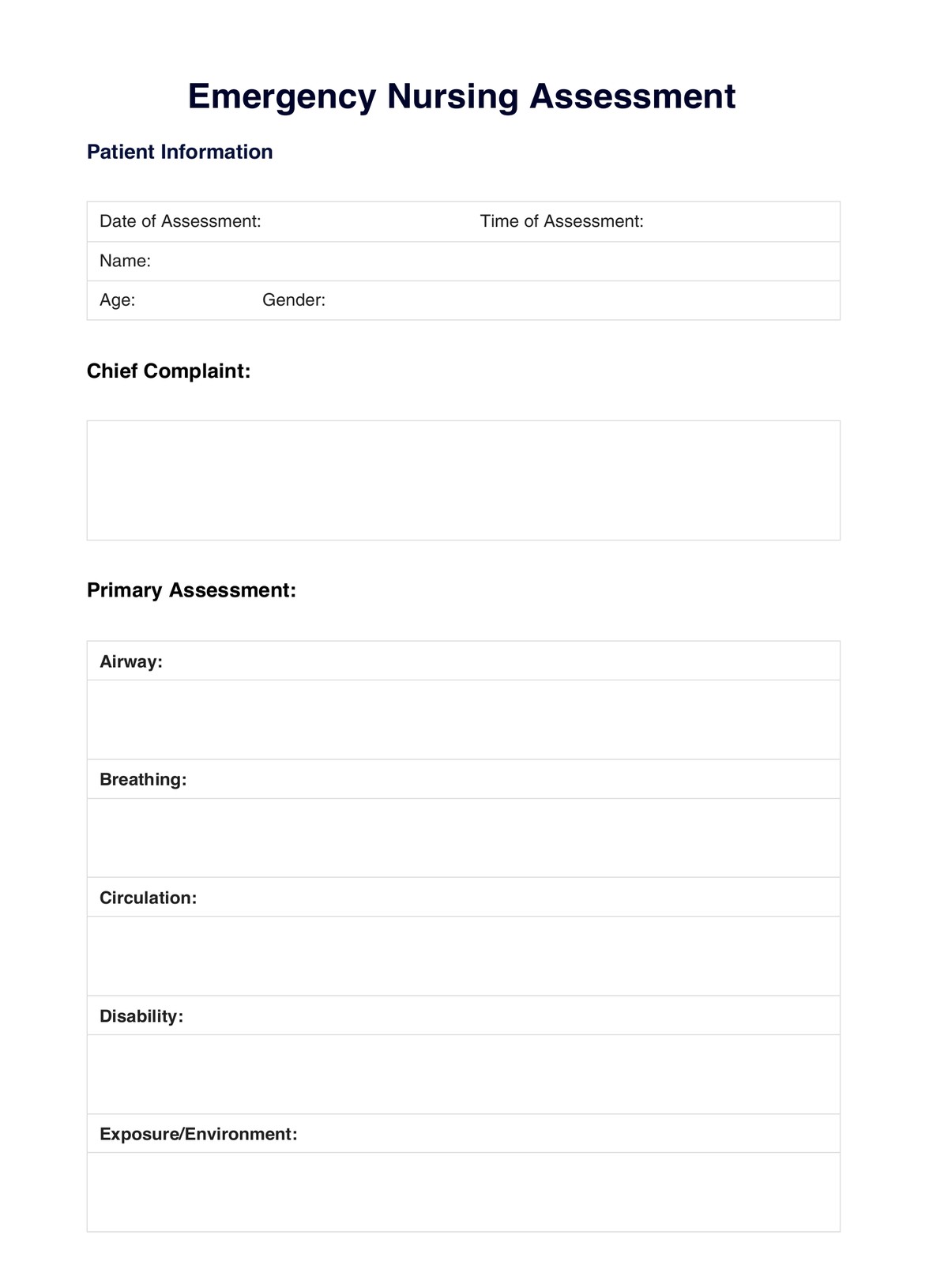
How does our Emergency Nursing Assessment template work?
Here's a step-by-step guide outlining the key components of the emergency nursing assessment process:
1. Primary assessment
The primary assessment in emergency nursing constitutes the crucial first step upon a patient's arrival in the emergency department. It involves a rapid yet comprehensive evaluation to identify and promptly address life-threatening conditions. Emergency nurses prioritize assessing the patient's airway, breathing, circulation, and neurological status while ensuring proper exposure and environmental control.
2. Secondary assessment
Following the primary assessment, emergency nurses conduct a thorough secondary assessment to gather detailed information about the patient's health. This comprehensive evaluation encompasses a systematic review of the patient's medical history, including pertinent symptoms, past medical conditions, medications, allergies, and social history.
3. Diagnostic tests
Based on the findings from the primary and secondary assessments, emergency nurses may order diagnostic tests to evaluate the patient's condition further and confirm or rule out potential diagnoses. These diagnostic modalities may include radiographic studies such as X-rays to assess for fractures or dislocations, blood tests to evaluate blood chemistry and organ function, and electrocardiograms (ECGs) to assess cardiac rhythm and detect signs of cardiac ischemia or infarction.
4. Formulating a care plan
Drawing upon the findings from the primary assessment, secondary assessment, and diagnostic tests, emergency nurses collaborate with other healthcare team members to develop a comprehensive care plan tailored to the patient's needs. The care plan encompasses medical interventions, surgical consultations if necessary, referrals to specialty services or consultants, and patient education regarding their condition and follow-up care instructions.