




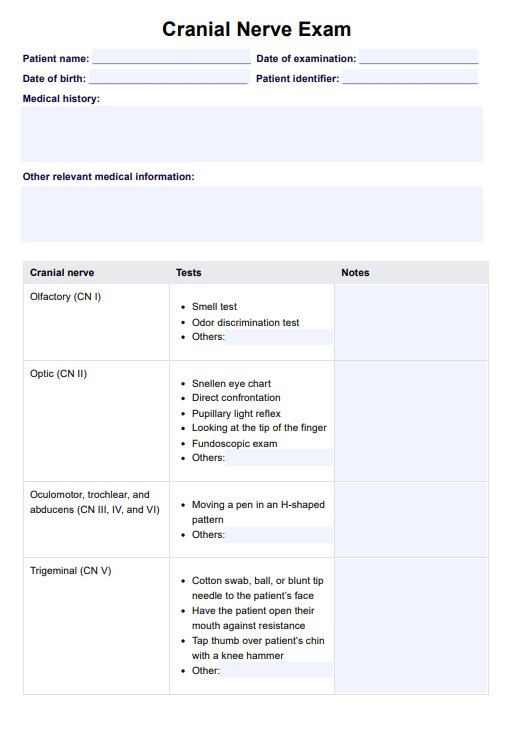




Introduction to cranial nerves
The cranial nerves test is a critical aspect of neurological assessment, providing key insights into the functioning of the twelve cranial nerves. Each cranial nerve has a specific role, ranging from sensory functions like smell and vision to motor functions like facial and eye movements. The cranial nerves are traditionally numbered I through XII and named based on their primary function or the area they affect. Here’s an overview of the cranial nerves and their purposes:
- Cranial nerve I — olfactory: This nerve is pivotal for the sense of smell.
- Cranial nerve II — optic: Also known as the optic nerve, this nerve is essential for normal vision.
- Cranial nerves III, IV, VI — oculomotor, trochlear, abducens: These three nerves control eye movements.
- Cranial nerve V — trigeminal: This nerve is responsible for helping a person chew and clench their teeth and provides sensation to multiple facial receptor sites.
- Cranial nerve VII — facial: This nerve is responsible for facial expression, speech articulation, lip movement, and tone.
- Cranial nerve VIII — vestibulocochlear: This nerve is involved in hearing and balance.
- Cranial nerve IX, X — glossopharyngeal, vagus nerve: The glossopharyngeal and vagus nerves are essential for swallowing, taste, and the gag reflex.
- Cranial nerve XI — spinal accessory: The spinal accessory nerve controls the sternocleidomastoid and trapezius muscles.
- Cranial nerve XII —hypoglossal: The hypoglossal nerve controls tongue movements.
In clinical practice, cranial nerve testing is crucial for diagnosing conditions like stroke, multiple sclerosis, and tumors. Therefore, a comprehensive examination of the cranial nerves is an indispensable tool in neurological assessment, aiding in accurately diagnosing and managing various neurological disorders.









